Death row inmate appeals against conviction after witness gave identification under hypnosis

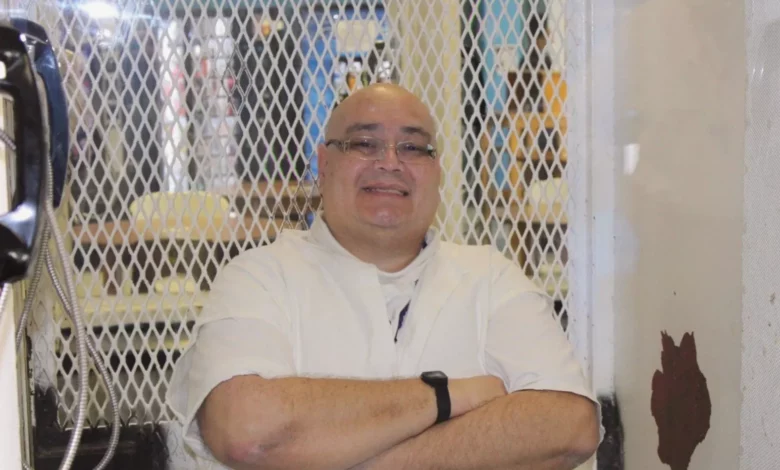
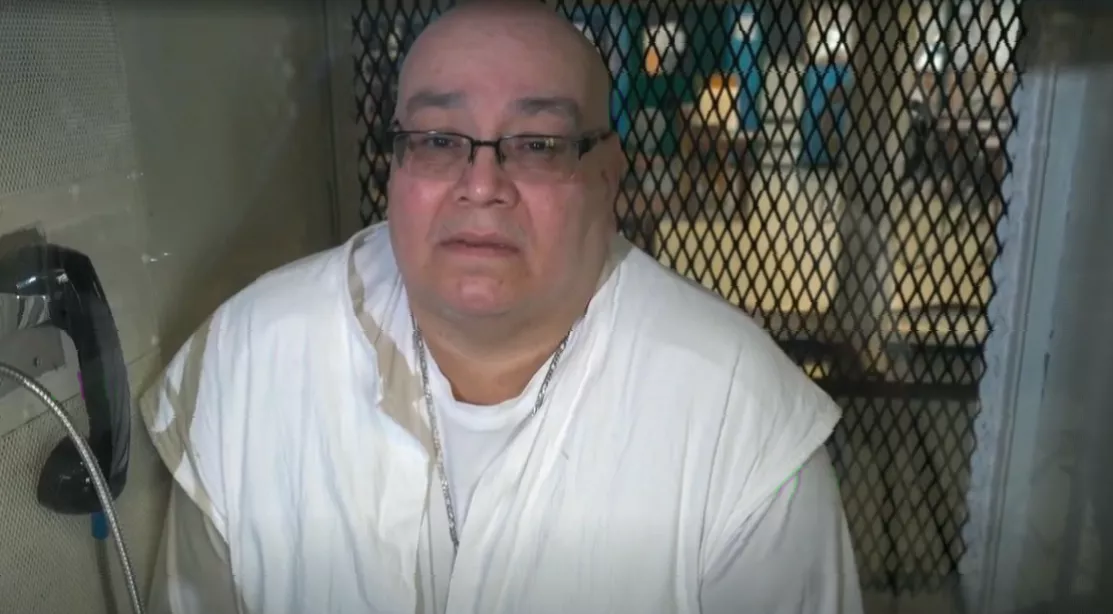
A man who has spent 26 years on death row in Texas has claimed he was framed for a murder he did not commit, with his conviction resting on witness testimony that was transformed under forensic hypnosis. Charles Don Flores was convicted in 1999 of the murder of Elizabeth “Betty” Black, who was shot dead in her home in Farmers Branch, Texas, in January 1998. He has consistently maintained his innocence, and in his first national television interview, with NBC News’ Dan Slepian, Flores said: “I’m getting set up. I had nothing to do with the murder of Mrs Black.”
The crime itself was not in dispute. William Black returned home to find the house burgled and his wife fatally shot. It later emerged the couple had been hiding drug money for their son, who was incarcerated at the time. Neighbours reported seeing two men get out of a distinctive pink and purple Volkswagen Beetle with a psychedelic paint job and enter the Blacks’ home. The following day, a neighbour identified Richard Childs as the driver. Childs confessed to the murder in 2000 and took a plea deal for 35 years; he served 17 and was released on parole in 2016. Flores was not accused of pulling the trigger but was sentenced to death under Texas’s “law of parties” — the doctrine that makes an accomplice equally liable for murder.
Flores has always insisted he was elsewhere. He told NBC he was making breakfast with his wife at the time of the killing. No physical or DNA evidence has ever connected him to the crime. Yet key details have repeatedly counted against him: the car used in the murder was hidden behind his home, he set it on fire two days later, and he fled to Mexico. When he returned, he was involved in a police chase, crashed his car, and tried to escape from hospital. Explaining his flight, Flores said: “I’m here to tell you that you also run when you are afraid. I had that thought: ‘They’re going to kill me, they’re going to kill me’. And you know what? I was right.”
The Hypnosis Controversy
The case against Flores turned on the testimony of the victim’s neighbour, Jill Barganier, and the circumstances under which her memory changed are at the heart of the controversy. Five days after Childs was arrested, Barganier was taken to the police station to create a composite sketch of the passenger. She identified Childs as the driver, but she did not identify Flores when shown two photo lineups. At that stage she described the two men she saw leaving the car as white males with long hair — a description that did not match Flores, who is Hispanic, short and stocky, with a shaved head at the time.
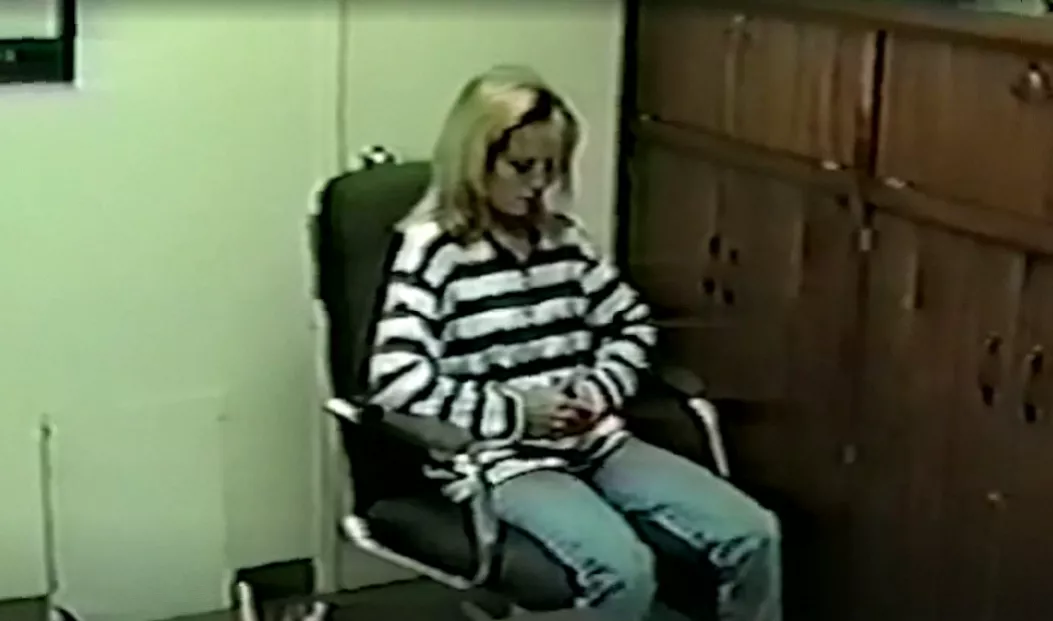
Barganier then underwent forensic hypnosis, conducted by a police officer who, according to reports, had never performed the procedure before. During the session, she again described the passenger as a white male with long hair and a medium build. Before the hypnosis ended, the officer told her she would “be able to recall more of the events as time goes on.” Houston Public Media later reported that not all rules were followed when recording the session, and that a Texas law was broken: the state did not allow officers involved in the case to be part of a hypnosis session, yet an investigating officer conducted it.
Thirteen months later, during Flores’s trial, Barganier changed her account. She identified him as the passenger in the Beetle, telling the court she was “100% sure”. Her certainty had grown despite the absence of any confirming physical evidence, and she had by that point seen Flores’s picture in news reports and at the defence table. Psychology professor Steven Lynn, an expert in memory and hypnosis, later testified that the hypnosis used in the case relied on a “faulty concept of memory” and that the identification was “astounding” given the circumstances. Lynn’s research — which helped secure a stay of execution for Flores in May 2016, just days before he was due to die — shows that hypnosis does not enhance accurate recall; it can create false memories, increase confidence in inaccurate recollections, and lead to confabulation, where the brain fills memory gaps with fictional events.
The broader record of investigative hypnosis in Texas has deepened concerns. A 2020 investigation by the Dallas Morning News found the technique had been used in at least 1,700 cases since the 1980s, resulting in prison convictions and even death sentences. Following that inquiry, the Texas Rangers suspended their forensic hypnosis programme in 2021, citing the development of more advanced interview techniques. In 2023, the Texas legislature passed Senate Bill 338, which prohibited the use of hypnotically induced statements in criminal trials, effective 1 September 2023. A similar bill had been vetoed by Governor Greg Abbott in 2021, who deemed it too broad. But neither the Rangers’ suspension nor the new law applies retroactively, meaning Flores’s conviction — secured with hypnosis-tainted testimony — stands.
Legal Battle Continues
Flores has now exhausted his appeals in state courts, where arguments based on the emerging scientific consensus and changes in law have been repeatedly rejected, often on procedural grounds. His last hope is a petition for a writ of certiorari to the United States Supreme Court, filed in February 2026 by his attorney Gretchen Sween. The petition argues that the Texas Court of Criminal Appeals’ refusal to apply state laws protecting the innocent violates his due process rights, and the Supreme Court is expected to consider it in May 2026. The court previously declined to hear his case in 2021.
A growing coalition has lined up behind his latest bid. Amicus briefs have been filed by organisations including the American Psychological Association, the Innocence Project, and even the magicians Penn & Teller, who have long highlighted the unreliability of hypnosis. The racial disparity in the case has also drawn attention: Childs, who is white, confessed to the murder and was paroled after 17 years, while Flores, who is Latino, remains on death row despite never having been accused of firing the fatal shot.