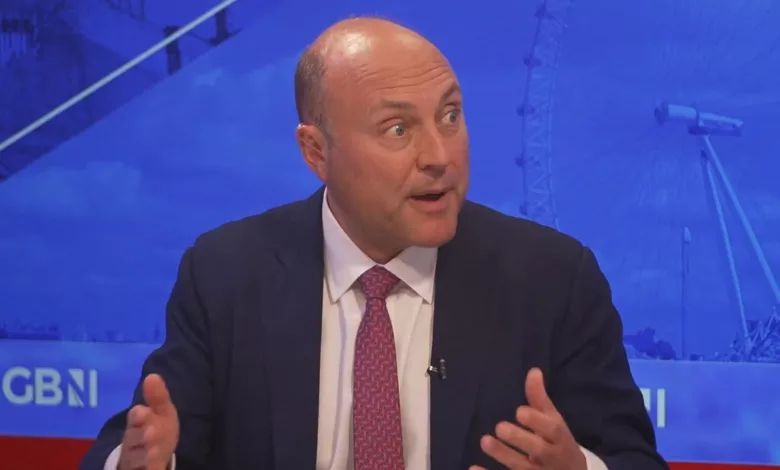
Labour’s “Brexit civil war” erupted this week after senior figures openly clashed over the European Union, prompting a blistering attack from Shadow Business Secretary Andrew Griffith, who accused the party of showing “disrespect” to those who voted to leave.
Speaking to GB News, Mr Griffith launched a broadside against the Labour frontbench, labelling its leading voices “Remainers” who had never accepted the 2016 referendum result. “These people are Remainers, have always been Remainers,” he said. “They sought to take the UK back and reject the verdict of the British people in a referendum. The very last thing we need is to go back to the past. We don’t want to go back and disrespect the British people. If Labour haven’t learned that, they really haven’t learned anything.”
Mr Griffith rejected any suggestion that closer EU ties would help struggling British businesses, arguing the bloc would do nothing to address the country’s core challenges. “I was talking to businesses over the weekend, more this morning, going back into the low or no growth. Europe wouldn’t do anything for some of the challenges we’re facing,” he said. He pointed to the UK’s national debt, which official figures show stands at £2,927.7 billion, equivalent to 95.6 per cent of GDP, and welfare spending – the largest component of government expenditure – as areas where EU membership would be irrelevant. “It wouldn’t help toughen up our borders and take control of our laws on immigration, and it definitely wouldn’t deal with the issue of the burgeoning national debt, the out of control welfare spending, in part fuelled by some of the rights that come down from Europe. And it wouldn’t help our businesses compete and grow more in the world. Slashing red tape, lowering taxes, trying to get back on the side of business rather than, as this Government is doing, keep attacking them.”
The Tory frontbencher accused Labour of coming to office on a “false prospectus” – repeating the charge against its “red lines on Europe” and its previous pledge not to raise taxes on working people, now contradicted by what he described as £70 billion of tax increases. “The one thing they’ve been consistent about is the trade unions. They haven’t changed, the leopard has not changed its spots, and all we’re seeing day by day is that unravelling and reverting to type at a moment when it’s just not funny, because the world is in crisis.” He added that the UK is “not growing, hasn’t grown for far too long” and that the country needs “politicians with the substance and honesty to deal with that.”
Andy Burnham’s U-turn
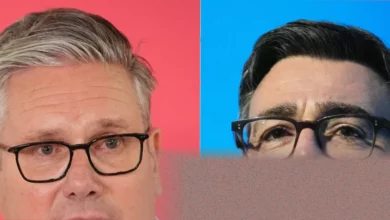
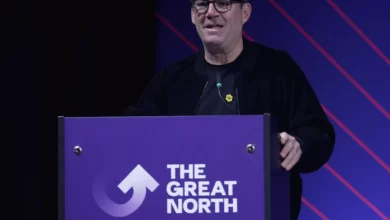
The internal row was ignited after Greater Manchester Mayor Andy Burnham appeared to reverse his previous position. In a speech in Leeds, Mr Burnham distanced himself from comments he made at last year’s Labour Party conference, when he said he wanted the UK to “rejoin the EU in his lifetime”. Instead, he declared: “I respect the decision that was made at the referendum” and argued it would “undermine everything I’ve said about respecting democracy if we don’t respect that vote.”
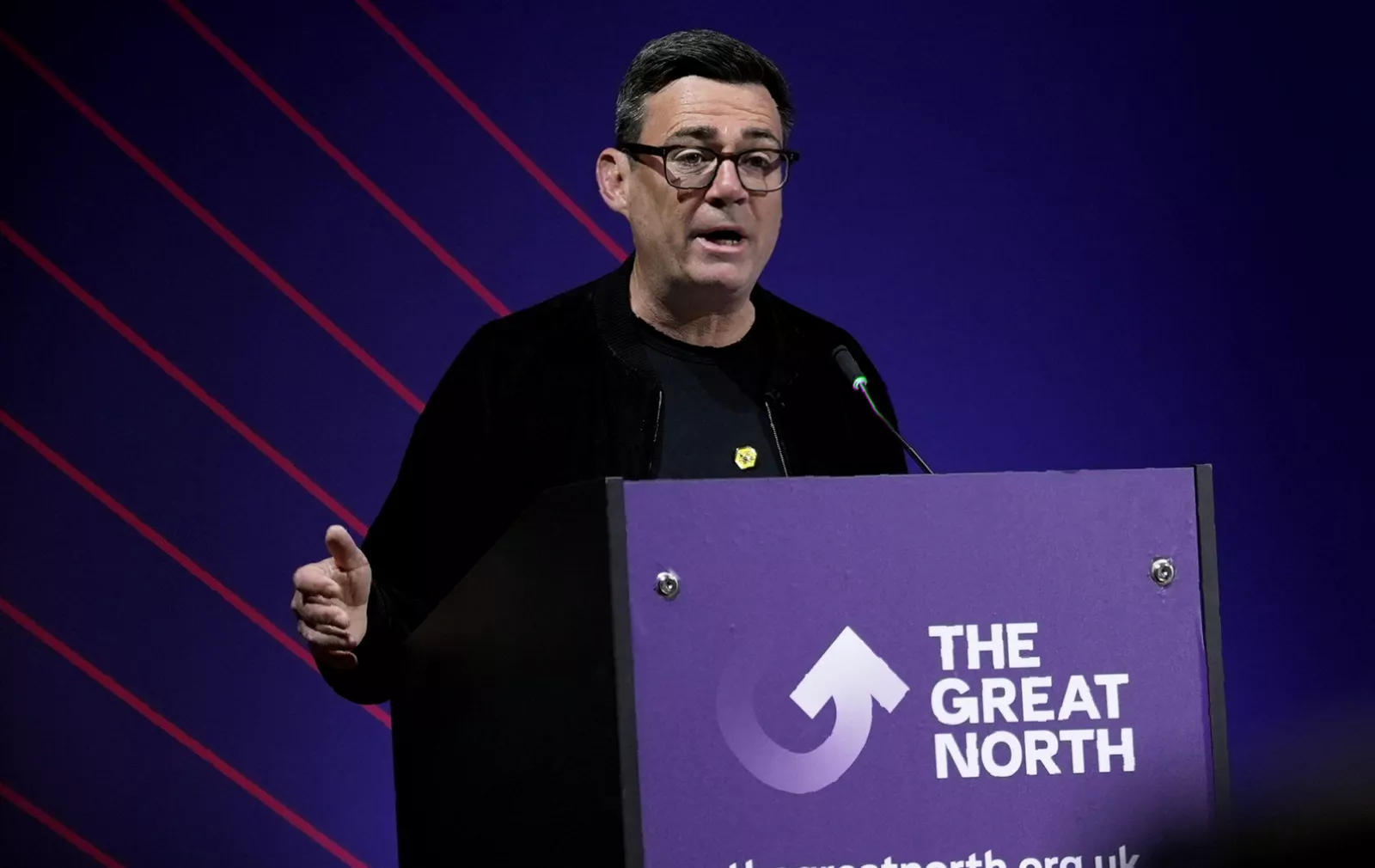
Mr Burnham has since sought to focus attention on domestic renewal, blaming decades of neoliberalism for the decline of the North of England and accusing Nigel Farage and Reform UK of being “cheerleaders for the Thatcherite policies.” He insisted the UK must “fix” itself before considering membership of international blocs, signalling a clear shift in tone from his earlier pro-rejoin stance.
Wes Streeting’s call to rejoin
In a direct counterpoint, former Health Secretary Wes Streeting doubled down on a pro-EU position, arguing over the weekend that “leaving the European Union was a catastrophic mistake”. Mr Streeting, who has formally announced his intention to stand for the Labour leadership, called for a “new Special Relationship with the EU” and said Britain’s future must lie with Europe. He also criticised Sir Keir Starmer’s leadership as “timid”, claiming the party needs to admit Brexit was a mistake.
Mr Streeting’s remarks have deepened divisions within Labour. Some allies of Andy Burnham suggested the intervention was an attempt to undermine his campaign in the Leave-voting Makerfield constituency, while Culture Secretary Lisa Nandy described the focus on rejoining the EU as “a bit odd” and cautioned against “reopening the Brexit wars.”
Keir Starmer’s response
Prime Minister Sir Keir Starmer has sought to stake out a middle ground, insisting he wants to “bring us closer to Europe” without reversing the referendum. Speaking after the internal Labour Brexit debate, he said: “We inherited a really bad Brexit deal that Boris Johnson had negotiated. It was a botched deal, it doesn’t work for businesses, doesn’t work for the country. What I’ve done in two years is to completely reset our relations with our EU partners to already have improved on that deal, which is what I did last year. This year we have another summit with the EU where we’re going to take a really important leap forward in terms of the relationship, and bring us closer to Europe.”
Sir Keir has maintained strict “red lines” ruling out rejoining the single market or customs union, but has announced plans for an “ambitious youth experience scheme” with the EU and pledged to “rebuild our relationship with Europe, by putting Britain at the heart of Europe.” He has also been critical of Nigel Farage, saying Brexit has made the UK “poorer, weaker, and less secure.” The reset in UK-EU relations, including a new trade deal that British businesses have welcomed for restoring stability, is expected to be a central feature of the next summit. Despite recent economic data showing UK real GDP grew by 0.6 per cent in the first quarter of 2026, the debate over Europe continues to expose deep rifts within Labour – with the party’s leadership contest now set to amplify the battle over its future direction. The division comes as the UK and EU prepare for that summit, where Sir Keir hopes to take “a really important leap forward” – though his red lines rule out any return to the single market or customs union.