Six people, including three paramedics, were killed in Israeli airstrikes on a clinic in southern Lebanon, just hours after envoys from Israel and Lebanon had agreed to extend a fragile ceasefire. The strike, which hit a health centre run by the Hezbollah-linked Islamic Health Committee, was part of a broader wave of Israeli attacks that also wounded at least 37 people in the Tyre district — among them hospital staff, women and children, according to the Lebanese Health Ministry.
Lebanese airstrikes
The Israeli military confirmed on Saturday that it was targeting what it described as “Hezbollah infrastructure” in southern Lebanon. Lebanese state-run media reported that at least five villages, including Hanuf and Tyre, had been hit. The strikes struck residential areas and roads, triggering a fresh exodus of civilians from the south. An Israeli military statement said it had killed Hezbollah militants who were preparing to fire rockets at its troops.
The deaths on Friday brought the toll from recent Israeli operations in southern Lebanon higher still. On 13 May, Israeli airstrikes killed ten people, including a child, and injured 27 others, the Lebanese Health Ministry reported. On the same day, six people — three children and two women — died in a strike on the town of Arabsalim. Separate strikes in Harouf and Roumine killed a child and three other individuals respectively.
Hezbollah has denounced the Israeli attacks and declared its “right” to respond. The group’s leader, Naim Qassem, described the Washington talks that produced the ceasefire extension as “futile” and urged Lebanon to cancel them, saying “we will not surrender.” Hezbollah continues to claim attacks on northern Israel and against Israeli forces inside southern Lebanon. The Israeli military, for its part, asserts that Hezbollah has repeatedly violated ceasefire understandings by rebuilding its militant infrastructure and weapons arsenal, and has warned Lebanese civilians not to return to southern villages.
Gaza
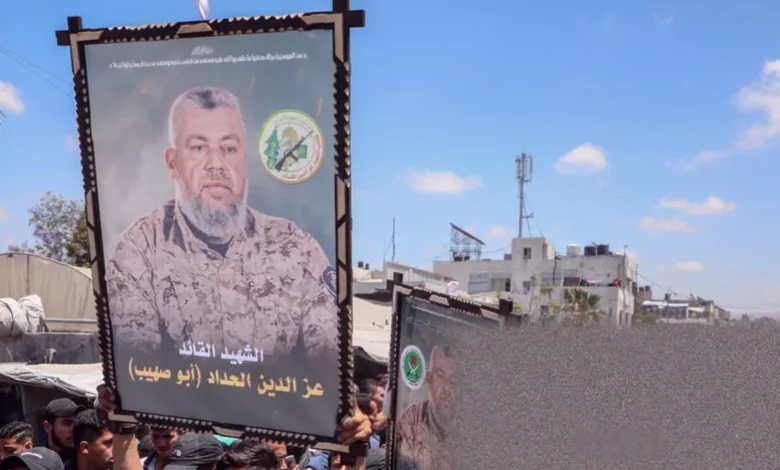
Israel also announced on Saturday that it had killed Izz al-Din al-Haddad, the commander of Hamas’s militant wing, in a targeted airstrike in Gaza City on Friday. The Israel Defense Forces described his death as a “significant operational achievement.” Al-Haddad was one of the last surviving senior commanders believed to have planned the 7 October 2023 attack on southern Israel, which killed 1,200 people and ignited the latest Gaza war. Israeli officials described him as an architect of that assault.
The IDF claimed that al-Haddad had surrounded himself with Israeli hostages as a shield against attack. His family confirmed his death, and reports indicate that his wife and daughter were also killed in the strike; his two sons had died earlier in the conflict. Hamas has not issued an official statement, though some reports suggest the group has confirmed his death. A funeral was reportedly held in Gaza City.
The ceasefire between Israel and Hamas, which has held for eight months, remains fragile. Both sides accuse each other of violations. Israel says Hamas has refused to disarm, while Hamas blames Israel for continuing airstrikes and moving the agreed demarcation line westwards into Hamas-controlled areas. The US-backed Board of Peace has warned that Israel is not obligated to uphold its ceasefire commitments if Hamas does not disarm. The refusal to disarm has also stalled reconstruction efforts, with Hamas linking any handover of weapons to Israeli troop withdrawals and the establishment of a Palestinian state.
Iran escalation fears
In a further sign that the region may be on the brink of a return to full-scale war, President Donald Trump has been briefed on military options against Iran, according to reports in the US and Israeli press. The New York Times reported that Trump was presented with a range of options, including a “short and powerful” wave of strikes, as he returned to the United States from a visit to China on Friday. Trump has publicly described the choice as either to “blast the hell out of them” or to “make a deal.” He has yet to make a decision.
The briefing comes amid stalled negotiations between the United States and Iran, which have been mediated by Pakistan. Islamabad brokered a ceasefire in what is being called the “Iran war” more than a month ago, but Pakistani-led mediation has failed to produce diplomatic progress, with the negotiating positions of the two sides still far apart. A US naval blockade of Iranian ports remains in place.
Israel has stressed that the US-Iran truce does not extend to Lebanon. The recent Israeli strikes in southern Lebanon have drawn international condemnation. The UN Secretary-General expressed alarm over the escalating situation and civilian casualties. France, the United Kingdom and the European Union have called for de-escalation and for Lebanon to be included in any ceasefire agreements. Iran itself has warned of a “regret-inducing” response if attacks on Lebanon do not cease.
The conflict between Israel and Hezbollah began in October 2023, following the outbreak of the Gaza war. A major Israeli ground invasion of southern Lebanon took place in October 2024, followed by a US-brokered ceasefire in November 2024. Ceasefire violations have been frequent, with Israel attempting to enforce its terms and prevent Hezbollah from rearming. Israel has also targeted Hezbollah’s civilian institutions — including health centres, financial arms and media outlets — in an apparent effort to weaken the group. The Islamic Health Society, Hezbollah’s healthcare arm, has lost 24 members in recent weeks.
Ceasefire extension and violations
The latest Israeli strikes came hours after envoys from Israel and Lebanon completed a round of talks in Washington, mediated by the US State Department. The two sides agreed to extend a month-long, partly observed ceasefire for a further 45 days. The US described the extension as enabling “further progress” and paving the way for negotiations on a permanent political agreement. The US also proposed the establishment of a security mechanism between the Israeli and Lebanese armies.
Hezbollah, however, denounced the talks from the outset. Israel has only partially observed the earlier ceasefire ordered by President Trump on 17 April, restricting its attacks on Beirut and northern Lebanon while focusing military operations in the south, where its troops have clashed with Hezbollah fighters. The new strikes have further undermined the truce, with both sides accusing each other of violations. The Israeli military claims Hezbollah has been rebuilding its infrastructure and weapons arsenal, while Hezbollah continues to assert its right to respond to what it calls Israeli aggression.