Data alone is insufficient; interpretation is key for public understanding. As two unfolding outbreaks command global attention — a hantavirus episode tied to a cruise ship appearing to peter out and an Ebola outbreak mounting in Africa — the familiar artifacts of the Covid era have resurfaced: dashboards, trackers, maps, risk estimates, and a polarised mix of alarming and dismissive takes. Once again, we can watch disease spread in almost real time. Yet despite all the information, many people are left asking the same questions: what can I trust? How bad is this, really? What should I do?
Current outbreaks and the information deluge
In April and May 2026, a deadly outbreak of Andes virus, a type of hantavirus, occurred among passengers and crew of the M/V Hondius cruise ship in the Atlantic Ocean. The Andes virus is the only hantavirus known to occasionally transmit from person to person, typically through close contact. The US Centers for Disease Control and Prevention (CDC) confirmed that 18 US passengers repatriated from the ship were monitored, with some remaining in quarantine at the University of Nebraska Medical Center. As of early June, no cases of Andes virus had been confirmed in the United States as a result of the outbreak, and the CDC assessed the risk to the American public and travellers as extremely low.
Meanwhile, an Ebola outbreak of the rare Bundibugyo strain in the Democratic Republic of Congo had resulted in at least 63 deaths among 397 confirmed cases by early June 2026. The response has been complicated by skepticism, attacks on health workers, and widespread misinformation. Radio stations such as Radio Télévision Mont Bleu in Bunia are playing a crucial role in combating rumours and restoring trust by providing daily awareness programmes and answering questions from the public. The US government, through partners like FHI 360, is engaging local leaders and using radio spots in local languages to enhance awareness, dispel false rumours, and build trust in Ebola treatment centres.
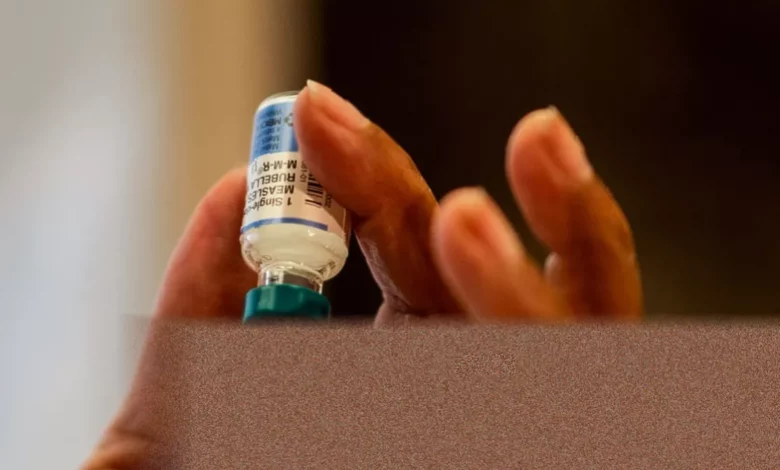
Separately, persistent measles outbreaks are occurring across parts of the United States and the world. The CDC recorded 58 confirmed cases across 17 US jurisdictions in 2024, linked to seven outbreaks. From January 2020 to March 2024, 338 US measles cases were reported, with 97 cases in the first quarter of 2024 alone — a significant increase. By June 5 2026, 2,073 confirmed measles cases had been reported across 40 US jurisdictions. The US had eliminated measles in 2000 due to high vaccination rates, but outbreaks have resurged because of vaccine hesitancy and declining vaccination coverage in some communities. The MMR vaccine remains highly effective, with two doses providing about 97% protection against measles.
Yet alongside these real-world developments, a parallel crisis is unfolding in the information environment. Social media platforms and AI-generated summaries now carry the bulk of public health messaging, often stripping numbers of context and recirculating them as certainty.
Here’s my explainer on log scales: https://t.co/yKtpVgTDad
— John Burn-Murdoch (@jburnmurdoch) March 14, 2020
Lessons from past crises: the erosion of interpretive infrastructure
Rewind to 2014, when the last major Ebola outbreak dominated headlines. Most people encountered that crisis through journalists and public health officials who helped interpret complex information, acknowledged caveats, and connected relative risks to appropriate actions. By 2020, those supports were already weakening. The Covid-19 pandemic turned millions of people into direct consumers of data dashboards, statistical models, and risk calculations. The Johns Hopkins dashboard alone received billions of data requests a day. At the same time, social media became a machine for stripping numbers of context and recirculating them as certainty. We had never had more access to information, or less help making sense of it.
Since then, the interpretive infrastructure has only continued to fragment and collapse. Deep cuts at the CDC, the Department of Health and Human Services, and the National Institutes of Health, plus the dismantling of USAID and the US withdrawal from the World Health Organization (WHO), have undermined systems that track and respond to infectious disease. Less discussed is the parallel gutting of communication capacity within those organisations. The US newspaper industry has lost more than three-quarters of its jobs in the past two decades — employment declined by 77% — with nearly 3,500 newspapers and over 270,000 journalism jobs disappearing between 2005 and 2025, creating vast “news deserts”. By 2024, newspaper industry employment stood at around 91,550, the lowest on record.
As traditional channels have eroded, people have grown more reliant on rapid, context-thin streams of information from social media feeds and AI-generated summaries. Social media rewards certainty, not nuance. AI summaries may omit the very caveats that determine whether a statistic is meaningful or misleading. This problem runs deeper than conspiracy theories, although a vacuum of trustworthy information does give misinformation room to spread.
The consequences are visible in how data is framed and misunderstood. During Covid, some messengers cited data showing higher death rates among vaccinated people than unvaccinated people, obscuring the fact that older adults were both more likely to be vaccinated and more likely to die. The relationship reversed once the data was broken down by age. Early hantavirus statistics carry a similar blind spot: commonly cited death rates of 30% to 40% may overstate the true risk since milder infections may go undiagnosed and shrink the denominator. The WHO’s initial January 2020 tweet that preliminary investigations found “no clear evidence of human-to-human transmission” of Covid lacked the caveats present in fuller statements where the WHO acknowledged transmission was possible. When a CDC official described a US cruise passenger as testing “mildly positive” for hantavirus, the phrase muddled the distinction between test result and disease severity — as one Facebook commenter put it, “Is mildly positive like saying kinda pregnant?” The test was simply inconclusive.
Technical terms mislead by triggering wrong associations. The WHO’s declaration of the current Ebola outbreak as a “public health emergency of international concern” (PHEIC) prompted headlines suggesting global danger, when the designation is actually a mechanism for mobilising resources and coordination. A sharp drop in official Ebola case counts in early June 2026 looked like good news but actually reflected a definitional shift from suspected to confirmed cases; confirmed counts have since continued to rise. The same dynamic affects geographic data: a region may hit the vaccination threshold for herd immunity on paper while unprotected pockets within it let the virus spread, yet this nuance rarely reaches the public, leaving people with a false sense of security.
The most trusted Covid data dashboards specified “confirmed cases” and “confirmed deaths”, provided both absolute and relative case counts, explained methodologies, and annotated anomalies. But even the best dashboards couldn’t control what happened next: a figure carrying caveats could lose them the moment it hit a social feed.
Preliminary investigations conducted by the Chinese authorities have found no clear evidence of human-to-human transmission of the novel #coronavirus (2019-nCoV) identified in #Wuhan, #China🇨🇳. pic.twitter.com/Fnl5P877VG
— World Health Organization (WHO) (@WHO) January 14, 2020
Rebuilding the systems that help us understand
Good risk communication helps people understand what actions are proportionate to their actual risk — whether that means getting vaccinated, monitoring symptoms, avoiding close contact, or resisting the urge to panic. Covid showed what happens when officials translate uncertainty into rules without clear reasoning. In February 2020, the US surgeon general tweeted: “Seriously people – STOP BUYING MASKS!” stating they were not effective. Two months later, when the CDC recommended face coverings, people were less willing to trust the message. Officials also marked out six-foot intervals with precision, closed beaches and trails without always distinguishing risks of crowded gatherings versus solitary outdoor time, and urged intensive surface cleaning after shared indoor air appeared to be the greater threat.
The hantavirus response included mixed messages: even as officials maintained the virus required prolonged close contact to spread, passengers from the same cruise ship faced strikingly different protocols — some placed in quarantine, others asked to self-isolate at home. The divergent reactions reflected genuine uncertainty about whether the Andes strain could spread across a room and whether people are infectious before symptoms appear, but that uncertainty was rarely communicated explicitly, leaving people to draw their own conclusions from seemingly arbitrary rules. Inconsistency can look like incompetence and invite distrust. Research from Covid and earlier outbreaks linked greater trust in public institutions, medical experts, and media with greater adherence to public health guidance and lower anxiety.
Investing in original reporting is a necessary foundation. As New York Times publisher AG Sulzberger recently argued, AI products rely on journalism; without strong reporting, they will eventually have little of value to synthesize. Communication teams need rebuilding, too. One underappreciated consequence of the US withdrawal from the WHO is that it stepped away from one of the world’s primary efforts to coordinate health messaging and reduced its capacity for everyone. Before ties were cut, the WHO had begun partnering with platforms such as TikTok, leveraging creators from its Fides network to reach wider audiences with digestible video content.
Scientists, doctors, and other trusted voices can also do more to communicate directly with the public. During Covid, researchers used social media to walk people through concepts such as the logarithmic scale and “flattening the curve”. One study found that short videos by doctors and nurses ahead of the winter holidays reduced travel and subsequent Covid infections. Ultimately, it is about meeting people where they are. In the Democratic Republic of Congo, a radio station has dedicated daily programming to answering questions and correcting rumours about Ebola, in hopes of winning over residents who have grown distrustful of authorities.
Measles is a case in point. We have a highly effective vaccine and decades of knowledge about transmission. Yet outbreaks continue because communication and trust determine whether people act on that knowledge. As the US hosts millions of visitors for the 2026 World Cup, amid persistent measles outbreaks around the world, that gap becomes more dangerous. Strong surveillance systems and coordinated responses will not be enough for the next outbreak. We also need to re-establish systems that help people understand what the evidence means — and what to do with it.