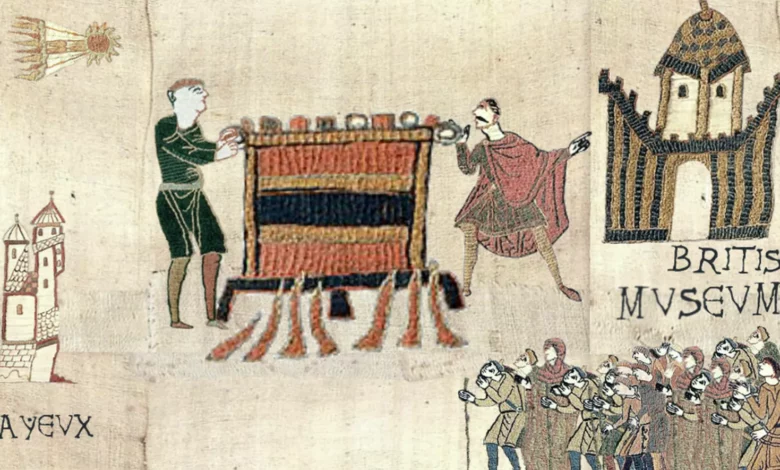
The Bayeux Tapestry will be laid flat for the first time in its recorded history when it goes on display at the British Museum later this year, offering visitors an unprecedented view of the 70-metre embroidered narrative that chronicles the Norman Conquest.
New display method
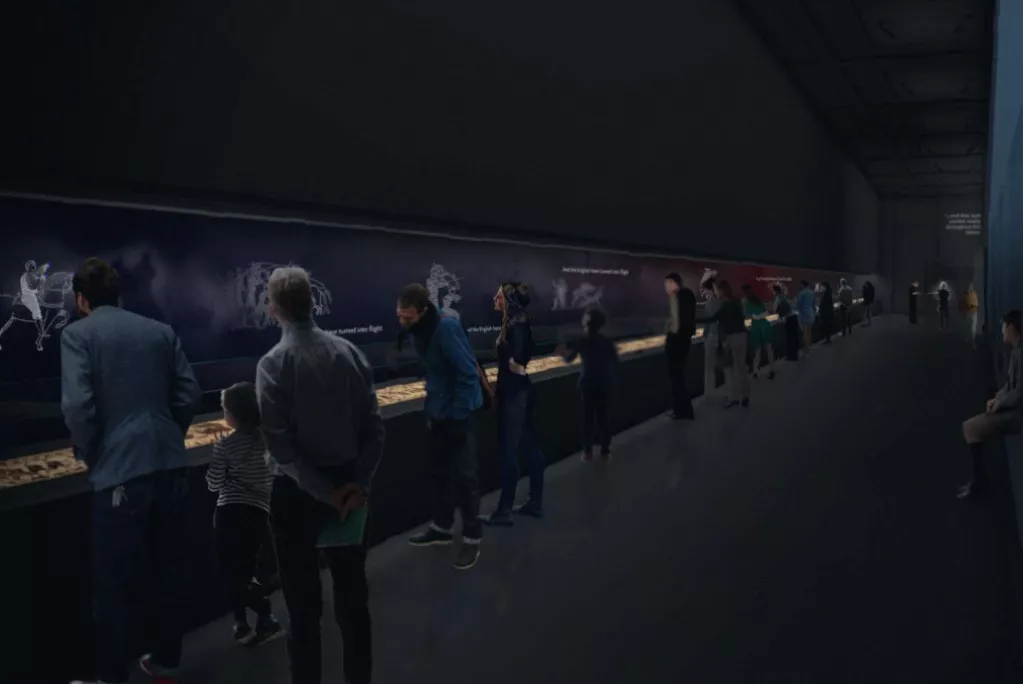
For nearly a millennium the tapestry has been exhibited vertically – most recently in a room where it curved around the display case – but from September it will lie on a long, specially designed table, allowing viewers to see its full expanse at once. The British Museum said the horizontal presentation will enable the installation of digital elements designed to “bring the tapestry to life” and enhance public understanding of the medieval story it tells. Each visit will be a timed 40-minute experience, the museum confirmed.
The tapestry is an embroidered cloth – technically not a woven tapestry – measuring approximately 70 metres (230 feet) by 50 centimetres (20 inches). It depicts events leading up to the Battle of Hastings in 1066 and its aftermath, and is widely believed to have been made in England for a Norman patron, possibly Bishop Odo of Bayeux, William the Conqueror’s half-brother. Its survival over nine centuries is considered remarkable, and it is classified as a historic monument and inscribed on UNESCO’s Memory of the World International Register.
The loan to the UK marks the first time the tapestry has been exhibited in England, the country where it is thought to have been created, and follows a historic agreement between France and the UK announced by Prime Minister Sir Keir Starmer and President Emmanuel Macron. The tapestry is currently undergoing significant conservation in Bayeux because its museum is closed for redevelopment; a new exhibition space, designed by the British architecture practice RSHP, is scheduled to open in 2027. Extensive planning between French and British heritage experts is in place to ensure the fragile fabric’s safety during transport and display, with the UK government allocating up to £800 million to cover potential damages under the loan arrangement.
Contextual objects
To place the tapestry in the wider context of medieval England and the Norman Conquest, the exhibition will draw on objects from the British Museum’s own collection and loans from UK and European institutions.
Among the loans is a charter dating from around 1060, issued during the reign of Edward the Confessor and provided by Hertfordshire Archives and Local Studies. Written in both Latin and Old English, it is witnessed by several individuals who appear in the tapestry: King Edward himself, Queen Edith, Archbishop Stigand, Earl Harold and Harold’s brother Gyrth.
The Bodleian Libraries at the University of Oxford are lending the Junius II manuscript, an illustrated codex created in Canterbury around AD 1000. Scholars believe this manuscript influenced the tapestry’s depictions of clothing, ships and everyday objects.
The South West Heritage Trust and Somerset Council museum collection are contributing the Chew Valley Hoard, the largest coin hoard from the immediate post-Conquest period found in the UK. The hoard comprises more than 2,500 silver pennies – 1,236 from the reign of Harold II and 1,310 from that of William I – and has been assessed at £4.3 million. Buried shortly after the Norman Conquest, possibly during unrest in the south-west, it offers insight into the immediate economic impact of the invasion and the instability that followed.
The London Archive is providing a charter issued by William I to the citizens of London in 1067. Written in Old English, it is the oldest document in the City of London’s archive and is notable for being the earliest known royal or imperial document to guarantee the collective rights of a town’s inhabitants, promising that the new king would uphold the laws and customs of Edward the Confessor.
The exhibition also aims to reflect the transformative impact of the Norman Conquest – a pivotal event that replaced the Anglo-Saxon aristocracy with a Norman elite, restructured the Church, introduced new architectural styles such as motte-and-bailey castles and Romanesque cathedrals, and profoundly altered the English language through the influx of Norman French vocabulary. The “Harrying of the North” in 1069–70, a brutal campaign that devastated the region, is part of the historical context the display will evoke.
Fragments from the underside of the tapestry, taken during the Nazi occupation, were rediscovered in 2023 and returned to Bayeux in 2026, adding a further layer of the object’s own eventful history. A previous plan to loan the tapestry to the UK in 2022 was postponed because of concerns about its condition.
Tickets and access
The exhibition opens on 10th September 2026 and runs until 11th July 2027. Tickets go on sale on 1st July 2026 via the British Museum website, with prices ranging from £25 to £33 depending on the day and time of visit.
Tickets will be released in phases. The initial release in July 2026 will cover visits between September and December 2026. A subsequent release in October 2026 will open dates from January to March 2027, and a third release in January 2027 will cover visits from April to July 2027.
Under-16s will be admitted free of charge when accompanied by an adult, and dedicated times will be set aside each week for school visits.
British Museum membership, available from £82, includes two free visits to the Bayeux Tapestry during its run, with discounts for further visits, as well as free entry to the museum’s other paid exhibitions. Members will also receive priority booking, gaining access two weeks before general sale – from 16th June 2026. The British Museum expects the exhibition to attract over a million visitors, potentially breaking attendance records, with polling indicating strong public support for the UK-France partnership and the historical significance of 1066.