A Florida man is suing multiple law enforcement agencies, claiming police ignored evidence that would have cleared him after faulty AI facial recognition software wrongly identified him as a suspect in an attempted child-luring case.
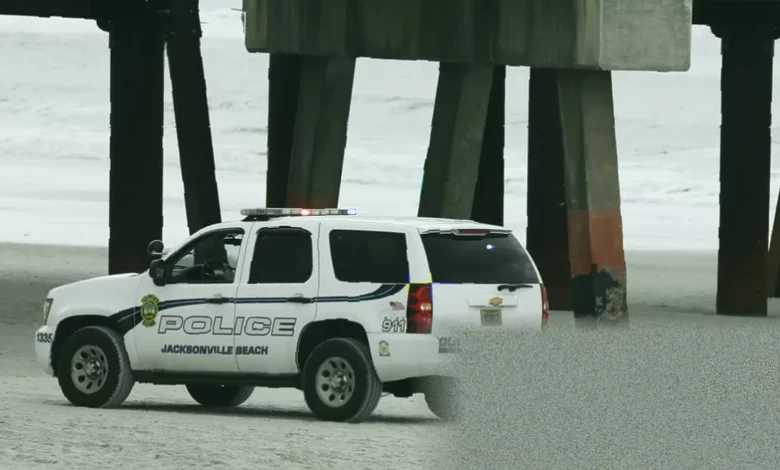
Robert Dillon, 52, from Fort Myers, was arrested at his home in front of his wife last year after the Jacksonville Beach Police Department said an algorithm returned a 93% probability that he was the man seen on security cameras at a McDonald’s in the town attempting to persuade an unaccompanied girl under 12 to leave with him. The charges were dropped months later, and Dillon has now filed a lawsuit against the Jacksonville Beach police, the Jacksonville Sheriff’s Office, and Pinellas County Sheriff Bob Gualtieri, whose agency maintains and operates the Faces (Face Analysis Comparison and Examination) system used in the identification.
The American Civil Liberties Union, which is representing Dillon, said in the lawsuit filed Tuesday in federal district court in Fort Myers that the investigation “resulted in the wrongful arrest and prosecution of an innocent man”.
How the investigation ignored the evidence
According to the court document, the lead investigator, Scott O’Connell of the Jacksonville Beach Police Department, deliberately omitted “multiple categories of readily verifiable exculpatory evidence” from the arrest affidavit. The lawsuit alleges that automated license plate readers showed none of Dillon’s vehicles were ever near the restaurant – a critical fact that was left out of the warrant application.
O’Connell also withheld from the issuing magistrate that the photograph run through the Faces software was not a direct digital upload from the security footage but a low-definition, poor-quality screen grab taken on an officer’s mobile phone. The quality of the image, the lawsuit argues, made any algorithmic match inherently unreliable.
Further, O’Connell did not challenge the assertion of a McDonald’s employee who picked Dillon out from a photo lineup of six similar faces. The employee claimed the suspect was a “regular customer” who had visited the restaurant multiple times in the weeks before the incident. Yet O’Connell knew that Dillon lived more than 300 miles away – a five-hour drive – and had never, according to Dillon, been to Jacksonville Beach in his life. The employee’s claim would have been physically impossible, the lawsuit states.
“Rather than test the machine’s answer against the evidence that would have cleared him, the officers built a case to confirm it,” the lawsuit said.
Dillon told detectives he had never visited Jacksonville Beach. No law enforcement agency has ever apologised or acknowledged the error.
The toll on Dillon and the pattern of failure
The ACLU described the impact on Dillon as devastating. “He was accused of attempting to lure a child, a charge carrying devastating social stigma and permanent reputational destruction,” the lawsuit said. “He was subjected to months of criminal prosecution, and publicly branded with a mugshot that remains accessible online, long after the charges were dropped. He no longer feels comfortable being friendly to children.”
Dillon said he remains traumatised. “Over a year later, I’m still picking up the pieces of my life, all because the police relied on this dangerous technology instead of doing their jobs and actually investigating,” he said in a statement.
His case is alleged to be at least the 15th nationally in which a person has been charged or arrested after a false facial recognition identification, according to the ACLU. The civil rights group has documented a string of similar wrongful arrests, including those of Robert Williams in Detroit in 2020, Nijeer Parks in New Jersey in 2019, Michael Oliver in Detroit in 2019, and Porcha Woodruff in Detroit in 2023.
Earlier this month, a similar case emerged in Jacksonville itself. Jalil Richardson, of Charlotte, North Carolina, said he was extradited to Jacksonville and spent nearly three months in jail after automated facial recognition placed him at the scene of a car theft. Employment timecards showed he was at work 400 miles away when the theft occurred.
A recent investigation into the use of AI facial recognition systems found that oversight was woefully inadequate, with advances in the technology far outpacing authorities’ ability to regulate it. In the UK, biometrics watchdogs have warned that national oversight is lagging and that a “patchwork legal framework” exists. The UK government has launched a public consultation on law enforcement use of biometrics, while the European Union’s AI Act already places restrictions on biometric technologies, including a general ban on live facial recognition in public spaces.
Experts, including Nate Freed Wessler, deputy director of the ACLU’s speech, privacy, and technology project, argue that facial recognition technology alone cannot provide the constitutional probable cause required for an arrest, describing it as “glitchy” and “so unreliable”. The ACLU has also raised concerns about a lack of transparency regarding the technology’s error rates and data, which can undermine defendants’ due process rights.
Some Florida law enforcement agencies have policies stating that the Faces system is an investigative tool only and that any law enforcement action must be based on an officer’s own identity determination, not solely on the system’s results. However, the details of Dillon’s case suggest those policies were not followed.
Dillon’s lawsuit names O’Connell as having specifically failed to act on evidence that contradicted the AI match. Records show a Scott O’Connell resigned from the St. Johns County Sheriff’s Office in 2017 after an arrest for battery, though the lawsuit does not mention this.
“These Florida police departments owe it to Mr Dillon to make amends and to take serious steps to make sure this doesn’t happen to anyone else,” Wessler said. “Police across the country are on notice: Unreliable face recognition technology is hurting people, and we will keep fighting to hold them accountable for these abuses.”
Dillon, meanwhile, said he remained traumatised by his experience. “Florida police must implement safeguards and ensure this never happens to anyone else, because until they do, nobody is safe.”