The United States is making access to lifesaving global health aid contingent on bilateral agreements that “jeopardise human rights” and could force recipient countries to allow abortion surveillance and hand over patient data without consent, Human Rights Watch has warned.
In a newly released report, the rights group alleges that seven African nations — Ethiopia, Kenya, Mozambique, Nigeria, Rwanda, Liberia and Uganda — are being pushed to accept terms that give Washington broad powers to monitor health systems, conduct unannounced facility inspections and claim extractive rights to pathogen samples for pharmaceutical development. “Governments negotiating health assistance agreements with the United States face difficult choices,” said Julia Bleckner, senior HRW health researcher. “They should be wary of terms asking them to sign away their populations’ rights and push for the inclusion of civil society representatives and multilateral global health organisations like the Global Fund in deliberations.”
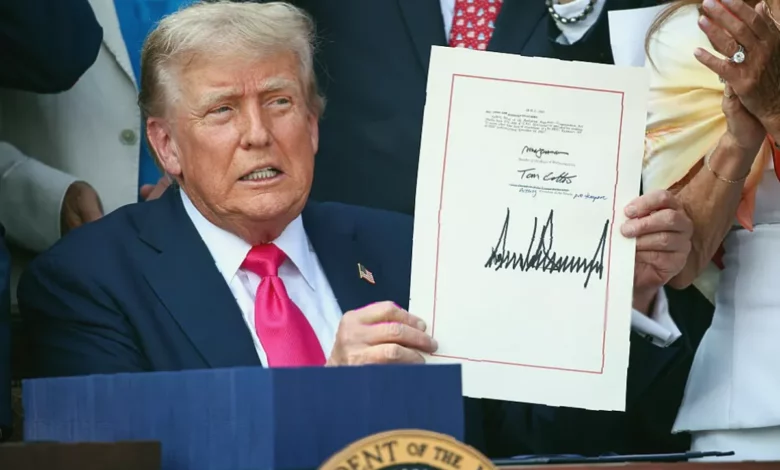
The agreements, known as Memoranda of Understanding (MOUs), are part of the Trump administration’s “America First” Global Health Strategy, which seeks to transform aid into jointly financed deals. After abruptly dissolving the US Agency for International Development (USAID) in early 2025 — an action that eliminated more than 90 per cent of foreign aid contracts and cut approximately $60 billion in funding — the administration shifted health aid to the State Department and began negotiating directly with governments. The US has now signed MOUs with 31 countries overall, including 14 African nations in December 2025, totalling over $20 billion. However, the US government has not publicly disclosed the full details of these agreements; those that have emerged were either briefly posted to the State Department’s Freedom of Information Act Library or leaked.
The human rights implications of the terms are stark. The MOUs require signatory countries to grant the US surveillance access to their health systems, enabling Washington to monitor compliance with the Helms Amendment, a US law that effectively bans foreign assistance funding from supporting abortion services. HRW warns that this could lead to expanded surveillance of healthcare facilities and pressure on governments over reproductive health services, as well as undermining patient privacy. Some agreements allow unannounced inspections of health facilities to verify compliance. Beyond abortion-related oversight, the deals grant the US extractive rights to pathogen samples and associated data for pharmaceutical research and development. Critics, including HRW and several African governments, have raised concerns that this data could be shared with US pharmaceutical companies without patient consent, and that countries providing the “raw materials for scientific discovery” have no guarantee of access to any resulting diagnostics, vaccines or treatments. Zimbabwe explicitly rejected US terms over this demand, stating it would not hand over pathogen data without assurance that end products would be accessible to its people. Ghana also rejected its health agreement due to data-sharing terms, and Kenya’s High Court halted its MOU after challenges concerning US access to patient data and pathogen information. In another controversial case, leaked documents suggest the US linked a $1 billion health package for Zambia to access to the country’s minerals, with the US stating it would “only secure our priorities by demonstrating willingness to publicly take support away from Zambia on a massive scale”. Zambia has until April 30 to decide.
Some countries have accepted the terms despite the trade-offs. Mozambique signed a five-year, $1.8 billion agreement for HIV and malaria programmes that requires increased domestic health spending, though it represents a significant reduction from previous annual aid. Ethiopia, which saw more than $800 million in health aid cuts, agreed to a deal in which the US will invest $1.016 billion while Ethiopia contributes $450 million for various health programmes. HRW notes that the MOUs often involve volatile co-financing expectations that can disrupt program continuity, placing a greater financial burden on already strained health systems.
The broader impact of the aid cuts — both from the US and from other western nations, including the UK — has been devastating. The sudden withdrawal of funding shuttered health programmes, disrupted vaccination and disease-monitoring efforts, caused medicine shortages and forced HIV clinics to scale back services. Experts say the collapse of the rapid-response infrastructure that helped contain previous outbreaks has directly hampered the response to the first major Ebola outbreak since the cuts. As of early June 2026, the Democratic Republic of Congo has reported 515 confirmed cases and 91 deaths across three provinces, with Uganda recording 19 confirmed cases and two deaths. The outbreak is caused by the Bundibugyo virus, a rare form with no approved treatment or vaccines. Analysis by the US Centres for Disease Control has warned it could match the worst outbreak in history, which killed 11,000 people in west Africa between 2014 and 2016. UK development minister Jenny Chapman admitted this week that the response to the rapidly spreading outbreak had been undermined by foreign aid cuts. “But I would say we’re still spending just short of £10 billion on international development each year,” Baroness Chapman told the BBC World Service during a trip to Kinshasa. “What we have to do is make sure we spend that really well.”
The cuts have also been linked to a significant increase in violence across several African nations, and a peer-reviewed study in The Lancet estimates that nearly 23 million additional deaths could occur by 2030 as a result of the global pullback on aid — including 5.4 million children under the age of five. Another study in The Lancet Global Health projects over 14 million additional deaths by 2030 if current funding cuts persist, with 4.5 million of those among young children. The State Department has been contacted for comment. A spokesperson previously told The Independent that the department is focused on implementing “lifesaving care in global health priority areas, including HIV/AIDS, tuberculosis, malaria, and maternal and child health – including through new, landmark bilateral global health Memoranda of Understanding.”