Full reopening of Strait of Hormuz may take weeks, shipping firms caution, contrary to Trump claims

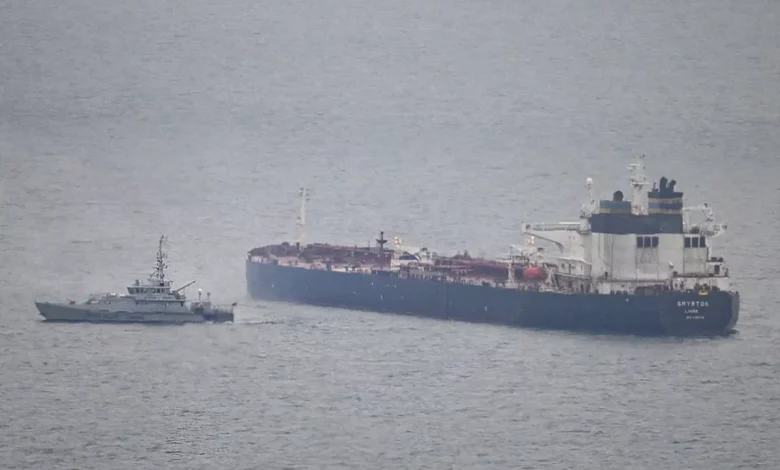
Shipping will take weeks to resume through the Strait of Hormuz as the world’s largest tanker company warns that a political deal must be “material” before vessels return to the waterway. Jotaro Tamura, chief executive of Mitsui O.S.K. Lines, told the Financial Times that while an agreement between Washington and Tehran to end the Middle East war has been announced, the practical conditions on the ground are far from settled. “Given the experiences in the last couple of months, I think it’s reasonable to assume that it may take at least a couple of weeks or if not a month,” he said, adding that shipping lines need to “make themselves comfortable” before transiting the narrow chokepoint. Many vessels will wait for tangible signs of security, he stressed, rather than relying solely on diplomatic statements.
US president’s optimistic timeline
Donald Trump, the US president, has struck a markedly different note. In a post on his Truth Social platform, he declared that the Strait of Hormuz would be “completely open” by Friday, 19 June, and claimed that ships loaded with oil are already moving out along a “Southern ‘Highway’” which he described as “totally safe, secure, and pristine”. Trump later clarified that the reopening would coincide with the formal signing of the memorandum of understanding between the US and Iran, scheduled for 19 June in Switzerland. The deal also includes a 60-day extension of the existing ceasefire, the lifting of the US naval blockade on Iranian ports, and the initiation of negotiations on Iran’s nuclear programme, specifically its stockpile of highly enriched uranium. On the issue of passage fees, Trump insisted the arrangement involved a “toll free opening”, but there has been no confirmation from Iran. Tehran has instead announced its intention to impose “fees” for specific services provided in the strait, though the nature of those services remains unclear. International maritime law experts have questioned the legality of any such charges, and paying fees to entities designated as terrorist organisations by the US and EU could expose shippers and banks to sanctions.
Analysts and the operational reality
Analysts broadly agree with the tanker CEO’s assessment. Morgan Stanley told clients: “From here, it likely takes several weeks for tanker flow to be restored.” Even as the price of oil dropped sharply on Monday — Brent crude had peaked at over $120 a barrel during the crisis — the practical barriers to a swift resumption are significant. Before the conflict a fifth of the world’s crude oil passed through the Strait of Hormuz every day, but hundreds of ships are now stranded in the Persian Gulf. Maritime and energy intelligence firm Kpler estimates that some 500 commercial vessels remain in the Gulf, of which around 250 are tankers. They cannot all exit the narrow waterway at once, and it will take time for Gulf oil producers that throttled back production to ramp up again. Analysts also say ship captains will take their time deciding whether passage is safe and whether the threat of attack from Iran has truly receded.
“Operationally, the sector is not rushing back,” wrote Richard Meade, editor-in-chief of shipping data and analysis company Lloyd’s List, noting that many warn mine clearance and a return to the use of internationally recognised transit lanes “are prerequisites for safe navigation”. The threat of naval mines laid by Iran remains the most acute concern. The Pentagon has previously estimated that clearing the strait of mines could take up to six months, while security firms suggest mine-clearing operations could take 40 to 50 days before insurance companies and shipping lines are confident enough to sail. Other navigational hazards include GPS jamming and spoofing, AIS anomalies, and limited salvage resources. The International Maritime Organization is assessing the feasibility of safe passage for the stranded vessels, and shipping industry groups — including BIMCO, INTERTANKO, the International Chamber of Shipping and the International Transport Workers’ Federation — have called for credible assurances from both sides of the conflict.
In recent months, a trickle of ships has been leaving the Persian Gulf through an Iranian-run vetting lane in the north of the strait, while others have slipped out with lights and location systems turned off under US forces’ guidance using a southern passage along the coast of Oman. However, Iran had threatened to attack any vessel using the internationally established mid-strait transit lanes — a UN-recognised Traffic Separation Scheme consisting of two two-mile-wide shipping lanes separated by a two-mile buffer zone. These lanes normally keep inbound and outbound traffic safely apart, but they remain effectively closed. Iran has demanded recognition of its sovereignty over the strait and the right to collect revenue from ships using it, and in some cases has already exacted payment to let vessels depart. Until these issues are resolved in a way that shipping lines consider “material”, the normalisation of traffic will be gradual at best. Experts and industry bodies anticipate a cautious, phased return rather than an immediate surge, with vessel behaviour likely to remain conservative until safe-passage procedures are proven. Oil exports from the Gulf may not reach pre-crisis levels until 2027, and the disruption — described as the largest supply disruption in the history of the global oil market — has already caused inflation, currency volatility and fears of stagflation in economies heavily dependent on Middle Eastern energy, such as India.