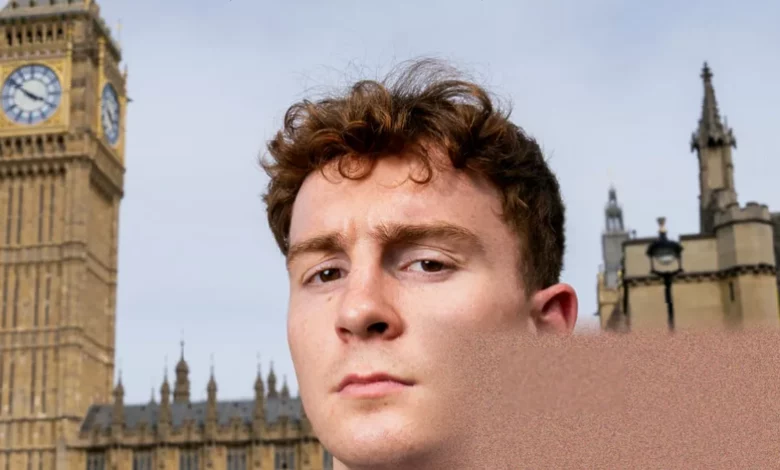
Champion swimmer Archie Goodburn is taking his fight for better brain cancer support from the pool to Parliament, demanding that the government close what he calls a “translational gap” that leaves promising research stranded before it can reach patients. The 24-year-old, who has a rare, inoperable form of the disease, is urging ministers to release the remaining funds from a £40 million pledge made in 2018, to appoint a named brain cancer lead, and to give patients the “right to try” potentially life-saving treatments. His campaign, run with the patient-led group Brain Cancer Justice, has already gathered enough signatures to trigger a Westminster Hall debate, which he will watch from the viewing room on Monday.
Goodburn’s diagnosis came as a devastating blow just months after he missed qualifying for the Paris Olympics by a few tenths of a second in April 2024. He had been experiencing strange episodes during training: a loss of strength, numbness on his left flank, and a deep feeling of fear and nausea. “I felt like my consciousness was being pulled away from me,” he said. Scans revealed three oligodendrogliomas, rare tumours that make up about 3% of all brain cancer diagnoses. The standard treatment for his cancer is radiotherapy and chemotherapy, which would have begun in July last year, impairing his cognitive ability and interrupting both his swimming career and his chemical engineering degree.
A breakthrough drug, Vorasidenib, gave him a reprieve. The drug works by inhibiting mutated IDH1 and IDH2 enzymes that drive tumour growth in certain low-grade gliomas. Clinical trials, including the pivotal INDIGO study, showed it more than doubled the time to tumour progression, allowing patients to delay the need for the more intensive treatments. Goodburn accessed it through an expanded access programme, and the drug has since been provisionally recommended by the National Institute for Health and Care Excellence (Nice) for use on the NHS in England and Wales. That decision was only reached after a campaign by the brain cancer community, including Goodburn, overturned Nice’s initial recommendation not to fund it.
The drug has already changed his life. Shortly after starting Vorasidenib, Goodburn broke the Scottish record in the 50m breaststroke, the event he will compete in at the Commonwealth Games in Glasgow next month. “There’s that much space for change. Change is so possible,” he said. But he is acutely aware that the new treatment is only a stopgap. “Vorasidenib only bought me four years, according to the trials. I need more. And I’m not going to stop [campaigning] until my last breath,” he said.
The funding gap that becomes a ‘valley of death’
Goodburn’s case highlights a systemic failure in UK brain cancer research funding. Brain cancer is the biggest cancer killer for children and adults under 40, yet since 2002 it has received just 1% of the government’s national cancer research budget. The problem, Goodburn argues, is not a shortage of scientific discoveries, but the difficulty of turning them into clinical trials that patients can access. This is known as the “translational gap.” The all-party parliamentary group on brain tumours has called it the “valley of death” for patients, blaming a siloed, risk-averse funding system for a disease that is particularly complex to study.
Even when money is pledged, regulation and bureaucracy can block its use. In 2018, the government promised £40 million over five years for brain tumour research, partly in honour of the late Dame Tessa Jowell. But reports indicate that by early 2023 only £15 million had been awarded, with a portion of that not clearly identifiable as relevant to brain tumours. Goodburn and Brain Cancer Justice are calling for the immediate release of the remaining funds and for the money to reach frontline scientists rather than being lost to administrative overheads.
The issue is not unique to the UK’s public funding bodies. In June 2026, the government announced a £45 million funding boost for brain tumour research, comprising £20 million through the National Institute for Health Research (NIHR) and £25 million from Cancer Research UK, aimed at establishing new centres of excellence. Separately, the NIHR committed £13.7 million in December 2025 to create the NIHR Brain Tumour Research Consortium, involving 48 institutions across the UK to accelerate clinical trials. The Rare Cancers Bill, supported by the government, also aims to improve access to trials through the NHS App. But campaigners argue that these measures will only help if the underlying funding bottlenecks are fixed.
The Department of Health and Social Care, responding to the petition, said it understands that “more needs to be done to boost research into brain tumours” and is “committed to securing patient access to effective and innovative new medicines.” Goodburn is unconvinced. “I campaign, if I’m being completely honest, because of the disparity in care, the lack of funding, but also because I believe that my campaigning can actually make a difference to my own future,” he said. “In some ways, it’s a treatment of its own.”
Alongside the call for faster fund release, Goodburn and the campaigners are demanding that every brain cancer patient be offered genomic sequencing at diagnosis, which would expand their access to suitable clinical trials. They also want the “right to try” legislation that would allow patients to access potentially life-saving treatments that have not yet completed the full approval process. For Goodburn, who watched the 2014 Commonwealth Games as a “wee kid” in Glasgow, the chance to step into the arena in July is a personal triumph. But his most daunting task right now is the parliamentary debate — and the battle to ensure that other patients get the same chance he did.