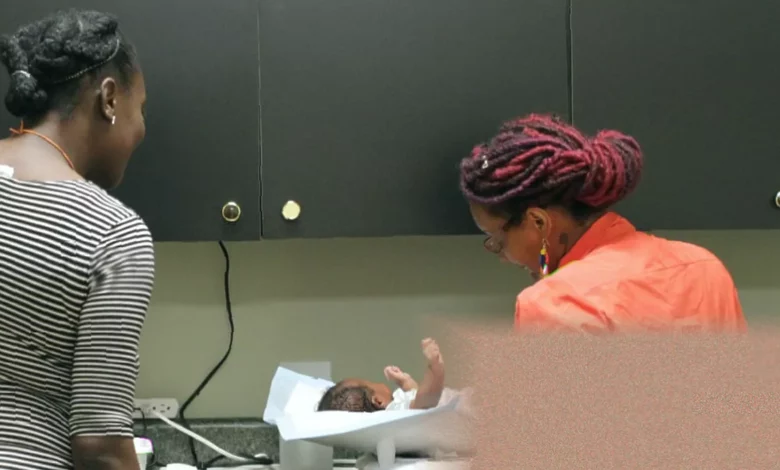
In a direct challenge to one of America’s most restrictive legal frameworks for maternity care, a major lawsuit has been filed against the state of Georgia, seeking to dismantle laws that prevent licensed midwives from practicing and which advocates say deepen a severe maternal health crisis.
The case, filed by the Center for Reproductive Rights on 2 April 2026 on behalf of three midwives, targets two core components of Georgia’s regime. First, it challenges the criminalisation of all midwives who are not also licensed nurses, such as Certified Professional Midwives (CPMs). Second, it contests the requirement that even the state’s authorised Certified Nurse-Midwives (CNMs) must operate under costly, formal written agreements with physicians—a rule many say is prohibitive.
The Plaintiffs: Practitioners Blocked and Forced Out
The plaintiffs embody the law’s consequences. Tamara Taitt, a nationally accredited midwife and executive director of the Atlanta Birth Center, is legally barred from providing clinical care to the very clients at her own facility. “I could be helping to meet the urgent gaps in maternity care, including for clients at our own birth center,” she said. Instead, under Georgia law, performing routine tasks like prenatal checks or delivering babies could lead to fines of up to $1,000 or imprisonment.
For Sarah Stokely, a Certified Nurse-Midwife living in Georgia, the physician oversight rule made practising in her home state untenable. She estimates the required collaborative “nurse protocol agreements” can cost $500 to $1,000 per month. “It’s just not feasible to have a practice here,” she said, and now commutes over four hours to work in Tennessee. Meanwhile, fellow plaintiff Jamarah Amani, a direct-entry midwife who works primarily with Black families, was driven to leave Georgia for Florida, a state with a licensure pathway for midwives like her. “I am bringing this lawsuit for every Georgian who has called asking me to be their midwife and who I’ve had to turn down,” Amani stated.
A Crisis Compounded by Restriction
The lawsuit lands amid a stark maternal health emergency in Georgia. The state’s maternal mortality rate is among the worst in the nation. Between 2020 and 2022, it stood at 37.9 deaths per 100,000 live births, and in 2021 it reached a staggering 66.3. This crisis disproportionately claims the lives of Black women, who in Georgia are more than twice as likely to die from pregnancy-related causes than white women. Experts believe over half of these deaths are preventable.
Access to care is critically limited. Over one-third of Georgia’s counties are classified as “maternity care deserts,” lacking obstetric providers or birthing facilities. Since 1994, more than 40 labour and delivery units have closed, and as of early 2026, only three freestanding birth centres remained in the state. Against this backdrop, advocates argue the state is actively blocking a ready workforce. “Georgia is choosing to leave a skilled, committed workforce on the sidelines even as communities struggle to access care,” said Taitt.
Angela Aina, executive director of the Black Mamas Matter Alliance, connects the legal restrictions directly to the racial disparity in outcomes. “In the face of that reality, the state of Georgia is not expanding access to care,” Aina said. “It is actively blocking trained, qualified midwives from practicing.”
Roots in Control, Not Safety
The current laws have deep historical roots in the systematic exclusion of traditional and Black midwives. A century ago, an estimated 9,000 traditional midwives served families across Georgia. In the early 20th century, white progressive reformers, deeming them “unsanitary and superstitious,” began a push for stringent regulation.
This effort was accelerated by the federal Sheppard-Towner Act of 1921, which tied funding to stricter licensing and training mandates. The regulations, often enforced through classes taught by nurses with less experience than the midwives themselves, disproportionately affected Black practitioners in the South. Within two decades, the number of midwives in Georgia plummeted to just 2,000. “Black midwives are the original maternity care providers in this country,” said Aina. “They sustained entire communities, and they were systematically excluded through regulations that were never about safety. They were about control.”
While neighbouring states like Florida and Tennessee have since created licensure pathways for direct-entry midwives, Georgia has maintained its restrictive stance. Legislative efforts to change the law have repeatedly failed, including HB520, a bill that would have largely decriminalised midwifery, which stalled on the same day the lawsuit was filed.
Broader Battles and a Global View
Georgia’s case is part of a wider national conflict over the scope of midwifery practice. Organisations like the American Medical Association strongly oppose expanding non-physicians’ scope of practice, and the American College of Obstetricians and Gynecologists does not support care by midwives not certified by the American Midwifery Certification Board. Similar legal battles are playing out elsewhere: in Mississippi, a lawsuit challenges physician collaboration rules; in Alabama, a case targets regulations treating birth centres as hospitals; and in Hawaii, a settlement was reached after a challenge to restrictions on Indigenous midwives framed as “medical colonialism.”
Globally, however, the World Health Organization urges countries to expand midwifery care, estimating universal access could prevent over 60% of maternal and newborn deaths. The legal action in Georgia argues the state’s scheme violates constitutional rights, including the right to pursue a profession and equal protection, by treating midwives differently from comparable providers without a safety-based rationale.
For now, unlicensed community midwives like Sekesa Berry continue to operate in a precarious grey area, rarely facing criminal charges but receiving cease-and-desist orders from the Georgia Board of Nursing. Berry, who mostly serves Black women, says her clients are driven by fear. “My most common phone call, specifically since the pandemic, is: ‘I don’t want to die,'” she said, referencing the maternal mortality crisis and fear of unnecessary medical intervention.
The state has 30 days to respond to the suit. Its outcome will determine whether Georgia remains an outlier, continuing to criminalise and restrict a profession that many see as a vital part of the solution to its profound maternal health failure.