Goods from Israeli settlements in occupied Palestine sold to Europe labelled Israeli, probe finds

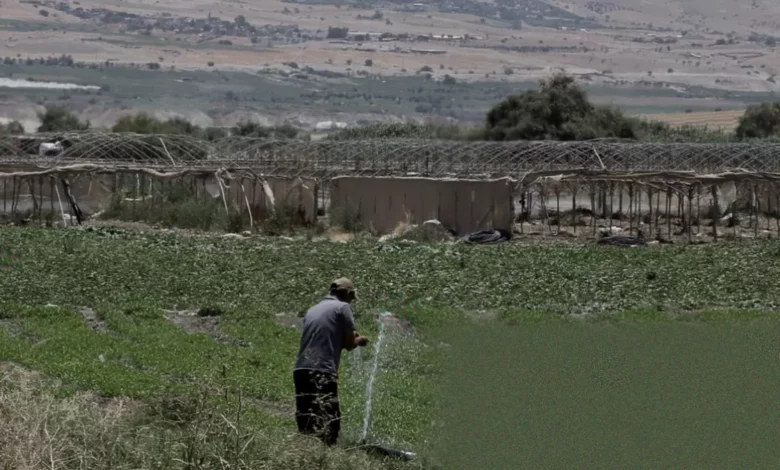
Israeli exporters are illegally mislabelling agricultural produce grown in occupied Palestine and the Syrian Golan Heights as Israeli-grown in order to claim unfair tax advantages in European markets, a rights group investigation has found. The practice, which legal non-profit Global Echo describes as systematic and deliberate, allows settlement goods to enter the UK and EU at reduced tariffs, effectively funnelling European tax revenue into an unlawful territorial regime.
Global Echo analysed more than 30,000 export documents covering thousands of Israeli shipments to the UK and EU over an eight-year period between October 2017 and February 2026. Its report, Importing Occupation, found that one in six shipments contained agricultural products originating from illegal settlements in the occupied West Bank and the Golan Heights. Among consignments destined for EU member states, the figure rose to nearly 20 per cent. At least 42 per cent of those settlement products had been mislabelled as Israeli-grown. The shipments examined, which represent a fraction of Israel’s total agricultural trade with Europe, contained €13 million (£11.2 million) worth of mislabelled settlement goods.
“This isn’t an aberration and it’s not accidental,” said Emily Schaeffer Omer-Man, executive director of Global Echo. “This is a system that the UK and the EU have perpetuated and agreed to.”
How Israeli exporters hide settlement origin
The investigation identified three principal methods used to conceal the true origin of produce from occupied territory. The first, described as “hiding in plain sight”, involves producers giving an accurate settlement address and postcode while listing the goods as Israeli-grown. This practice is permitted under a 2005 technical agreement between Israel and the EU, and is encouraged in guidance from the Israeli tax authority – even though that same guidance acknowledges that settlement products are not eligible for lower tariffs. The arrangement places the burden of detecting and correctly taxing goods from occupied territory squarely on EU and UK border officials.
The other two approaches involve outright fraud, despite having been publicly detailed by Israeli businessmen during a 2015 Knesset session. Settlement firms either provide a “sham address” that falsely indicates production inside Israel’s internationally recognised borders, or they “mingle” settlement goods with Israeli-grown products – often in cooling or packing facilities – and label the entire consignment as “grown in Israel”.
“Together, these practices undermine the effective application of EU trade and policy rules by systematically obscuring territorial origin,” Global Echo said in its 400-page report. European customs authorities also routinely accepted invalid Israeli-issued organic and plant health certificates for settlement products, even though only Palestinian or Syrian authorities are legally entitled to certify produce grown in occupied territory.
The EU’s role in perpetuating the system
Europe is Israel’s largest market, with the EU accounting for almost 30 per cent of Israeli exports. Total trade in goods between the EU and Israel reached €43.3 billion in 2025. A free trade agreement signed in 1995 reduced tariffs for Israeli imports, but products from settlements do not qualify because Israel’s military occupation of Palestinian and Syrian territory is illegal under international law. A “technical arrangement” between the EU and Israel, in place since 2004, was designed to differentiate between goods from Israel proper and those from settlements, but Global Echo’s findings demonstrate that the system has failed. The European Court of Justice ruled in 2010 that member states could refuse preferential treatment to settlement products and were not bound by Israeli proofs of origin if insufficient evidence existed, yet settlement goods have continued to enter European markets under false Israeli labels.
מוחקים את הקו הירוק ע״י חיזוק החקלאות ביהודה ושומרון.
החוות החקלאיות ביהודה ושומרון – יעד אסטרטגי בשמירת קרקע ומניעת השתלטות.
במשך שנים רבות התייחסו לחקלאות ביהודה ושומרון כאל “דרג ב’”, והחקלאים באזור סבלו מאפליה מתמשכת. הממשלה בראשותנו מתקנת עוול היסטורי ומחזקת את החקלאות כחלק… pic.twitter.com/lNbMcdzfEg
— בצלאל סמוטריץ' (@bezalelsm) December 29, 2024
The EU has never used its vast economic leverage to “attach meaningful consequences to that illegality”, according to Michael Lynk, a professor emeritus at Canada’s Western University and former UN special rapporteur for human rights in the occupied Palestinian territories, who wrote the introduction to the Global Echo report. “European trade continues to contribute materially to an unlawful territorial regime, in direct tension with EU law,” the report stated. Lynk described the findings as exposing a “gap between European principle and conduct”.
Even when Europe does apply its own trade rules, the impact on the settlement economy is blunted by Israeli government subsidies. When exporters of produce from occupied territories are barred from claiming preferential tariffs, they can receive compensation from a secretive fund, rendering European tariffs “practically meaningless”, Global Echo said. Israel provides extensive subsidies for water, transport and other inputs that underpin the economic viability of many settlements. Finance Minister Bezalel Smotrich posted on X in 2024: “We are erasing the Green Line through agriculture in Judea and Samaria [the occupied West Bank].” The Green Line is the 1949 armistice boundary, once seen as a potential template for Israel’s border with a future Palestinian state.
International law and the impact on Palestinian farmers
Decades of EU policy have deemed Israeli settlements illegal, a position reinforced by the International Court of Justice’s July 2024 ruling that Israel should end its occupation of Palestine “as rapidly as possible”. The Fourth Geneva Convention prohibits an occupying power from transferring its own civilian population into the territory it occupies; Lynk has stated that the creation of settlements amounts to a war crime under the Rome Statute. Yet no official data on settlement exports is published by either Israel or European countries. The only public figure is an unverified estimate provided by Israel to the World Bank 15 years ago, suggesting that 2.23 per cent of exports to Europe came from settlements – though the settler population in the occupied West Bank has since increased by more than 50 per cent.
The mislabelling of settlement produce is not merely a trade issue; it is directly linked to the dispossession and suffering of Palestinian farmers. Amer Abu Khader, 35, has never set foot on three plots of family land near his home in the north Jordan valley village of Ein al-Beida. Shortly after the 1967 war, Israeli settlers fenced them into a new settlement, Mehola. “We have all the documents proving that it belongs to us,” Khader said, adding that other families had also been robbed by settlers who falsely claimed the land was owned by absentee landlords. One of the Khader family plots is now incorporated into the agricultural holdings of a major Israeli importer that supplies the UK market, according to Global Echo, which cited documents from the company and Israel’s agriculture ministry.
Palestinian farmers face escalating violence, restrictions on movement and theft of water resources, all of which have intensified since the 7 October 2023 Hamas-led attacks. “We sell our produce in Nablus, Qabatiya and Jenin, but reaching those markets is difficult because checkpoints on the roads are frequently closed,” said Mohamed Faiz Daraaq, 53, one of Khader’s neighbours. “The spring near our land, that was an essential resource for our farming, has been taken from us. The settlers turned the area into a recreational site for themselves, with swings, seating areas and other facilities. It has become a place for their tourism and leisure.” Wastewater dumping from settlements onto Palestinian farmlands has also devastated agricultural production and contaminated water sources.
Global Echo is demanding the UK government review its controls on Israeli imports and has promised to take legal action if HMRC does not address verification concerns. The group is also preparing legal proceedings against EU customs authorities, importers and certifiers. Several EU member states, including Spain, Ireland, Belgium and the Netherlands, have announced or are considering bans on imports from illegal settlements; Spain already implemented such a ban in September 2025. More than 90 organisations have urged the EU to suspend its Association Agreement with Israel, and a European Citizens’ Initiative is calling for a ban on trade with settlements. The EU itself is debating the imposition of tariffs on goods from occupied Palestine in an attempt to curb violence and settlement expansion, though there remains little sense of how much trade is at stake.