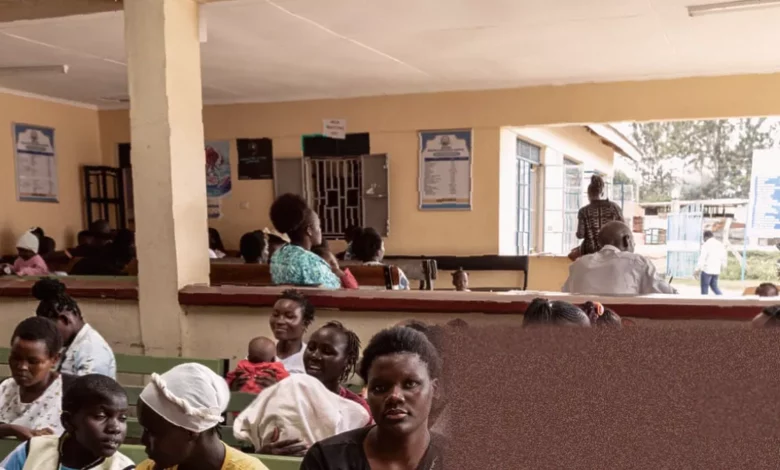
An AI system designed to make healthcare affordable in Kenya is systematically overcharging the poor, an investigation has found. The predictive machine learning algorithm, central to President William Ruto’s flagship health reforms, overestimates the incomes of the poorest households while underestimating those of the wealthiest, according to a months-long audit by Africa Uncensored, in collaboration with Lighthouse Reports and the Guardian. The result is that millions of Kenyans in the informal economy – the day labourers, hawkers and farmers who make up 83% of the workforce – are being charged premiums they cannot afford, despite a government promise that “no Kenyan will be left behind”.
‘People are dying, people are suffering’
Grace Amani*, a government volunteer who registers households for the new Social Health Authority (SHA), says the system is punishing the very people it was supposed to help. Each day she visits homes in Nairobi’s poorest communities, asking intrusive questions – what type of toilet, what roofing material, do they own a radio – and entering the answers into a digital questionnaire. When the form is complete, an algorithm calculates the annual premium. Amani says most families are charged sums that amount to between 10% and 20% of their meagre incomes. She has watched critically ill patients unable to receive treatment because they cannot pay the amount the AI says they should. “People are dying, people are suffering,” she said. On social media, Kenyans have flooded comment sections with accounts of charges they cannot afford. One single mother reported a monthly contribution of 3,500 Kenyan shillings, well beyond her means. “From struggling to pay 500 Kenyan shillings previously to being billed 1,030 Kenyan shillings,” another wrote.
How the algorithm works
The system is built on an older, widely criticised method known as proxy means testing (PMT). Rather than using recent advances in artificial intelligence, such as large language models, it employs a predictive algorithm that estimates household income based on possessions and living conditions: roofing materials, toilet type, livestock ownership, number of children. This approach has been pushed by international donors, notably the World Bank, and deployed in programmes “all over Africa, all over Asia and the Pacific”, said development economist Stephen Kidd. In Kenya, government volunteers like Amani feed these details into an opaque formula that decides how much each household must pay for public health insurance.
The core problem, according to Kidd, is that poverty is fluid and cannot be reliably captured by a handful of proxies. “Using an iron roof or a pit toilet to estimate a family’s wealth is an intrinsically imprecise undertaking,” he said. Studies of similar PMT schemes have shown massive error rates: one targeted programme in Indonesia excluded 82% of the population it aimed to serve; another in Rwanda had an error rate of 90%. In Kenya, the investigative audit found that the SHA system overcharges more than half of poor households, while underestimating the incomes of higher-income ones. For two farmers, the algorithm predicted incomes twice their actual level simply because they had electricity and owned their home. Kidd described the experience for many Kenyans as feeling “like a lottery”, which he said is “not a great way of building trust”.
Flawed by design: warnings ignored
The system’s flaws were not a surprise. David Khaoya, a health economist who advised Kenya’s health ministry, said the government was faced with a deliberate choice: the algorithm could either correctly assess poor households or correctly assess rich ones. The government chose to prioritise the wealthy, because “if you identify a richer person as poor and therefore ask him to pay less, this person will never own up and say, ‘I’m actually supposed to be paying more’.” That decision meant overcharging the poor was accepted as a trade-off.
A report by the international data consultancy IDinsight, shared with the government before the system was implemented in October 2024, had already warned that the SHA mechanism was “inequitable, particularly for low-income households”. It noted that the data used to train the algorithm “over-represents middle-income households and has very few data points from poverty pockets”, and was “out-of-date with the current socioeconomic condition” in Kenya following multiple economic shocks. Despite these findings, the system was deployed.
The consequences have been severe. Of more than 20 million people registered for SHA, only 5 million are regularly paying their premiums. Hospitals are reporting large deficits because promised reimbursements from SHA remain unpaid. An audit revealed that more than 10 billion Kenyan shillings had been lost to fraud and irregular claims within months of the rollout. The Rural and Urban Private Hospitals Association (RUPHA), whose chair Dr Brian Lishenga called the system “a poor tool for identifying poor households” and “a really great tool for helping the government run away from responsibility”, has warned of massive failures in SHA’s digital systems, including system downtime and claims processing problems. Former Deputy President Rigathi Gachagua has repeatedly predicted that “SHA will collapse in another six months”, calling it a potential “landmark corporate failure” and claiming hospitals were owed 90 billion shillings. The system has also faced legal challenges: a court ruled its rollout unconstitutional, citing identified gaps.
Lishenga, who first encountered proxy means testing at a conference of government officials and international donors, is now one of the system’s most vocal critics. “This is an experiment that has failed,” he said. The government, however, has continued to implement the programme despite the evidence that it is systematically overcharging the very people it was designed to help.
*Name has been changed to protect her identity.