SpaceX’s initial employee secures $500m at $4.26bn for post-launch spacecraft relocation infrastructure

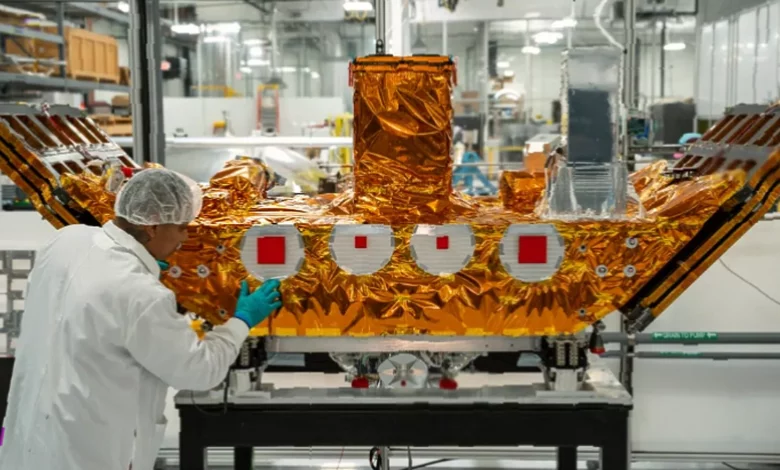
Impulse Space has secured $500 million in a Series D funding round, co-led by 137 Ventures and BANNER VC, valuing the Redondo Beach-based company at $4.26 billion and pushing its total raised past the $1 billion mark.
Funding and background
The round, which arrives just one year after a $300 million Series C led by Linse Capital, underscores sharply accelerating investor conviction in the market for post-launch orbital infrastructure. Returning investors include Founder’s Fund, Lux Capital, and Linse Capital, with BANNER VC joining as a new participant. Founder’s Fund, which led Impulse’s original $20 million seed round in 2022, has backed every subsequent round — a rare signal of sustained insider confidence. 137 Ventures, which has supported SpaceX across roughly two dozen rounds since 2010, recently closed $700 million in new funds and now manages more than $15 billion in assets under management; it also holds stakes in Anduril, Cognition AI, Hadrian, Ramp, and Gusto.
The company was founded in September 2021 by Tom Mueller, SpaceX’s first employee, recruited by Elon Musk in 2002 after Musk found Mueller test-firing a 13,000-pound-thrust engine built in his garage. At SpaceX, Mueller served as chief technology officer of propulsion and led the development of the Merlin — the engine that powers Falcon 9 — as well as the Kestrel, Draco, SuperDraco, and early Raptor engines. Before SpaceX, he spent 15 years at TRW as lead engineer on the TR-106 engine and rose to vice president of propulsion. Mueller holds a BS in mechanical engineering from the University of Idaho and an MS from Loyola Marymount University. He retired from SpaceX in November 2020 and founded Impulse Space the following September.
Headquartered in Redondo Beach, California, Impulse Space operates additional facilities in Boulder, Colorado; Washington, D.C.; and a test environment in Mojave. The company has more than doubled headcount over the past year and currently lists more than 200 open roles across propulsion, avionics, autonomy, and manufacturing. With three missions already flown and hundreds of millions of dollars in customer contracts, Impulse is the only well-capitalised private company building chemical-propulsion spacecraft purpose-designed for rapid orbit changes at scale.
The problem of in-space mobility
Launch has been solved — or at least dramatically improved. SpaceX’s Falcon 9 now launches dozens of times per year at costs that would have seemed impossible a decade ago. But getting to orbit is only the first step. Once there, spacecraft have historically had little ability to move: changing orbits is slow, expensive, and often impossible with onboard propulsion alone. Most satellites are locked into the orbit their rocket delivers them to, or face months-long transfers to reach their intended destination.
Impulse Space builds a fleet of specialised vehicles designed to fix this. Its flight-proven Mira precision manoeuvring vehicle has completed multiple missions, executing record-setting orbit changes and autonomous rendezvous and proximity operations. The company is also developing Helios, a high-energy kick stage scheduled for first flight in 2027, which uses a staged-combustion-cycle Deneb engine burning liquid oxygen and methane to produce 67 kN (15,000 lb-f) of thrust. Helios is designed to deliver payloads rapidly to geostationary orbit, lunar, and heliocentric destinations and is compatible with a range of launch vehicles, including SpaceX’s Falcon 9, Falcon Heavy, and Starship, as well as Blue Origin’s New Glenn and United Launch Alliance’s Vulcan. The Caravan rideshare programme reduces the cost of accessing higher-energy orbits by pooling payloads; its first mission is scheduled for the third quarter of 2026 and is already fully booked.
Impulse Space is also developing a tailored family of propulsion systems: the Saiph thruster for precision repositioning, the throttleable Rigel engine for responsive manoeuvres and potential lander applications, and the Deneb for high-energy long-distance transport. The company’s chemical-propulsion approach — as opposed to electric or ion propulsion used by competitors — enables rapid orbit changes critical for time-sensitive government and defence missions.
That dual-use demand is reflected in Impulse’s involvement with Anduril Industries’ team, which holds a contract with the U.S. Space Force to develop space-based interceptor systems under the Golden Dome for America initiative, aimed at countering ballistic missiles and hypersonic weapons. Anduril leads the consortium, which includes Inversion Space, K2 Space, and Voyager Technologies. Eric Romo, Impulse Space’s president and chief operating officer, said: “The Golden Dome program requires advanced solutions, which is where Impulse excels.” The company is also in discussions with NASA regarding potential roles in lunar missions.
Tom Mueller, founder and chief executive of Impulse Space, said: “We’re building more than spacecraft: we’re building the economic and technical engine that will power humanity’s expansion into space. From Earth orbit to the Moon and beyond, the ability to move quickly, precisely, and affordably on orbit is the fundamental capability that will unlock a true space age.” Justin Fishner-Wolfson, managing partner of 137 Ventures, added: “Tom helped transform access to space at SpaceX, and now he’s tackling the industry’s next major challenge: in-space mobility. Mobility in space is strategic and will define the next phase of the space economy, and Impulse is building the infrastructure to make that possible.”
Market outlook and competition
According to Research and Markets, the in-space manufacturing, servicing, and transportation market was valued at $2.18 billion in 2025 and is projected to reach $5.23 billion by 2030, growing at a compound annual rate of 19.1%. That figure likely understates actual demand: as satellite constellations scale and government defence spending in space grows, the market for rapid orbital repositioning is structurally linked to some of the largest budget lines in aerospace.
Impulse’s closest direct peer in the United States is Momentus, a publicly traded in-space transportation company that uses microwave-electrothermal propulsion. Momentus generated just $1.1 million in revenue in 2025 and forecasts $10 million for 2026 — a fraction of Impulse’s hundreds of millions in customer contracts. The technical difference is meaningful: Momentus uses electric propulsion, which is fuel-efficient but slow; Impulse uses chemical propulsion, which is fast but consumes more propellant. For time-sensitive missions, speed wins. D-Orbit, the Italian in-space logistics company that has raised $408 million and operates the ION Satellite Carrier, focuses on low-Earth-orbit deployment services using ion propulsion. Astroscale, the Japanese on-orbit servicing company that has partnered with NASA and the European Space Agency, focuses on debris removal and satellite life extension rather than rapid orbital transport. None of these companies flies chemical-propulsion spacecraft at the scale and with the mission complexity that Impulse has already demonstrated.
The deeper question is not whether Impulse can move spacecraft faster and cheaper than its competitors. Three missions and hundreds of millions in contracts already answer that. The question is whether the commercial space economy — with its recurring launch cadence, growing constellation density, and newly urgent defence requirements — will scale fast enough to justify the $1 billion in capital Impulse has now absorbed, before the next generation of launch vehicles makes some of those transfers cheaper to do at the point of launch itself.