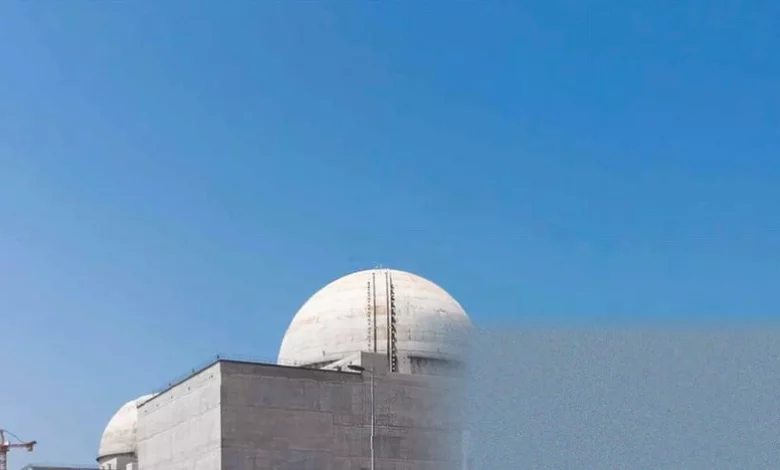
Anwar Gargash, a senior diplomatic adviser to the UAE president, described the drone strike that ignited a fire just outside the Barakah nuclear plant as “a dangerous escalation,” pointing the finger at Iran or one of its regional proxies. The incident, which occurred on Sunday, May 17, 2026, during the fragile sixth week of a ceasefire in the Iran war, has thrust the UAE to the centre of renewed tensions between the US-led coalition and Tehran.
The UAE’s Ministry of Defence said three drones entered the country from its western border. Two were intercepted, but a third struck an electrical generator “outside the inner perimeter” of the Barakah Nuclear Energy Plant in the Al Dhafra region of Abu Dhabi. The resulting fire caused no injuries and triggered no radiation alerts. The Federal Authority for Nuclear Regulation (FANR) confirmed that all four of the plant’s reactors are operating normally and that essential safety systems were unaffected. The ministry added that investigations are ongoing to determine the source of the attack, with updates to be disclosed upon completion.
Though the UAE has not formally named a perpetrator, its officials have made clear where they believe responsibility lies. Gargash wrote on X that the attack, “whether carried out by the principal perpetrator or through one of its agents, represents a dangerous escalation” and called it “a dark scene that violates all international laws and norms.” The UAE’s foreign minister, Sheikh Abdullah bin Zayed Al Nahyan, informed Rafael Grossi, the director general of the International Atomic Energy Agency (IAEA), of the details and stressed that his country retains “the full right to respond to such terrorist attacks.” The IAEA, which is in constant contact with UAE authorities, expressed “grave concern” over the incident and reiterated its call for maximum military restraint near nuclear facilities. Grossi confirmed that radiation levels at the Barakah site remained normal.
الاستهداف الإرهابي لمحطة براكة للطاقة النووية النظيفة، سواء جاء من الموكّل الأصيل أو عبر أحد وكلائه، يمثل تصعيدًا خطيرًا ومشهدًا مظلمًا يخرق كافة القوانين والأعراف الدولية، في استهتار إجرامي بأرواح المدنيين في الإمارات ومحيطها. ويأتي هذا التصعيد المحظور ليؤكد مجددًا طبيعة…
— د. أنور قرقاش (@AnwarGargash) May 17, 2026
Trump warns Iran as ceasefire talks stall
The drone strike landed at an extremely tense moment in the wider conflict. Peace talks between the US, Israel and Iran have stalled, and US President Donald Trump has voiced growing impatience. “For Iran, the Clock is Ticking, and they better get moving, FAST, or there won’t be anything left of them. TIME IS OF THE ESSENCE!” Trump wrote on his Truth Social platform. According to reports, Trump met national security advisers on Saturday at his golf course in Virginia and is due to sit down with his full national security team on Tuesday to discuss options. He also spoke with Israeli Prime Minister Benjamin Netanyahu before an Israeli security cabinet meeting that addressed Iran, Lebanon and Gaza. Widespread speculation in Israel suggests the war could restart in the absence of signs of compromise. Netanyahu has stated that Israel’s “eyes are open regarding Iran” and that the country is prepared for “any scenario.” Reports indicate that Israel is coordinating with the US on a possible resumption of attacks.
Regional diplomacy and the UAE’s hardened stance
In the wake of the attack, Sheikh Abdullah held talks with other states in the region, including Saudi Arabia, with which the UAE has had a strained relationship recently. Riyadh condemned the attack. The UAE has emerged as the most hawkish of the Gulf states over military action against Iran. The country has tightened its partnership with Israel over the course of the war and is reported to have retaliated for earlier Iranian strikes on its oil infrastructure with airstrikes on Iranian facilities. Iran has a network of proxy groups across the Middle East — including Hezbollah in Lebanon, Hamas and Islamic Jihad in the Gaza Strip, Shiite militias in Syria and Iraq, and the Houthis in Yemen — all supported by Iran’s Islamic Revolutionary Guard Corps (IRGC) Quds Force, which handles extraterritorial operations. The Barakah plant is the first nuclear power station in the UAE and the Arab world, located roughly 53 km southwest of Al Dhannah City in the Al Dhafra region, a vast area stretching from the outskirts of Abu Dhabi city to the Saudi Arabian border. With four APR1400 reactors generating a total of 5,600 MW — enough to supply up to 25% of the country’s electricity — the plant is a cornerstone of the UAE’s energy diversification strategy and a source of clean, carbon-free power. Previous attacks during the war have also targeted nuclear facilities: Iran struck near Israel’s Dimona nuclear site, and nuclear plants have increasingly become targets, as seen during Russia’s invasion of Ukraine. The UAE defence ministry said the drone that caused the fire was one of three that “entered the country from the western border direction,” striking “an electrical generator outside the inner perimeter of the Barakah nuclear power plant in the Al Dhafra area.”