In the winter of 2023, a small, unique public liberal arts college on Florida’s Gulf Coast became the primary battleground in a national political war over the soul of American higher education. The institution, New College of Florida, was targeted directly by Governor Ron DeSantis in his campaign against what he terms “woke ideology,” setting in motion a transformation that has seen academic programs dismantled, faculty depart, and a campus culture upended.
A Political Project Takes Shape
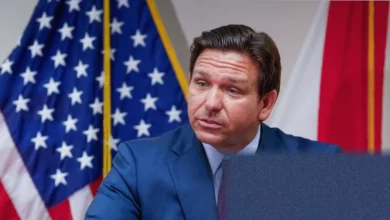
Governor DeSantis’s intervention was swift and structural. In January 2023, he appointed six conservative allies to New College’s Board of Trustees, a move widely characterised as a hostile takeover. The goal, as articulated by the governor’s office, was to remake the school of roughly 700 students into a conservative institution, explicitly modeled after Michigan’s private, evangelical Hillsdale College.
The new board moved immediately, ousting the sitting president, Patricia Okker, on January 31 and installing Richard Corcoran, the former Florida House Speaker and Education Commissioner, as interim president. He was later made permanent in October 2023. The board’s lineup included prominent figures like Christopher Rufo, the conservative activist who helped fuel the national fight against critical race theory and LGBTQ+ discussions in education, and Matthew Spalding, a dean from Hillsdale College itself.
“Eliminating DEI” and Dismantling Departments
The new leadership’s agenda quickly moved from the boardroom to the classroom and campus life. In February 2023, the board voted to abolish the college’s Office of Diversity, Equity, and Inclusion. This was followed in August by a vote to begin eliminating the Gender Studies program entirely, making New College the first public university in the nation to take such a step.
These actions were bolstered by state legislation. In May 2023, Governor DeSantis signed bills SB 266 and HB 999, which prohibited spending on DEI programs across Florida’s public colleges and restricted courses that teach “identity politics” or theories of systemic racism, sexism, oppression, and privilege. DeSantis underscored the point during a visit to the New College campus, telling a crowd, “We are eliminating DEI. If you want to do things like gender ideology, go to Berkley.”
The impact was profound and personal. Students reported library shelves being stripped of books by Black and Indigenous authors, with texts from the shuttered gender studies department discarded. The campus atmosphere shifted palpably; students describe a “queer utopia” transformed, with same-sex couples no longer feeling safe to hold hands for fear of homophobic slurs. The school’s Title IX office was closed, leaving fewer places to turn for protection.
Resistance and Reckoning
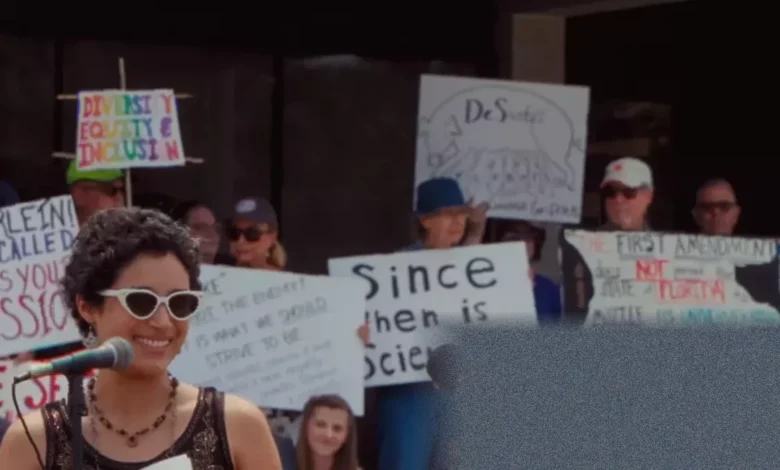
The student response was one of galvanised resistance, a story captured in the documentary First They Came For My College by director Patrick Bresnan and producer Harry W Hanbury, a New College alumnus. The film shows students chanting “Only Nazis ban books” at Governor DeSantis during his visit and documents their efforts to preserve their community.
Resistance took many forms, from protests and alternative commencement ceremonies to cultural expressions like exuberant drag performances of The Rocky Horror Picture Show. “It was sort of a morale boost for students to get that anger out and just scream a little,” said former student and protest leader Gaby Batista, who was also editor-in-chief of the student newspaper, The Catalyst.
The filmmaking process itself became collaborative. Bresnan handed camera phones to students to film protests, planning meetings, and intimate moments, a technique that gave the documentary its raw texture and helped collapse the traditional hierarchy between filmmaker and subject. “I really saw my role as facilitating their ability to storytell,” Bresnan said.
The Broader Fallout and a “Cautionary Tale”
The ramifications of the takeover extended beyond campus culture. Academically, the college saw significant faculty turnover, with one-third of its faculty not returning for the 2023-2024 academic year. There have also been allegations of retaliation against faculty for “left-wing” teachings or critiques of administrators.
Paradoxically, amid the academic cuts, the college has embarked on a major expansion of its athletics programme, launching 12 teams and joining the NAIA. Plans are advancing for a new baseball stadium, to be named the “Beruff Family Field of Dreams” following a $1 million donation from developer Carlos Beruff, though the project faces regulatory hurdles with the Federal Aviation Administration due to its proximity to Sarasota-Bradenton International Airport.
The events at New College are viewed by many as a stark case study in the erosion of academic freedom. The international advocacy network Scholars at Risk has cited the U.S. as a “model for how to dismantle” it, documenting a rise in government interference and restrictions. “We were the canary in the coalmine,” says Batista. “New College was their little political playground.”
For the filmmakers, the story is a dire warning. “This is fascism,” says Bresnan unequivocally. “At a certain point, the film became very serious in documenting our country’s turn toward these fascist practices.” He hopes the documentary will stand as a historical record, much like films from the civil rights or Vietnam eras, so that future generations can say, “I can’t believe that’s what we did to our greatest professors. I can’t believe that’s what we did to college students.”
The documentary First They Came For My College, which premiered at the True/False Film Festival and screened at South By Southwest, chronicles a conflict that continues to resonate far beyond the Mediterranean-style buildings of this Florida campus, posing urgent questions about what universities are for and who gets to decide.