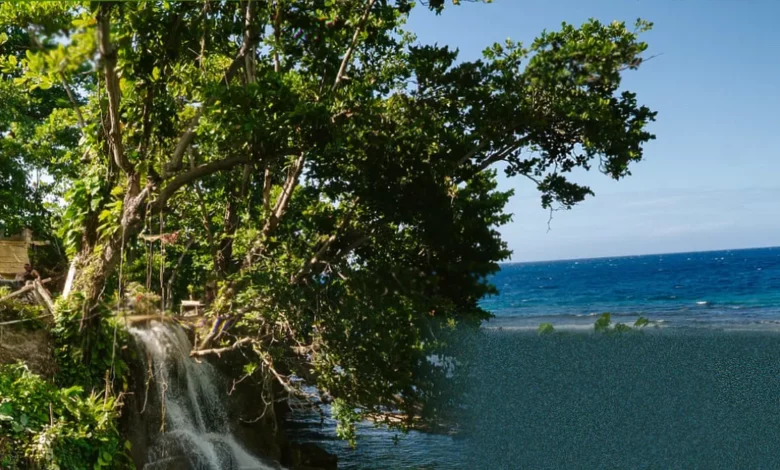
Jamaica’s picture-perfect beaches have become a battleground over access rights, as a wave of civil court cases pits local communities against the government and private hotel operators in a fight that cuts to the heart of the country’s colonial legacy and its multibillion-dollar tourism economy.
The Legal Battleground
Five simultaneous civil court cases are currently being brought against the Jamaican government and private landowners, with trials scheduled through June and July 2026. The actions seek to prevent the privatisation of beaches in some of the country’s most popular tourist destinations, from the north-coast parish of Saint Ann to the eastern parish of Portland and the western resort city of Montego Bay. At issue is whether ordinary Jamaicans have a fundamental right to walk on the sand, swim in the sea, and earn a living from the shoreline — or whether developers and hotel chains can legally fence off long stretches of coast for exclusive use by paying guests.
On one side stand community members, craft vendors, fishers, and Rastafarians who say that being barred from the beach is discriminatory, a breach of constitutional rights, and a continuation of what they call “colonial logic” — the idea that Black Jamaicans do not deserve to enjoy or benefit from their own natural resources. On the other side, the government argues that tourism income, worth an estimated US$4.35 billion in 2024 from 4.27 million visitors, benefits every Jamaican, and that activists risk damaging the industry that is the backbone of the economy.
The Colonial Roots of the Conflict
The legal foundation of the dispute is the Beach Control Act of 1956, passed when Jamaica was still a British colony. The Act vested ownership of the island’s foreshore and seabed in the state — formerly the British Crown, now the Jamaican government. Crucially, the legislation does not grant any inherent or natural right to the Jamaican people to access or use the beaches. Instead, it operates on a licensing system, meaning that any right to use the coast is derived from or acquired under the Act, rather than being a birthright.
Campaigners argue that successive governments have used this colonial-era law to hand exclusive control of sections of coastline to private developers, often for all-inclusive resorts that prohibit locals from entering unless they pay. The result, they say, is that a tiny fraction of Jamaica’s 795 kilometres (494 miles) of coastline remains publicly accessible — estimates from advocacy groups put the figure at between 0.6% and 1%.
In March 2018, Prime Minister Andrew Holness proposed a new beach access and management policy, which promises to modernise the legislation and increase access. But campaigners have denounced the policy as offering only “qualified rights” that remain subject to conditions, rather than the “free, legal, unfettered, forever rights” they are demanding. The policy is still under review or awaiting cabinet approval, and activists remain deeply sceptical.
The Constitutional Argument
While the Constitution of Jamaica guarantees the right to a healthy environment, whether that extends to a fundamental right of beach access is contested. Groups such as Citizens’ Rights to the City argue that public access to beaches is a constitutional right essential for recreation, livelihood, and cultural heritage. The courts have not yet settled the matter, but the issue lies at the heart of the current legal cases.
In addition to constitutional arguments, campaigners are relying on the Prescription Act of 1882, another piece of colonial-era legislation that protects the legal right to land or pathways that have been continuously used as public access routes for at least 20 years. The Jamaica Beach Birthright Environmental Movement (Jabbem) — the organisation leading the legal fight — argues that this Act applies to beaches, meaning that communities who have used a stretch of coast for generations have acquired a “prescriptive right” that cannot be extinguished by government licensing or private development.
The Fight for Mammee Bay and Beyond
At the heart of the campaign is Jabbem, founded in 2020 by Dr Devon Taylor, an immunologist with a PhD in biochemistry. Taylor, who describes himself as an “anticolonial fighter”, says the organisation was born out of necessity after months of protests against the privatisation of Mammee Bay in Saint Ann — a beach near where he grew up, previously public but now part of a luxury resort. The protests saw demonstrators clashing with police and tearing down barriers around privatised properties.
Jabbem is now involved in multiple legal actions. In Saint Ann, cases target Mammee Bay and Little Dunn’s River, where efforts are underway to prevent development and privatisation. In Portland, campaigners are fighting to protect public rights at the Blue Lagoon, where mountain-fed mineral springs meet the ocean — a site of particular cultural and medicinal significance for the elderly. In Saint Andrew, cases defend public access to Bob Marley Beach. In Montego Bay, activists are fighting for environmental protection and public access at Flankers or Providence Beach.
For many of Jabbem’s members and their allies, the beaches are not merely recreational assets. They are where generations learned to swim. For families who cannot afford trips abroad or expensive hotel passes, they are the primary space for leisure and relaxation. For Rastafarians, beaches hold spiritual significance as places for meditation and connection with nature. And for fishers and craft vendors, the shoreline is a source of livelihood and food security. “When you cut us off from the sea … you are actually setting us up to starve,” Taylor says.
Professor Carolyn Cooper, emerita at the University of the West Indies and a volunteer adviser to Jabbem, calls the access restrictions “outrageous”. She adds: “It’s as though this government, and successive governments of Jamaica, don’t seem to realise that Black Jamaicans are entitled to leisure.”
The Government’s Case: Tourism as the Engine of Growth
Matthew Samuda, the minister of environment and climate change, has acknowledged that the “idea of access needs to be explored”, but argues that the government must consider how to convert Jamaica’s natural assets into “an economic benefit that helps you, me, every single citizen, the poorest among us, the richest among us”. He says the tourism sector directly employs between 112,000 and 116,000 Jamaicans, and an estimated 300,000 to 350,000 — more than 10% of the population — benefit through connected industries.
Tourism Minister Edmund Bartlett has described the sector as the “main engine of economic growth”, noting that it contributes approximately one-third of Jamaica’s total economic output and is a major source of foreign exchange. In 2014, tourism generated a total impact of US$4 billion on GDP; by 2024, annual earnings had risen to US$4.35 billion.
Samuda has also pointed out that recent approvals for new developments, especially on public land, require developers to carve out corridors to the sea. Campaigners counter that this is at the discretion of landowners and fails to address their concerns about existing private beaches. They argue that the government’s proposed beach access policy, even if finalised, would still leave communities with only conditional, qualified rights.
The “Plantation Tourism” Critique
Critics, including Jabbem, describe the current model as “plantation tourism” — a term that draws direct parallels to the colonial plantation economy that exploited land and labour for the benefit of a wealthy few. They argue that most major hotel profits are either funnelled out of Jamaica entirely to foreign owners or concentrated among a small elite, while ordinary Jamaicans are locked out of their own coastline.
Campaigners insist they are not anti-tourism. They point to other Caribbean nations where citizens have guaranteed beach access rights and tourism still flourishes. In St Lucia, for example, all beaches must be made accessible to the public. Mexico has enacted laws to fine hotels for denying public beach access — a model that Jabbem says Jamaica should follow.
The Long Road Ahead
The legal process could take years, and trials have already been postponed, at great expense to the campaigners, who rely on fundraising and volunteer support. Yet Taylor remains defiant. “Our evidence is overwhelming, and nothing can defeat this case for prescriptive rights,” he says. “So we continue on. We are very patient. And we’ll see the victory.”
With five cases now before the courts, the outcome of the June and July hearings will be closely watched — not only in Jamaica, but across a Caribbean region where the tension between tourism development and public access is a recurring flashpoint. For now, the beaches remain a frontier where colonial-era laws, constitutional aspirations, and the daily realities of ordinary Jamaicans collide.