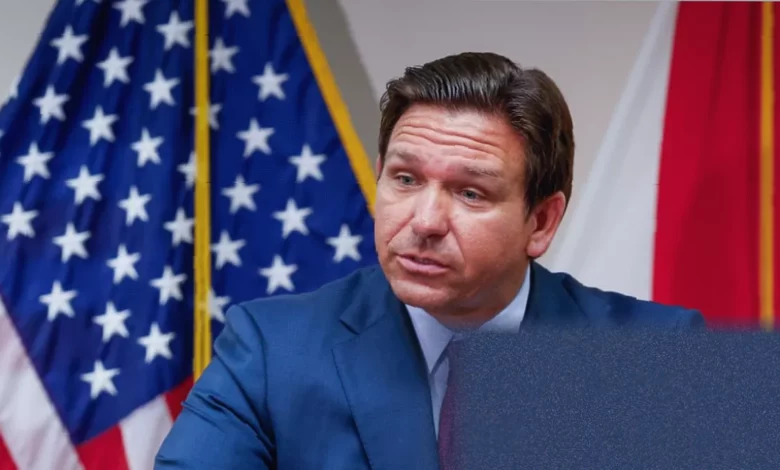
Florida has banned undocumented students from state colleges and universities, a move approved by the state board of education on Tuesday that bars anyone who is not a US citizen or “lawfully present” in the country from enrolling in the state’s 28 public colleges. The directive was voted through by the seven-member board, which is appointed by Governor Ron DeSantis, and also extends to adult general education programmes in high schools and state colleges that prepare students for GED exams.
The ban applies immediately to new applicants, though the state university system is pursuing a parallel rule via its board of governors that would bar students “present in the United States unlawfully” from its 12 institutions. That proposed policy is expected to take effect for the 2027–28 academic year, with currently enrolled students not affected. Critics have immediately challenged the legality of the board’s action, pointing out that it bypasses the elected state legislature and creates new policy through rule-making rather than implementing existing statutes.
Financial toll and enrollment decline
Analysts estimate the ban could cost Florida’s state college system up to $15 million annually in lost tuition and fees. The projected financial hit is not evenly spread: Miami Dade College stands to lose approximately $1.8 million, Broward College around $1.18 million, and Palm Beach State College about $1.06 million. These figures come from the Florida Policy Institute, whose senior analyst Alexis Tsoukalas described the rule as “unnecessary, but is harmful … and likely illegal.” She added that the rule-making process is meant to implement existing legislation, not create new policies, which she said was exactly what the department was doing.
The financial impact is all the more significant given that Florida’s college system has been struggling with declining enrollment for several years. Pre-pandemic enrollment levels are already 11% lower, and numbers have continued to fall. Tsoukalas warned that “it’s not like there are students waiting in the wings to enroll when others are denied admission” and that the ban will only deepen the problem. The ban also runs directly counter to Governor DeSantis’s own “Sail to 60” initiative, a 2019 policy that aims to raise the proportion of Florida residents with high-value post-secondary education from below 50% to at least 60% by 2030. Excluding undocumented students, Tsoukalas argued, makes that attainment goal harder to reach as a shrinking share of students enrol.
Luisa Santos, an elected member of the Miami-Dade school board who was brought to the United States from Colombia as an eight-year-old, said the state faced “serious consequences” from the rule, including the $15 million loss in tuition and fees and the governor “getting in his own way of stated goals like Sail to 60, which so many school districts around Florida have worked so hard to try to accomplish.”
Opposition from advocates and students
Immigration advocates have condemned the rule as “cruel and harmful.” Alexander Vallejos, a “Dreamer” and computer science student at the University of Central Florida who came with his family from South America in 2001 as a one-year-old, said the ruling “sends a painful message to young people who have done everything right. It tells them that their hard work isn’t enough, and that their dreams are less because of something they have no control over.” He added that behind every policy is a real person – a student staying up late to study, working two jobs to pay for college, a future engineer, teacher, nurse or entrepreneur who “just wants the chance to succeed.”
Santos said the rule change took her back to “the darkest days of high school, where, like Alexander, I felt the world caving in on me. No matter how hard I worked, I felt like opportunities were being taken away.” During the board of education meeting on Tuesday, dozens of public commenters spoke unanimously against the measure. State Representative Anna Eskamani, a Democrat running to become Orlando mayor, phoned into the public comment section to denounce the policy, calling it “un-American, unfaithful, and absolutely also constitutionally concerning because, obviously, we did not pass legislation on this matter.”
Republican state senator Don Gaetz, a long-standing opponent of in-state tuition for undocumented students, defended the ban. “The policy issue is: should illegal aliens receive taxpayer-funded higher education in Florida? And in my view, the answer to that question should be no,” he said. Gaetz added that he would file legislation to enshrine the board’s decision in statute if necessary. His stance echoes his opposition from 2014, when he said he could not prioritise subsidising education for people in the country illegally over those who followed rules to become citizens – a position that was countered at the time by House Speaker Will Weatherford, who argued the students were residents and deserved educational opportunities.
Legal challenges and constitutional questions
The legal authority of the board of education to enact the rule has been questioned from multiple sides. The Joint Administrative Procedures Committee (JAPC), a bipartisan legislative panel, received a letter from its chief attorney asking whether existing statutes grant the board the power to create and enforce such policies. Critics argue that rule-making should implement existing laws, not create new ones, and that the board overstepped its role. Republican lawmakers have previously tried to pass legislation restricting undocumented immigrants’ access to higher education, but those efforts failed in recent sessions, including the 2026 session. Bills filed this year to prohibit higher education institutions from admitting non-citizens not legally present and to limit foreign-born students did not advance.
Eskamani said the decision is “ripe for legal challenge” because the board acted unilaterally without legislative direction. Students and advocates are expected to serve as plaintiffs in any legal action. The ban follows Florida’s 2025 repeal of a 2014 law that allowed certain undocumented students to pay discounted in-state tuition rates at public institutions. That repeal meant students who previously qualified now face costly out-of-state fees or cannot attend at all.
Governor DeSantis defended the ban, stating that if students are in the country illegally it “doesn’t make sense” for them to attend a state university and that he would “rather have that spot go to a Florida resident.” The board’s lone dissenting vote on the adult education portion of the rule came from board member Daniel Foganholi, who was appointed by DeSantis. Immigration status is protected under FERPA (the Family Educational Rights and Privacy Act), but that protection generally applies to accepted or enrolled students, not applicants. The Florida Department of Education did not confirm whether the changes would apply to existing students.
Immigrant students contribute to the state’s economy through taxes and by filling critical skills shortages, particularly in STEM and healthcare. Advocates warn that denying them higher education will prevent them from becoming essential professionals Florida needs. The ban, they argue, is not only financially costly and legally questionable but also self-defeating for a state that has set itself the goal of significantly boosting its educated workforce.