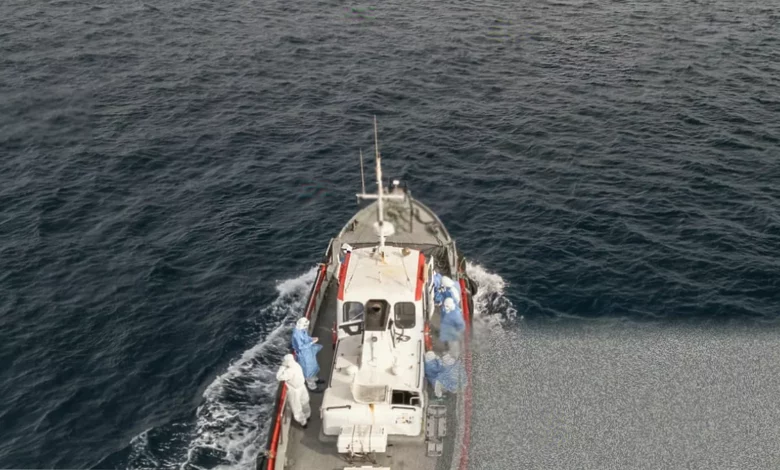
The response to an outbreak of Andes virus on a Dutch cruise ship has exposed deep fractures in the United States’ public health infrastructure, raising urgent questions about the country’s ability to contain future pandemics, experts have warned. The MV Hondius, which departed Ushuaia, Argentina, on 1 April, carried 149 people – 88 passengers and 61 crew from 23 nationalities. As of 8 May, at least eight suspected or confirmed cases of Andes virus, a strain of hantavirus that can in rare instances pass between humans through close contact, have been identified. Three people have died, and three have been hospitalised, including in intensive care, though those patients are now showing signs of improvement, officials said on Thursday.
Outbreak on the MV Hondius
Andes virus is typically spread by rodents through urine, droppings or saliva, but it can also transmit between people via prolonged exposure to bodily fluids or possibly airborne droplets. It is not considered highly transmissible like Covid-19 or measles. The World Health Organization (WHO) is coordinating an international response, and has deployed an expert to the ship. “This is not Covid, this is not influenza. It spreads very, very differently,” Maria Van Kerkhove, director of epidemic and pandemic management at the WHO, said at a briefing on Thursday. “The vast majority of the world has absolutely no worry at all,” added Bill Hanage, professor of epidemiology at the Harvard TH Chan School of Public Health. The early symptoms of Andes virus are flu-like – fever, muscle aches, headache, fatigue, nausea, vomiting and diarrhoea – and can progress to Hantavirus Pulmonary Syndrome, with coughing, shortness of breath and respiratory failure. Previous outbreaks in Argentina have shown case fatality rates of 20–40%.
Passengers from at least 12 countries disembarked before the outbreak was confirmed. On 24 April, around 30 passengers left the ship in Saint Helena and have since been contact-traced by the UK Health Security Agency. British nationals who return to the UK will be asked to isolate for 45 days. At least six US states – Georgia, California, Arizona, Texas, Virginia and New Jersey – are monitoring individuals who were on the ship or potentially exposed, but none are currently symptomatic. The WHO is narrowing in on human-to-human transmission in this cluster, with evidence that the first two patients passed the virus to close contacts, including a doctor who treated them on the cruise ship. This mirrors an outbreak in Argentina in 2018–19, where 34 people ultimately tested positive and 11 died.
Cracks in the US Public Health System
Despite the WHO’s coordination, US leadership has been conspicuously absent, experts say. The US withdrew from the WHO soon after President Trump took office, and the US Centers for Disease Control and Prevention (CDC) has not held a briefing or created a public resource page about the hantavirus. Top officials have not appeared on television to explain the risk. Boghuma Titanji, an infectious disease physician and assistant professor at the Emory School of Medicine, said the “radio silence” from officials was one of the most concerning aspects of the outbreak because “it just fuels the public anxiety”. People are still reeling from the trauma of Covid-19, she said, and “a lot of people who experienced that still have a degree of PTSD. So it’s very hard to not spiral.” The first and only CDC press release on the issue was sent on Wednesday evening, after days of no guidance, and stated that the US Department of State is now leading a “whole-of-government” response, engaging in “direct contact” with passengers, diplomacy, and coordination with domestic and global health officials. That move is highly unusual, Titanji said – normally the CDC, with decades of experience responding to Andes virus outbreaks, would take the lead.
The gaps run far deeper than communications. US health agencies have been hollowed out under the current administration, experts said. All full-time CDC cruise ship inspectors were unexpectedly laid off last year while teams were actively investigating two other outbreaks. Laboratory staff have been gutted: states can no longer send samples to the CDC for orthopoxvirus testing – like mpox – because that division has been temporarily paused, and labs can no longer test for the parasite that causes leishmaniasis. In April, rabies testing at the CDC was also temporarily halted. “We’re losing that type of support,” Titanji said, referring to the CDC’s role as a first port of call for rare diseases. “If we had a significant outbreak of a high-consequence pathogen, it would be very, very concerning to see what the response and the leadership of that response would be.”
Research into virology itself has come under intensely politicised scrutiny. In May, the White House issued an executive order to curb research on viruses, and the National Institutes of Health made sweeping cuts to this work. Lawmakers have introduced bills to cut what they have loosely termed “gain of function” research. Meanwhile, the scientific consensus on the origins of SARS-CoV-2 points strongly to a spillover from animals into people, yet officials continue investigating a lab leak scenario, leaving scientists facing subpoenas, arrests and prosecution. “We should be investing in doing more to understand how these spillover events take place – and that’s actually the very opposite of what’s going on at the moment,” Hanage said. More than half of US states have passed laws restricting health officials’ ability to require quarantine and isolation or recommend masks; some schools are forbidden from requiring certain vaccines for attendance and from shutting down during another health crisis.
The US Department of State has arranged a repatriation flight for American passengers, with plans to quarantine them in Omaha, Nebraska. The CDC has classified the outbreak as a “Level 3” emergency response, indicating a low but actively monitored risk. Yet the agency did not grant a request to speak with a hantavirus expert and did not respond to questions about testing and laboratory capacity, precautions for returning passengers, or support for local health providers. In the absence of trusted information, misinformation about the outbreak is swirling – including unsubstantiated claims about unproven treatments such as ivermectin, vitamin D and zinc, echoing patterns seen during the Covid-19 pandemic.
Broader Lessons for Pandemic Preparedness
Abdirahman Mahamud, an infection prevention control specialist at the WHO, said the outbreak has shown why the world needs a global entity to coordinate responses. “If we follow public health measures and the lesson we learned from Argentina now is shared across all countries – what needs to happen in contact tracing, isolation – we can break this chain of transmission.” The WHO is still sharing information with the US because the country has not withdrawn from the International Health Regulations (IHR), though the US rejected amendments to the IHR in July 2025. “In terms of collaboration with US and US institutions, it has been going very well,” Mahamud added, noting that “the information flow is there, transparent and frank.”
Contact tracing passengers who have returned home is critical, Hanage said, but the involvement of multiple authorities and jurisdictions may slow the response. “Everything that we know about both this outbreak and previous ones indicates that this is controllable, and I expect that it will be controlled. How long it will take to be controlled is another question. The appetite for that control will be a major part in deciding how easily it’s done and how long it ultimately takes.” The World Organisation for Animal Health has emphasised that hantavirus is a zoonotic disease, calling for rodent management, surveillance, and a “One Health” approach that links human, animal and environmental health.
Tedros Adhanom Ghebreyesus, the WHO director-general, expressed hope that the US and Argentina would “reconsider” decisions to leave the organisation. “Any vacuum, any space which is not covered, actually gives advantage to the virus. And the best immunity we have is solidarity.”