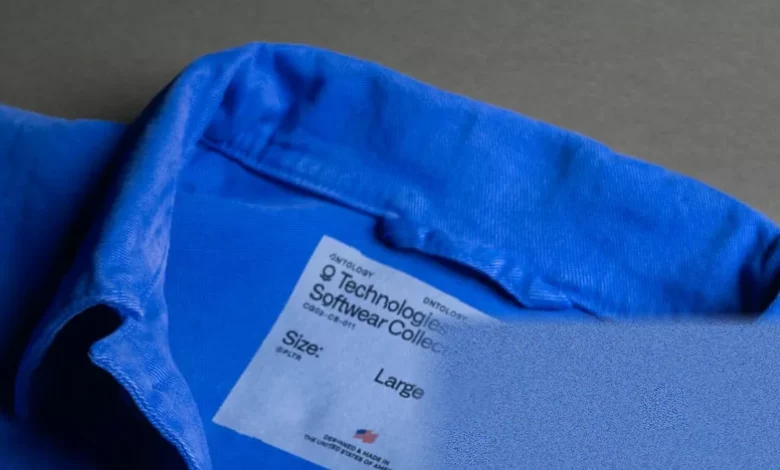
Tech firms are now selling branded clothing to appear ‘cool’ and ‘tasteful’, deploying chore coats, designer T‑shirts and pop‑up coffee shops as part of a wider effort to reframe their public image. From Palantir’s $239 denim jacket to OpenAI’s nineties‑nostalgic merchandise, these companies are borrowing the language of fashion to signal cultural capital — even as they face intense scrutiny over surveillance, copyright and the ethics of artificial intelligence.
The most explicit example landed last week when Palantir, the US spy‑tech and data firm, dropped its latest “merch”: a denim chore coat described on its website as offering “rugged utility, enduring style”. Priced at £175 and available in blue or black, the jacket carries the company’s logo on the chest pocket. All 420 units sold out within hours. Eliano Younes, Palantir’s head of strategic engagement, told the New York Times the jacket was part of a commitment to “re‑industrializing America” — it is made in Montana and deliberately recalls workwear from a previous era. “It’s not political,” Younes added. “It’s about people who love Palantir and are aligned with our mission.”
That mission, however, is deeply controversial. Palantir has aided the Trump administration’s deportation drive and Israel’s devastating assault in Gaza. Its software has been used by US Immigration and Customs Enforcement (ICE) for deportation raids and by the Israeli military. Palantir CEO Alex Karp has expressed pride in supporting Israel and stated that the company’s weapons software is deployed in “every combat situation I’m aware of”. The firm also publishes a militaristic manifesto and received early investment from In‑Q‑Tel, the CIA’s venture capital arm, before raising billions from other investors. For critics, the chore coat represents an attempt to soften that image with a veneer of authenticity.
The chore coat itself has a long history. Originating in 19th‑century France as the bleu de travail, it was designed for labourers, farmers and railway workers — made from sturdy cotton drill or moleskin, with large pockets for tools. American brands such as Carhartt and Levi Strauss later adapted the design; Carhartt introduced a corduroy collar and reinforced seams by the 1920s. Over the past two decades the chore coat has become almost ubiquitous, adopted by fashion houses at every price point and worn by celebrities including Monty Don and Harry Styles. It has become “perhaps the defining signifier of a casually alternative taste”, as one style commentator noted, making it an appealing proxy for tech firms “keen to be seen as cool, fun and tasteful”. “They need cultural capital to be perceived as acceptable in the zeitgeist,” the commentator added.
Palantir is not alone in this fashion pivot. Anthropic, the AI company, collaborated last year with Air Mail, a high‑end digital newsletter, to host pop‑up events at newsstands in New York and London, offering “thinking” caps and coffee. Anthropic has secured billions from Amazon and Google, and has also partnered with Palantir and Amazon Web Services to provide its Claude model to US intelligence and defence agencies. OpenAI, meanwhile, sells long‑sleeved T‑shirts on an online shop called “OpenAI Supply Co.”, designed to look like a website from the 1990s — a tongue‑in‑cheek attempt to capitalise on a less corporate, more democratic era of the web. The merchandise includes Pokémon‑style trading cards and T‑shirts with slogans such as “AGI that benefits all of humanity”. OpenAI has raised tens of billions from Microsoft, SoftBank and Amazon. The company is currently facing copyright lawsuits from major publishers who allege it pirated works to train its large language models.
At this year’s Met Gala, the intersection of tech wealth and fashion was on full display. Amazon co‑founder Jeff Bezos and his wife, Lauren Sánchez, bought their way to the top table via a $10m donation. The fundraiser for the Metropolitan Museum of Art’s Costume Institute raised a record $42m. Attendees included Meta’s Mark Zuckerberg, Alphabet’s Sergey Brin and senior executives from TikTok, Instagram, Snap and Slack. OpenAI, Meta and Snap all purchased tables costing at least $350,000. Mark Zuckerberg has undergone a protracted public effort to cultivate personal style, trading hoodies for Bode shirts and taking a front‑row seat at Prada’s Milan fashion week show — the “most tasteful of all”, according to one observer. His stylistic shift is thought to align with Meta’s growing smart‑glasses business, with potential collaborations with luxury brands such as Prada.
The motivations behind tech’s “taste‑washing”
What does it mean that tech executives, once proudly unstylish, have turned their attention to fashion? According to Kyle Chayka, writing in the New Yorker, the industry is engaged in “taste‑washing” — “an attempt to give anti‑humanist technologies a veneer of liberal humanism”. By associating with artisanal credibility, the implication is that personal taste can give a company a competitive edge. Much of this is self‑serving: the same figures who talk up the importance of their finely honed human instincts are “happy to have everything around them automated into oblivion”.
The motivations extend beyond mere aesthetics. Tech firms are seeking brand refinement and cultural capital, making themselves appear more relatable and less purely transactional. In an era of increasing public concern about data privacy, antitrust issues and the ethical implications of AI, adopting a sophisticated image can help deflect criticism and build trust. For companies such as Meta, engaging with fashion also represents market expansion: smart glasses integrated into lifestyle products open up new revenue streams. A polished brand can also attract talent, signalling that a company values culture and innovation beyond technical prowess.
This drive for tastefulness comes at a time when the industry’s relationship with the creative sector is under legal assault. Five of the largest book publishers in the US have sued Meta, alleging that it pirated millions of copyrighted works to train its Llama AI model. Similar lawsuits have been filed against OpenAI and Anthropic, and Anthropic has reportedly settled some piracy claims for a substantial sum. Meta has said it will “fight this lawsuit aggressively”, while publishers seek damages and injunctions to prevent further infringement. The central question in these cases is whether using copyrighted material for AI training constitutes “fair use” — a legal doctrine that tech companies are relying on even as they wrap themselves in the language of tastefulness.
A greater interest in fashion and human discernment is not necessarily bad, but when it comes to tech behemoths, there is a hunch where this leads: hoarding and optimising for financial gain. Tech’s embrace of taste could be fleeting, as quickly abandoned as the industry’s earlier embrace of social justice when it no longer suited its purpose. Matters of style and cool will continue in ways that cannot be optimised or defined only by wealth.
Bill Cunningham, the late New York Times fashion photographer, was a lifelong wearer of the classic blue chore coat. In the 2010 documentary Bill Cunningham: New York, he explained that he discovered the jackets in Paris, where street‑sweepers wore them: they were cheap, washable and functional, with three big pockets. “And I thought the colour was nice.”