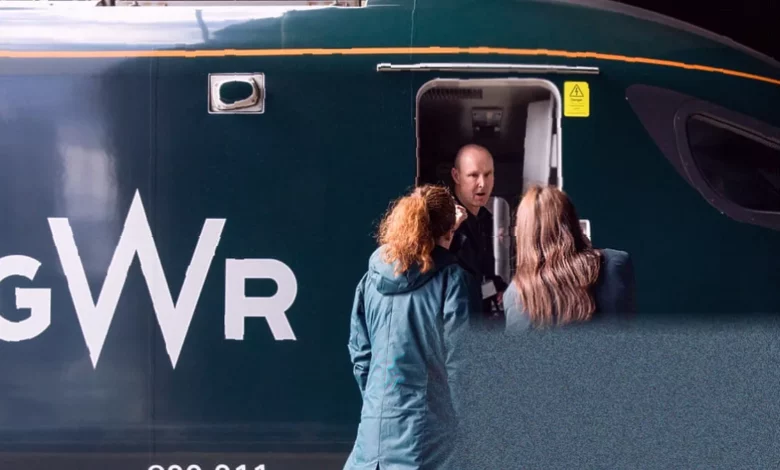
Great Western Railway will return to public ownership in December, the government has announced. The operator, which has been in private hands for nearly three decades and primarily run by FirstGroup since March 1998, is scheduled to be nationalised on 13 December – a date that coincides with the introduction of new national timetables across the country.
The move is the latest step in the Labour government’s wider programme to bring all passenger rail operators under public ownership by the end of 2027, a commitment formalised through the Passenger Railway Services (Public Ownership) Act 2024. Great Western Railway will become the 11th train operator on the national network to be brought back into public hands. The Department for Transport (DfT) confirmed the date, noting that GWR has worked closely with the department in recent years to upgrade the mainline and introduce a new fleet of intercity trains.
The operator’s route connects Paddington station in west London to destinations across west and south-west England and south Wales, and also runs services on lines to Oxford and Hereford. As of March 2025, GWR employed 6,449 staff, managed 198 stations and operated a network spanning 1,997 km (1,241 miles), providing 89 million annual passenger journeys. Its fleet includes Class 175 Coradia 1000, Class 230 D-Train, Class 387 Electrostar, Class 800 IET and Class 802 IET trains. The company also serves Heathrow Airport via the Heathrow Express and Gatwick Airport on its North Downs Line route.
Great Western Railway has a long history: originally established in 1833, it was nationalised in 1948 to become the Western Region of British Railways, then privatised as Great Western Trains in February 1996 before being rebranded as First Great Western in December 1998 and finally adopting the name Great Western Railway in September 2015. Historically it was known as the “Holiday Line”, transporting passengers to resorts in the West Country, and completed the four-mile Severn Tunnel under the Bristol Channel in 1886.
The nationalisation of GWR is part of a phased timetable that has already seen several operators transferred to public ownership. South Western Railway was nationalised on 25 May 2025, followed by c2c on 20 July 2025 and Greater Anglia on 12 October 2025. West Midlands Trains followed on 1 February 2026. The UK’s largest single commuter operator, Govia Thameslink Railway (GTR), which runs Southern, Thameslink, Gatwick Express and Great Northern services around London and handles nearly 20% of UK passenger rail journeys across 236 stations, is due to be nationalised on 31 May 2026. Chiltern Railways, owned by Arriva UK Trains, will transfer to public ownership on 20 September 2026. After GWR’s transition, three national rail operations will remain in private hands through 2027: Avanti West Coast, expected to be nationalised in spring 2027 (some sources suggest October 2027), CrossCountry expected in autumn 2027, and East Midlands Railway expected in late 2026 or winter 2026.
Great British Railways: a new structure for the network
The ultimate goal of the nationalisation programme is the creation of Great British Railways (GBR), a new public body intended to oversee the entire rail network. GBR will be headquartered in Derby and is designed to act as a “single directing mind” for the railway, integrating the functions currently split between Network Rail – which manages the track and infrastructure – and the DfT Operator, the state-owned holding company for nationalised train operating companies. Under this model, responsibility for planning timetables, managing rolling stock, setting fares and managing network access will all fall under one organisation.
The government’s stated aim is to bring “track and train together” and put passengers, rather than shareholders, at the heart of the railways. A DfT spokesperson said: “This is another significant moment for the government’s flagship public ownership programme and brings a simpler, more reliable network under Great British Railways a step closer. The government is delivering on its commitment to bring services back into public ownership and put passengers, not shareholders, at the heart of our railways.”
Public opinion polls indicate strong support for the move. A May 2024 Ipsos poll found 54% of Britons in favour of rail nationalisation, with only 13% opposed; among regular rail users support rose to 76%. Around 49% believed it would lead to a better quality of service. Labour has argued that consolidating operators under public ownership could save approximately £680 million annually by eliminating shareholder dividends and reducing administrative duplication. However, some industry bodies, such as Rail Partners, have cautioned that nationalisation could increase costs.
Despite the popularity of the principle, the government faces several challenges. Railway infrastructure in Britain is noted as being particularly expensive compared with other countries, and the sector relies heavily on government subsidies, with public funding often exceeding fare revenue. The rail industry is also grappling with an aging workforce, with many engineers, drivers and technicians due to retire, raising concerns about skills shortages and workforce transition. Productivity and efficiency remain subjects of debate, and while the government has frozen regulated rail fares for 2026 to ease the cost-of-living crisis, support could wane if nationalisation is perceived to lead to higher fares or taxes. Industrial disputes also pose complications: the nationalisation of Chiltern Railways, for instance, may be affected by an ongoing dispute, raising questions about whether the public operator will inherit it. It is widely acknowledged that public ownership alone is not a guaranteed solution and that systemic reform is needed to address long-standing structural issues.
Integrated management of track and train
Steps have already been taken to integrate the management of train operators and Network Rail where services have returned to public ownership. Under the GBR model, most daily rail operations will be devolved to regions, some of which are already being run as combined track-and-train units. Southeastern was the first to have an overall managing director with responsibility for both track and train – a single point of accountability that ministers hope will raise standards and performance while reducing costs. That integrated structure has also been established at South Western Railway and in Anglia since the nationalisation of Greater Anglia.
It is not yet known if Great Western Railway will immediately adopt a similar integrated management model when it is nationalised in December. However, Network Rail has been piloting “local railway units” in some regions, bringing Network Rail and train operator teams together to improve journeys through shared knowledge and ideas. GWR has participated in trials of this scheme in Devon and Cornwall.
Great Western Railway’s nationalisation on 13 December will bring the total number of operators returned to public ownership to 11, leaving just three private operators on the national network as the government presses ahead with its timetable for a fully publicly owned railway.