Japanese fans celebrated their team’s 4-0 victory over Tunisia in Monterrey by staying behind to collect rubbish from the stands – a tradition known as gomi hiroi that has become one of the defining images of this World Cup. The practice, which reflects a deep cultural emphasis on taking responsibility for shared spaces, has gone viral across social media after matches in Arlington and Monterrey. “We are guests in Mexico,” said Ken Okawa, 30, stooping to pick up discarded cups around his seat. “I have been treated wonderfully, so this is my way of showing my appreciation.”
The habit is instilled from a very young age in Japan, where schoolchildren are taught to clean their own classrooms. Miku Takeya, 41, said that the habit of tidying up after herself has become second nature. “It’s a natural part of our culture,” she explained. “We do this to ensure that everything we use is left clean so that the next person can use it comfortably.” Sociologists point to the influence of the concept of “reading the air” – an unspoken social pressure to conform to group behaviour – as well as a broader sense of social responsibility sometimes referred to as “O-soji”, or “the Great Clean-Up”. The tradition has been a consistent feature of Japan’s World Cup appearances since 1998.
While the global audience has marvelled at the scenes, many Japanese fans insist it is nothing out of the ordinary. “It’s common sense in Japan,” said Ichiro Oyo, 27. Still, Ryo Matsuoka, 32, said he was proud to bring this part of his culture to the world stage. “I think it is a matter of great pride that this is being showcased in a stadium like this, where people from all over the world are watching,” he said. The sentiment was echoed by local officials too: ahead of Saturday’s match, the governor of Nuevo León, Samuel García, said he had arranged for 20,000 bin bags to be distributed in the stadium, at Fanfest and other tourist sites, following requests from Japanese fans, according to local media. NFL quarterback Jameis Winston was also observed joining the clean-up effort at one of the matches.
Team performances: Netherlands march on, Germany finally progress, and Curaçao claim a historic point
On the pitch, Group F took clearer shape as the Netherlands swept aside Sweden 5-1 in Houston. Sunderland’s Brian Brobbey and Liverpool’s Cody Gakpo both scored twice, while Crysencio Summerville of West Ham – the only goalscorer not plying his trade in the Premier League – also found the net. Newcastle’s Anthony Elanga scored Sweden’s consolation. “The scoreline’s a little harsh on us, but sometimes that happens in football, especially with the quality of the opponent we face,” said Sweden’s head coach Graham Potter. “We got off to not a good start, which then puts you behind in the game and then affects the mood.” The Netherlands now top the group on four points, level with Japan, with Sweden on three and Tunisia eliminated on zero. Ronald Koeman said: “We needed this. When you start a tournament, you want to start well. It gives you peace of mind.” Tunisia, who have joined Turkey in booking their flights home, sacked Sabri Lamouchi and replaced him with Hervé Renard – his third World Cup national-team job after Morocco and Saudi Arabia – but the change made little immediate difference. Renard acknowledged: “The score is heavy but it reflects the difference between the two teams tonight.”
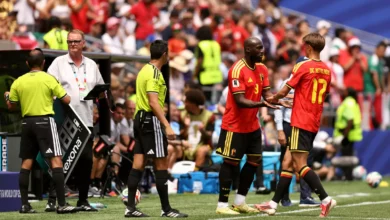
In Group E, Germany sealed progression from a World Cup group stage for the first time since they won the tournament in 2014, coming from behind to beat Côte d’Ivoire 2-1 in Toronto. Deniz Undav came off the bench to score twice, including a late winner, taking his tally to nine goals in 11 international caps. His role under Julian Nagelsmann remains curious: the coach has previously criticised Undav’s performances even when he scores, and the striker has not been entirely happy as an impact substitute. “I could have him in the starting lineup,” Nagelsmann said yesterday. “I think that every player would love to be in the starting lineup, but I think he’s very happy as it is right now.”
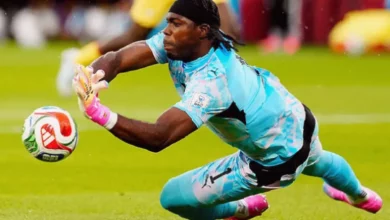
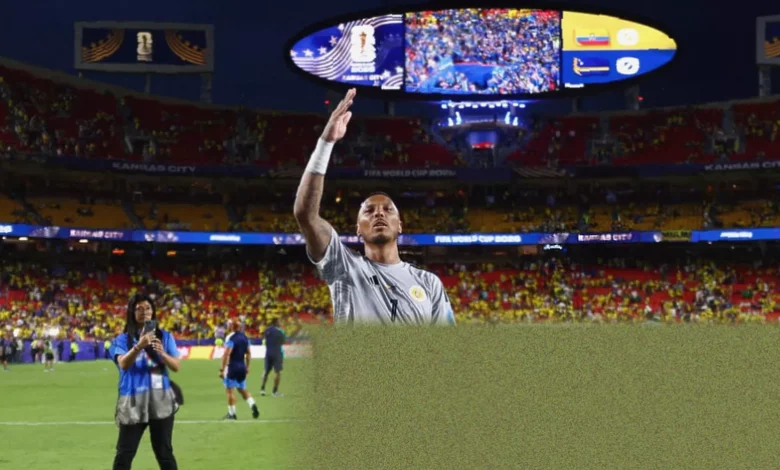
Curaçao earned their first ever World Cup point with a heroic 0-0 draw against Ecuador in Kansas City. The result was built on an extraordinary performance by goalkeeper Eloy Room, who made 15 saves – a new record for a 90-minute regulation World Cup match, and just one short of Tim Howard’s all-time tournament record of 16 saves (which included extra time). Room’s 15 saves are also the most by any goalkeeper on record (since 1966) while keeping a clean sheet. “A little bit annoyed that I don’t have the record from Tim Howard, but I think he was sweating in front of the TV because I was close,” Room said. The 37-year-old Miami FC goalkeeper’s heroics denied 28 Ecuador shots, including early chances from Enner Valencia. “It’s going to be an insane memory. You don’t think about it when you do it but of course it’s going to be something you look back to.” The draw means Curaçao – the smallest nation by population ever to qualify for the tournament, with about 150,000 to 158,000 inhabitants – can still progress from Group E if they beat Côte d’Ivoire in their final fixture. The match was attended by King Willem-Alexander and Queen Máxima of the Netherlands, with Queen Máxima reportedly giving Room a congratulatory kiss in the dressing room afterwards. Curaçao are managed by Dick Advocaat, the oldest coach at the tournament.
Japan’s victory over Tunisia was powered by Daichi Kamada, who played in an advanced “shadow striker” role after Takefusa Kubo sustained a left knee injury during the opening match against the Netherlands. Kubo collided with Denzel Dumfries and an MRI scan confirmed the injury; he is expected to miss several matches, though there is a possibility of his return later in the tournament. Japan have also been affected by pre-tournament injuries to Kaoru Mitoma, Takumi Minamino and captain Wataru Endo. Head coach Hajime Moriyasu said: “Daichi has mostly been deployed as a defensive midfielder recently, but considering our current team situation, we had him shift to the shadow striker position today. The idea was to bring out his strengths and have him control the team’s offence and defence from that advanced position.”
Iran’s travel chaos and the silence of other managers
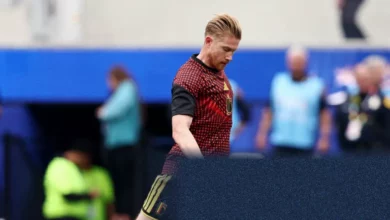
Iran’s head coach, Amir Ghalenoei, has expressed deep frustration at the lack of support from his counterparts and at Fifa’s handling of his team’s logistical arrangements on the eve of their crunch Group G match against Belgium. Iran arrived in Los Angeles from their base in Tijuana, Mexico, soon after midday on Saturday – less than 24 hours before kick-off. They had requested to arrive two days earlier but were not permitted to do so. Belgium, by contrast, arrived on Friday.
Ghalenoei detailed how the team spent Friday evening in limbo after being given encouragement by Fifa that they might be able to travel earlier than initially permitted. “They phoned me and said: ‘Are you ready if we get you a flight at 6pm?’ I welcomed that but we sat and waited and waited,” Ghalenoei said. “We waited until 7pm, nothing happened. ‘OK, sorry, we weren’t able to do that.’ That’s going to affect us mentally, especially me as a head coach … I know Fifa is trying its best, I thank them for that but it doesn’t mean they have succeeded.”
Iran have voiced their frustrations directly to Fifa president Gianni Infantino about feeling the “most oppressed” team at the tournament. Ghalenoei said he has not heard from any other coaches. “I haven’t heard anything from other coaches and I’m sure they’re busy with preparing their own teams and we never expect them to show any reaction,” he said. “But if I had seen another team being treated the way we’ve been treated, I would have [done it].” He noted that Belgium’s coach Rudi Garcia had said Iran are at the World Cup for football, not politics – a sentiment Ghalenoei endorsed – but stressed that Iran’s grievances are with the way Fifa has behaved.
Iran have been granted permission to fly to Seattle two days before their final Group G match against Egypt on Friday, but Ghalenoei questioned why similar arrangements were not made for their earlier games in the US. “Why didn’t they let us come earlier for the first two games as well?” he said. “They’ve allowed us to make our own decisions with regards to planning the travel but unfortunately for the first two games others made these decisions for us.”
Infantino, meanwhile, has defended Fifa’s handling of the tournament, saying the World Cup has gone “beyond our expectations” and urging fans to “chill and relax” over ticket prices and visa issues. He acknowledged that Fifa is not “kings of the world” and must respect governmental decisions, while defending the revenue raised from ticket sales for global football development. Infantino himself has been using a private jet provided by Qatar Airways to attend multiple matches per day across the host nations – a schedule made necessary by the vast distances between venues.
Group G is finely balanced: New Zealand, Iran, Belgium and Egypt all sit on one point each, making every result critical.