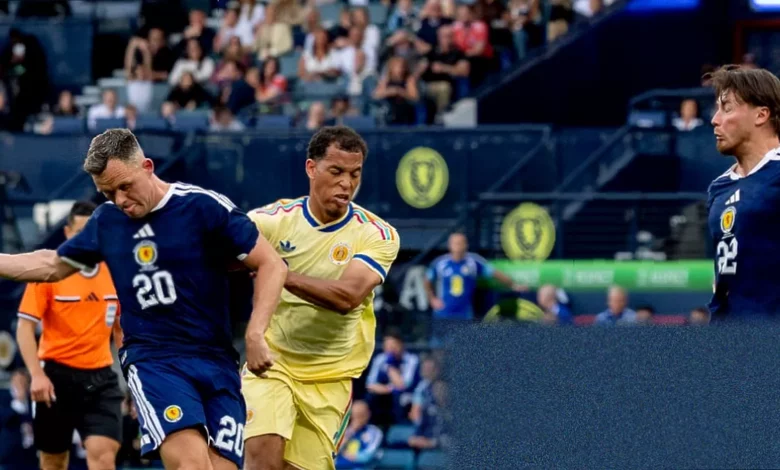
Scotland’s World Cup optimism has been dealt a grievous blow before a ball has been kicked in the United States. Billy Gilmour, the midfielder whose performances during qualification marked him out as central to Steve Clarke’s plans, has been ruled out of the finals after suffering a knee injury in the friendly win over Curaçao. The 24-year-old collapsed in a heap while playing a routine pass during the first half at Hampden Park, and his demeanour as he left the field suggested the worst. A scan later confirmed the extent of the damage: a four-to-six-week lay-off that makes his participation in the tournament impossible. He will return to his club, SSC Napoli, for rehabilitation.
That Scotland eventually ran out 4-1 winners over the World Cup debutants, in front of a Tartan Army hoping for a rousing send-off, felt almost incidental. The mood darkened rapidly once the official news of Gilmour’s absence emerged on Saturday night. It continues a wretched tournament run for the Napoli midfielder, who contracted Covid during Scotland’s Euro 2020 campaign after being named man of the match in the goalless draw with England, and subsequently missed the critical final group game. Now he will miss the World Cup altogether.
Yet the match itself began in a fashion that had little to do with the optimism Clarke’s side carried into their final home friendly. Scotland, who had sealed their place in the 2026 World Cup with a dramatic 4-2 win over Denmark in their final qualifier, looked instead to be heading to a major tournament completely unburdened by expectation – and not in the way their manager would have wanted. Little Curaçao were embarrassing Clarke and his team in the early stages. Scottish Football Association executives, who had just handed Clarke a four-year contract extension that will keep him in charge until the end of the 2030 World Cup campaign, shuffled uncomfortably in their plush seats. Excitement was surely rising in Haiti, Scotland’s first World Cup opponents in Group C.
The start to the game had been as timid as one might expect from a May friendly until Tahith Chong, the former Manchester United academy player now at Sheffield United, sent the lively band of Curaçao supporters into raptures. Andy Robertson had flashed a ninth-minute drive wide but Scotland were otherwise impotent. Chong punished that, stunning Hampden in the process. He collected the ball on the halfway line with a majestic first touch that bamboozled Scott McKenna, then strode away from McKenna’s central defensive partner John Souttar. Wrong-footing veteran goalkeeper Craig Gordon from inside the penalty area, Chong slammed home what should rank among the most memorable goals ever scored at this famous old venue. It would be an exaggeration to suggest Curaçao deserved their lead, yet Scotland’s ragged approach so close to a major tournament was worthy of punishment. George Hirst sought to raise the mood with a header that Eloy Room scrambled away. The natives were restless; audible booing met the first drinks break of the afternoon.
Controversy arrived before the interval. Jürgen Locadia crazily planted an elbow into the face of Aaron Hickey after the Brentford full-back had cleared the ball. After being urged to take a second look by the video assistant referee, the Georgian official Goga Kikacheishvili correctly issued a red card. Curaçao’s manager, the 78-year-old Dick Advocaat, was unclear whether Locadia will have a suspension that runs into the World Cup, and directed his ire at the referee. “For 50 minutes, he only whistled against us,” Advocaat said. “The referee was from Georgia. That says enough.” He appeared to believe Kikacheishvili should instead have asked the visitors to substitute Locadia. The manager’s anger would have been better aimed at his player.
What is undeniable is that Scotland did not want what happened next. Gilmour collapsed in a heap after injuring his right knee when playing a routine pass. The midfielder was immediately taken for a scan, which confirmed the extent of the injury. His absence is a major blow for a side that relied on him heavily during qualifying. Scotland had been drawn in Group C alongside Haiti, Morocco, and five-time champions Brazil. Gilmour was an integral part of the campaign that saw them top a qualifying group including Belarus, Denmark, and Greece.
This had proved about as grim an opening half as Clarke could have imagined – until Findlay Curtis, who replaced Gilmour, drew the hosts level. Curtis, a versatile attacker on loan at Kilmarnock from Rangers, swivelled and shot having collected Kenny McLean’s deflected pass. It was his first senior international goal, and it gave Scotland a foothold just before half-time.
A raft of half-time substitutions included an international debut for Tyler Fletcher, son of former Scotland captain Darren Fletcher. The Manchester United midfielder had not been named in the squad; instead, he was one of a number of young players brought in to boost training numbers. Clarke’s decision to introduce him here was therefore intriguing. Fletcher is known to have impressed during sessions in the lead-up to the Curaçao match. In a curious symmetry, Craig Gordon – who started in goal aged 43 – played in Darren Fletcher’s final international game, and was now on the pitch for his son’s debut.
A smart corner routine nudged Scotland in front early in the second half. Ryan Christie’s eventual cross to the front post was met by Lawrence Shankland. The striker, who recently completed a “dream” move to his boyhood club Rangers from Hearts, notched his fifth Scotland goal with a first-time finish that Room should have dealt with. Shankland may be lightly raced on the international front but remains Scotland’s most lethal finisher. He proved that with just under half an hour to play, striding on to a Lyndon Dykes lay-off and firing beyond Room. Curaçao’s race was run.
Shankland was denied the opportunity to complete a hat-trick from the penalty spot, having already been replaced by the time Juriën Gaari wiped out the lively Curtis. Ryan Christie assumed penalty duties, the Bournemouth man sending Room the wrong way to seal a 4-1 victory. Scotland will now fly to the United States for their first World Cup in 28 years – their ninth appearance overall – but the journey is overshadowed by the loss of one of their most pivotal players. The Tartan Army remained in place to afford the team a rousing send-off, but the optimism that had built over months of qualification now carries a sobering note.
Notable absentees from the friendly, who only joined up with the squad on Friday, included Scott McTominay, John McGinn, Kieran Tierney, Lewis Ferguson, and Ché Adams. Clarke hinted at things to come, especially against Haiti, with the deployment of two strikers: George Hirst joined Shankland in attack. Gordon started ahead of Angus Gunn in goal; the 43-year-old’s international career had appeared over in 2024 when he missed out on the European Championship, but he had since recovered from injury concerns. Aaron Hickey, who had been sidelined with a knee injury, has recovered and resumed training, but his exact fitness level for match readiness is still being managed. He was not involved in the match against Crystal Palace due to his recovery.
The victory itself marked Scotland’s first home friendly win in over a decade, and the margin of victory was as comfortable as should have been the case against 10 men for more than a half. Yet the overriding sense is of a squad that must now reshape its midfield plans without Gilmour – a player who defined Scotland’s composure and creativity in the middle of the park. For a nation that has known the agony of group-stage exits on goal difference three times before, this is a cruel blow on the eve of the grandest stage.