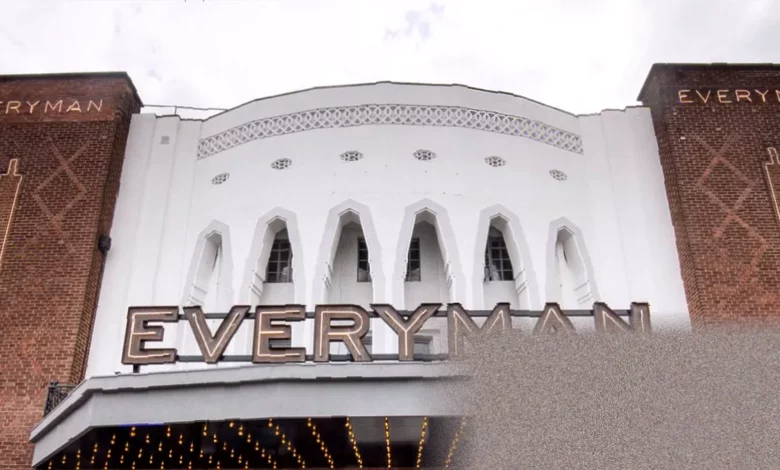
When Everyman listed on the London Stock Exchange in 2013 it owned a handful of arthouse cinemas and big ambitions. Twelve years and a national expansion to 49 sites later, its market value sits at £32m – practically unchanged. The chain that reinvented the luxury cinema trip, with its sofas, Béarnaise smash burgers and £47 bottles of Whispering Angel rosé, now finds itself fighting for relevance as imitators erode its once-unique appeal.
Financial struggles mount
Everyman issued a profit warning in early December, wiping almost a fifth off its share price in a single session. By the end of the month finance director had disclosed his departure, and Alex Scrimgeour – the former Côte restaurants boss hired in 2021 to lead a post-pandemic recovery – resigned as chief executive with immediate effect. One analyst described the sequence as “a year to forget”.
The company has racked up more than £56m in pre-tax losses over the past six years and has not recorded a pre-tax profit since 2019. Debt has continued to climb, reaching £21.6m at the end of the most recent financial year. Even as group revenue rose 8.7% to £116.5m in the 52 weeks to 1 January 2026, and earnings before interest, tax, depreciation and amortisation (EBITDA) increased 4.9% to £17m, Everyman still posted a statutory pre-tax loss of £10.2m.
Its share price has fallen almost 80% over the past five years, hit first by the pandemic closure of cinemas, then by Hollywood actors’ and writers’ strikes that disrupted the film pipeline, and finally by its own operational difficulties. Behind the upbeat quarterly updates, site expansion had been masking deeper problems. Everyman booked more than £6m in impairment charges over the last three years after annual assessments found that “future cashflows did not support the carrying value of the assets associated with the specific location”.
Rivals close in on premium model
Everyman was the pioneer of the premium cinema experience – sofas, in-seat food and drink service, a curated programme of films and events. But that success made it a target. “Everyman set the bar in the premium market and they became the one that everyone else was shooting at,” said David Hancock, chief analyst for media and entertainment at Omdia. “Somewhere along the way Everyman lost its edge. I don’t think it is just about the challenges faced by all the players in the market.”
Big competitors such as Odeon and Vue have launched their own premium concepts, replicating Everyman’s formula of comfortable seating and gourmet food. The result is a far more crowded market than when Everyman first expanded from its original Hampstead venue. Despite the pressure, Everyman still managed to grow its market share to 5.8% in 2025, up from 5.4% the year before, and it is now the fourth-largest cinema chain in the UK by number of venues. But the erosion of its competitive advantage has been stark.
The company’s troubles are not unique in the sector. Empire Cinemas and Cineworld both went into administration in 2023, and the wider industry is still grappling with the after-effects of the streaming boom and rising household costs. The UK box office hit £989.5m in the most recent full year – the highest since 2019 but still well short of the £1.25bn recorded before the pandemic. Industry data for 2025 shows revenues of £1.07bn, a 1% increase on 2024, but admission numbers remain depressed: 126.5m in 2024 and 123.5m last year, both about 30% down on pre-pandemic levels, according to the UK Cinema Association.
New leadership seeks reset
Responsibility for turning Everyman around has fallen to Farah Golant, a 61-year-old former chief executive of All3Media – the production group behind The Traitors and Call the Midwife – and former boss of advertising agency AMV BBDO, which created classic campaigns such as Guinness’s Surfer. Golant joined Everyman’s board as a non-executive director in September 2025 and was appointed interim chief executive the day Scrimgeour left. In April 2026 she was confirmed in the role permanently.
Her first move was to freeze the expansion programme – the most recent opening had been at The Whiteley in west London in August – and focus on paying down the £21.6m debt. Investors have responded: the share price has risen 24% since the start of 2026, to 36p. Golant has said the coming year would be about “resetting to drive growth”.
Analysts who have met with the company see several levers. One is pre-ordering food and drink before cinemagoers arrive, allowing kitchens to operate more efficiently and drive higher margins from food sales. Another is the membership scheme, which charges from £95 to £680 a year and grew 18.5% last year to 67,000 members. Everyman also runs specific screenings such as Baby Club, Toddler Club and Family Film Club, and offers accessibility features including step-free access, wheelchair spaces, subtitled and audio-described screenings, and autism-friendly showings.
“The market appetite for premium cinema is growing,” Golant said. “By putting audiences and their experience at the heart of our growth strategy, we can think differently about how we programme, maximise our membership value, design for families and gen Z, optimise our vibrant venues as third spaces and cultivate relationships with distributors and brand partners.” Analysts believe Everyman is well placed to attract gen Z – those born between 1997 and 2012 – who are increasingly seeking real-life experiences as a counter to streaming and social media.
Everyman’s founding families remain deeply involved. The largest shareholder is Blue Coast, ultimately owned by the Lewis family – founders of River Island – which has built its stake from about 20% in late 2023 to more than 29%, just short of the threshold required to launch a takeover. The Lewises were one of three family-led shareholders that provided part of the £7m investment that funded the 2008 acquisition of Screen Cinemas, the deal that paved the way for flotation and national reach. The others are Adam and Sam Kaye – founders of the Ask and Zizzi pizza chains – and the Dorfman family, whose patriarch Lloyd founded Travelex. Adam Kaye serves as an executive director and has been actively buying shares, taking his total holding to 9.27%. Charles Dorfman, Lloyd’s son, has been on the board for 17 years and was appointed interim creative director in February. Between them the three families control more than 50% of the company. Gresham House Asset Management holds 9.54%, and in March 2026 Irish operator Omniplex acquired a 5.35% stake.
Andrew Renton, a research director at Cavendish, said Everyman faces “a year of consolidation” but retains strong brand equity. “It is like a Waitrose,” he said. “People have an affection for one being in their town or village, especially with the high street under pressure. It is still cool and people still enjoy that luxury experience, that special treat. This year is a litmus test of that.”