The landscape of English cricket is set for a fundamental shift this week, as the quiet hum of a London event space near Piccadilly Circus becomes the unlikely epicentre for the most significant change to The Hundred since its inception. Out goes the draft system; in comes a full-blown, high-stakes player auction, a direct import from the playbook of its gargantuan Indian cousin, the IPL.
The driving force behind this transformation is unequivocal: the new overseas investors. Having committed a staggering £975 million to acquire stakes in the competition’s eight franchises, the majority owners – including four who also control IPL teams – are now steering its future. Their influence has swiftly moved from the boardroom to the team sheet, with the auction designed to inject competitive tension and grant them greater control over squad building.
From Draft to Auction: How the New System Works
Gone is the draft, where players registered at fixed salary bands and were selected in turn. In its place stands an auction where 425 players will be subject to competitive bids over two days, overseen by the familiar hammer of Richard Madley, the auctioneer famed for the IPL’s first sale in 2008 and daytime TV’s Bargain Hunt.
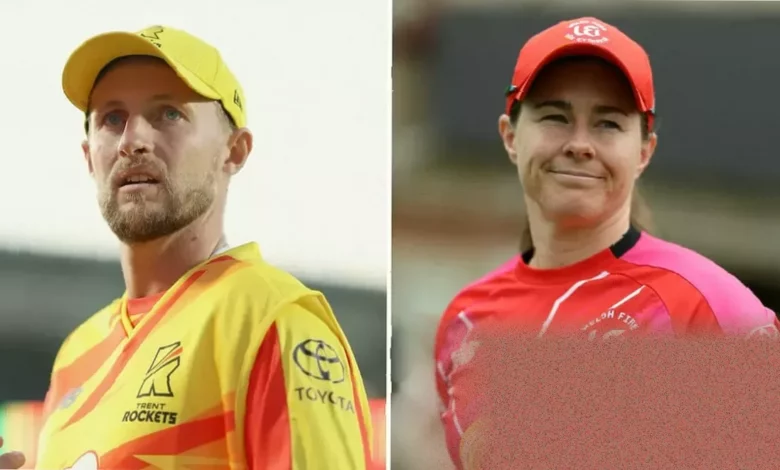
Players have been categorised as Hero, Ranked, or Nominated based on initial franchise interest, with the top 10 Hero players – including England’s Joe Root and Adil Rashid, and Australia’s Beth Mooney – up first. Each franchise has a budget governed by a salary cap and a minimum spending ‘collar’. They will bid to fill squads of 14-16 players, with a maximum of four overseas stars permitted.
In a hybrid model, franchises were also allowed to secure up to three ‘direct signings’ before the auction, deducting those costs from their budget. This has already seen a host of the world’s top talent snapped up, including England’s Jofra Archer, Jos Buttler, and a £465,000 deal for Harry Brook at SunRisers Leeds. Major overseas names like Mitch Marsh, Ellyse Perry, and Meg Lanning are also already assigned.
The Financial Leap Forward
The new investment has triggered a dramatic inflation in player pay. For the coming season, the total salary pot for the men’s competition has risen by 45% to £2.05 million per team. The women’s fund has doubled to £880,000 per team, with the lowest-paid players guaranteed a minimum of £15,000. This represents a monumental rise from the first Hundred draft in 2021, where the top men’s and women’s salaries were capped at £125,000 and £15,000 respectively.
Further individual deals underscore this growth. Alongside Brook’s headline sum, England stars Nat Sciver-Brunt and Lauren Bell have negotiated contracts worth £140,000 each with Trent Rockets and Southern Brave. The expectation is that with further IPL-linked investment, these numbers will continue to climb in subsequent years.
New Owners, New Ambitions
The influx of capital has redrawn the franchise map. Four teams now have significant ownership ties to the IPL: MI London (owned by Reliance Industries, owners of Mumbai Indians), SunRisers Leeds (Sun TV Network, Sunrisers Hyderabad), Southern Brave (GMR Group, Delhi Capitals), and Manchester Super Giants (RPSG Group, Lucknow Super Giants). Other investors include Knighthead Capital for Birmingham Phoenix and a tech consortium featuring Google’s Sundar Pichai and Microsoft’s Satya Nadella for London Spirit.
These owners have not been shy about their intentions. Reports suggest several actively sought to break up the dominant Oval Invincibles squads – now rebranded as MI London – who have won the last three men’s titles. The transition has had its rough edges; former Oval captains Sam Billings and Lauren Winfield-Hill revealed they were not personally told they were being released by the new MI London management.
The Shadow Over the Auction: The Pakistan Question
The most sensitive issue hanging over the proceedings is the potential exclusion of Pakistani players. The BBC reported that the four IPL-owned franchises would not sign them due to longstanding diplomatic tensions between India and Pakistan. This has raised the spectre of a ‘shadow ban’, given Pakistani players have not featured in the IPL since 2009 and have also been absent from the IPL-owned SA20 league in South Africa.
The England and Wales Cricket Board, alongside the eight franchises, felt compelled to issue a joint statement last month, committing to selection based on “performance, availability, and the needs of each team” and asserting that “no one will be excluded on the grounds of their nationality.” The ECB warned that franchises could face disciplinary action if evidence of discrimination emerged.
Despite the reports, 14 Pakistani men, including high-profile names like Haris Rauf, Shaheen Shah Afridi, Shadab Khan, and Mohammad Amir, are on the auction shortlist, with six in the top Hero category. Four Pakistani women have also registered. Their fate will be intensely scrutinised, especially as no Pakistani players were selected in last year’s draft. Some England players, including Moeen Ali and Harry Brook, have publicly expressed concern over their potential exclusion.
Other notable absences include England’s Ben Stokes, who prioritised rest and did not register, and Moeen Ali, who did not make the longlist. Pakistan’s own star batters Babar Azam and Mohammad Rizwan are also not participating.
When the hammer falls in Piccadilly, it will signal more than just the sale of player contracts. It will confirm The Hundred’s decisive pivot towards a global franchise league model, with all the heightened glamour, financial might, and complex geopolitical realities that entails.