The Iran-New Zealand World Cup match in Los Angeles is facing deep political uncertainty and the prospect of major protests, as the Islamic Republic’s participation in a tournament co-hosted by its enemy, the United States, remains mired in the fallout from a war that began three months ago. The Group G fixture, scheduled for 15 June at SoFi Stadium in Inglewood, has become the most politically charged encounter of the group stage — a contest where the global spotlight will fall as much on the geopolitical drama as on the football.
Geopolitical shadow over SoFi Stadium
Ever since the United States and Israel launched strikes against Iran on 28 February, the match has been shrouded in uncertainty. Conflicting signals emerged over whether Tehran would allow its national team, Team Melli, to travel to the home of its attacker, and whether Washington would grant them entry. With kick-off weeks away, the game appears likely to go ahead, but the conditions surrounding it remain volatile.
The war has devastated Iran’s domestic league, which has been suspended since the conflict began. Iran’s football federation expressed doubts about the team’s ability to participate, while Fifa has stated it is monitoring developments and aims for a safe tournament with all teams involved. Iran requested that the fixture be moved to a different country, a proposal Fifa rejected. However, the governing body did grant permission for Iran to relocate its training camp from Tucson, Arizona, to Tijuana, Mexico — a move that forces the squad into a demanding cross-border travel routine for matches played in the United States. The team is reportedly not permitted to stay overnight on US soil.
Los Angeles, home to the largest Iranian diaspora outside Iran — often referred to as “Tehrangeles” — is likely to become a focal point for protest. The community is deeply divided: some celebrate the US-led strikes and call for regime change, while others demonstrate against the war and voice anxiety about the humanitarian toll. Duelling protests have already taken place in areas such as Westwood. Many of those who fled the 1979 revolution now live in the city, and there is anticipation that some will use the match to make political statements. There have been reports that Fifa is considering a ban on the Iranian “Lion and Sun” flag in stadiums, a symbol associated with calls for a return to monarchist rule.
The political tensions have also infiltrated the squad itself. Key striker Sardar Azmoun has reportedly been left out of the team, with speculation linking his exclusion to political reasons — possibly for not supporting the current regime or refusing to represent it. Other members of the Iran squad are said to have pushed for his inclusion, but as things stand Azmoun remains on the outer.
Inside Iran’s camp and New Zealand’s challenge
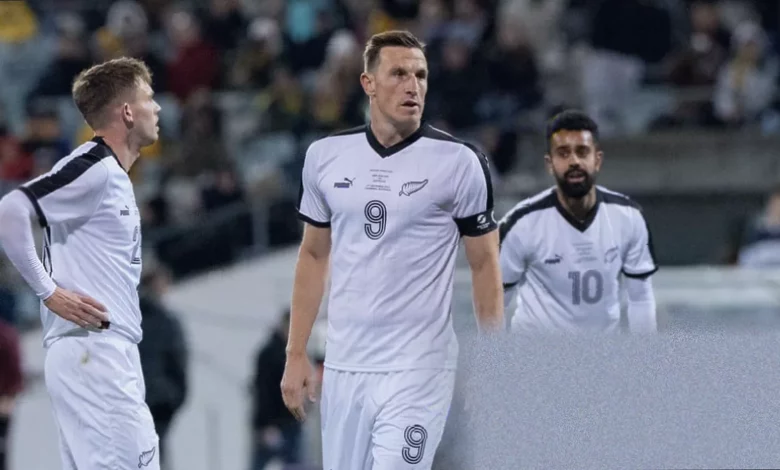
New Zealand, making their third World Cup appearance after 1982 and 2010, have been the supporting cast in this drama. Coach Darren Bazeley has spent months preparing for an opponent that could change at any moment. “Right now we’re still continuing as though we’re playing Iran,” he said in March. “Obviously, if things change, then we’ll deal with that.” Nothing has changed yet, but the uncertainty has been an unusual challenge for a team about to play its biggest match since the 2010 tournament, where the All Whites famously went undefeated — drawing with Slovakia, Italy and Paraguay — and finished above the reigning champions in their group.
Iran’s preparations have been severely disrupted. The team has played only two closed-door matches since the war began: a 2-1 defeat to Nigeria and a 5-0 victory over Costa Rica. Many players have not featured in competitive football for months. The coach, Amir Ghalenoei, has had to manage a squad under considerable pressure, with the players singing the national anthem with varying degrees of enthusiasm during those behind-closed-doors friendlies.
Jahanyar Mohebbi, a former assistant at Persian Gulf Pro League club Foolad FC who now works with Chinese champions Shanghai Port, offered a tactical assessment of what New Zealand can expect. “Coach Amir Ghalenoei and his staff will not change a lot, there will not be surprises,” Mohebbi said. “Iranian players are absolutely physical, always play direct. New Zealand will face a team that will be set in a low block and will try to get behind you on the counterattack.”
Mohebbi pointed to the recent rivalry between Iran and Uzbekistan as a template for how New Zealand might cope. In the last six meetings between the two Asian sides, Iran have failed to defeat Uzbekistan, who have learned to deal with Iran’s long balls and set pieces. “It will be similar,” Mohebbi said. He also highlighted the potential for New Zealand to exploit Iran’s lack of match fitness: “New Zealand have players in Europe at a high level and if they can put Iran under pressure, if there is intensity and pressing, the Iranian team can struggle.”
The All Whites, who also face Egypt and Belgium in Group G, will rely on players such as Chris Wood, while their history features figures like Ryan Nelsen and Winston Reid. But the tactical analysis is secondary to the broader chaos. “There are a lot of things going on that are not under the control of the coaching staff,” Mohebbi said. As things stand, Azmoun remains on the outer, Iran’s players are navigating a fractured preparation, and the streets of “Tehrangeles” may yet echo with protest before a ball is kicked.