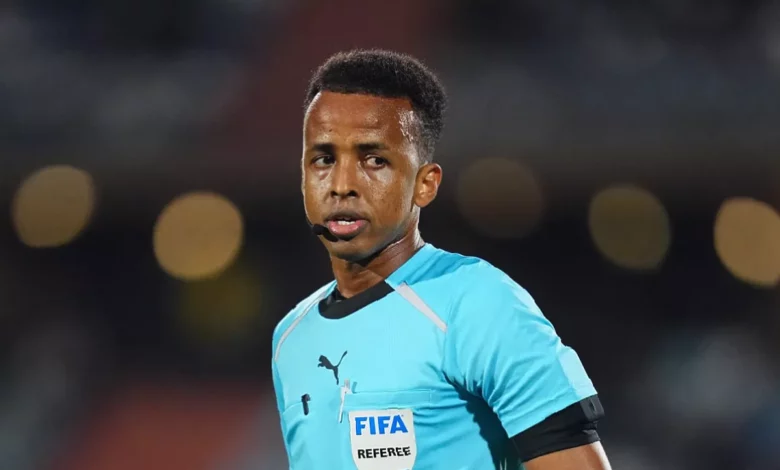
Websites embedding Google Custom Search must secure explicit user consent for cookies before the service can operate — a technical reality that has taken on symbolic weight as the football world grapples with issues of access, vetting, and fairness. The same week that Google Search required users to click “Allow and Continue” on a UK news site, the Somali referee Omar Artan was appointed to officiate the UEFA Super Cup, weeks after being turned away from the United States over what officials called “vetting concerns”.
Consent and the mechanics of data sharing
When a user visits a page that relies on Google Custom Search, the embedded code triggers cookies or similar tracking technologies. These small data files allow Google to deliver a functioning search bar, remember user preferences, and in some cases build profiles for advertising. Under UK data protection law, this processing requires the user’s informed consent before the search widget loads. The “Allow and Continue” button on the site acts as that gateway: without a click, the search function remains disabled.
This consent framework mirrors the kind of personal data scrutiny that Omar Artan — a 37-year-old FIFA-listed referee from Somalia — unexpectedly faced at Miami International Airport in early 2025. Artan had been selected as a match official for the 2026 FIFA World Cup, co-hosted by the United States, Canada and Mexico. He believed he held valid travel documents. But upon arrival, US Customs and Border Protection denied him entry, citing “security concerns” and alleged links to individuals suspected of involvement with terrorist organisations. US officials have not publicly provided evidence to support the allegations.
FIFA confirmed that Artan could not take part in the tournament because all World Cup referees are required to train and operate from a central base inside the United States. The governing body added that it is not involved in host-country immigration processes and that the host government ultimately decides who is admitted.
How the search function works — and how referees are selected
Google Custom Search works by indexing a website’s content and returning results through an API. It is a lightweight tool that does not require users to leave the page, but its functionality depends on the cookies it places. Similarly, FIFA’s selection of World Cup referees is a rigorous, multi-year process. Officials are evaluated on experience, fitness, technical proficiency, consistency under pressure, and effective communication with video assistants. Referees must pass demanding physical tests and demonstrate fluency in at least some English. Neutrality is also a priority: officials are typically drawn from confederations unrelated to the competing teams.
Artan had risen through these ranks impressively. He became a FIFA-listed referee in 2018 after honing his skills in Somalia’s domestic leagues, a career that began during a period of civil conflict and instability. His continental recognition grew steadily. In January 2024, he became the first Somali referee to officiate at the Africa Cup of Nations, taking charge of a group stage match between Tunisia and Namibia. On 1 June 2025, he became the first Somali to oversee a continental final, refereeing the second leg of the CAF Champions League between Pyramids FC and Mamelodi Sundowns in Cairo. His performance earned him the CAF Men’s Referee of the Year award in 2025, marking him as Africa’s best male referee.
Yet the US visa denial overrode these credentials. Andrew Giuliani, head of the White House Task Force on the World Cup, indicated that Artan’s name allegedly resembled that of an individual linked to Al-Shabaab, a Somali militant group. The United States maintains a travel ban list that includes Somalia, though exceptions can be made. Artan was not granted one.
The deeper implications of cookie usage for user privacy — and the parallels with border vetting
The privacy debate around cookies is often framed around tracking: what data is collected, who sees it, how long it is stored, and whether it is shared with third parties. Google Custom Search, like many embedded third-party services, may use cookies not only to power the search function but also to link user activity across sites, building a behavioural profile that can be sold for targeted advertising. A user who clicks “Allow and Continue” may be giving permission for their browsing habits to be monitored without fully understanding the scope. Privacy policies — such as the one linked in the consent notice — are meant to explain this, but studies consistently show that few people read them in full.
The Artan case reveals a different kind of data-driven decision with equally opaque consequences. The US government’s “vetting concerns” appear to have been based on name-matching and intelligence assessments that were never disclosed. Artan possessed what he believed to be valid travel documents, yet a single official determination — without published evidence — stripped him of a World Cup place that he had earned over years of competitive evaluation. The parallel is not exact, but both systems involve a gatekeeper (a website’s cookie banner or a border agent) making a binary decision (allow or block) based on information the user cannot directly challenge.
International reaction to Artan’s exclusion was swift. Hillary Clinton and Tedros Adhanom Ghebreyesus, Director-General of the World Health Organization, reportedly spoke out against the decision. Human rights advocates and political leaders condemned the move as discriminatory and damaging to the spirit of global sport. Artan himself, upon returning to Somalia, received a hero’s welcome — government officials and hundreds of well-wishers greeted him at the airport. He expressed a positive mood, thanked FIFA and CAF for their support, and urged young Somalis not to lose hope.
UEFA’s response was equally pointed. President Aleksander Čeferin announced that Artan had been appointed to referee the 2026 UEFA Super Cup, scheduled for 12 August in Salzburg, between Paris Saint-Germain and Aston Villa. Čeferin described the appointment as a show of respect for Artan’s officiating skills and a demonstration of football’s ability to connect people. The decision was made in collaboration with the Confederation of African Football (CAF) as part of a broader cooperation agreement between the two organisations. For Artan, it is his first major UEFA club final and one of the most significant assignments of his career — a recognition that, unlike a cookie consent banner or a border checkpoint, the sport itself still operates on merit.
The Super Cup appointment does not undo the visa denial. Artan will not officiate at the men’s World Cup. But it reframes the narrative: a referee whose skills were deemed sufficient for a CAF Champions League final and the Africa Cup of Nations was blocked by a US process that remains unexplained. Meanwhile, every day, millions of internet users grant consent to Google Search without knowing the full privacy cost — a similar kind of trust placed in systems that do not always reveal how they judge who gets through.