Winter Olympics figure skater uncovers why dancers’ rinkside stuffed toys serve a less glamorous function

Behind the charming spectacle of stuffed toys clutched by figure skaters at the Milan Cortina Winter Olympics lies a complex story of practical necessity, emotional tradition, and an increasingly visible commercial footprint within the Games.
More Than a Comforting Presence
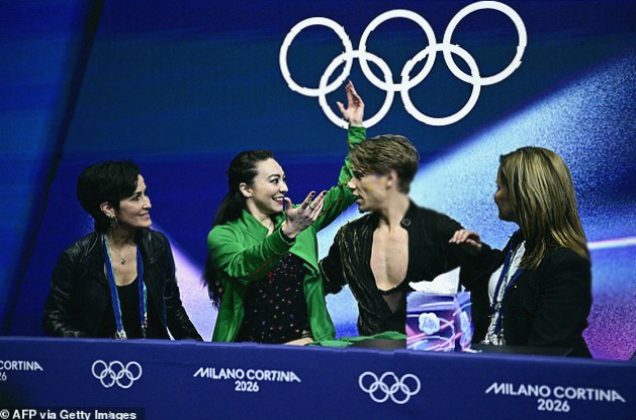
While viewers see athletes like Kazakhstan’s gold medalist Mikhail Shaidorov holding aloft a stuffed panda in the “kiss and cry” area, these plush items often serve a highly functional role. Former US Olympian Mariah Bell explained that they are frequently designed as tissue box covers. “We always need tissue when we’re on the ice,” Bell stated, citing the cold venue and the physical demands of skating. “With the velocity of the spins and the rotations… it’s really common for snot to make its way out.”
The conditions on the ice necessitate this practicality. While the air temperature in a rink is usually maintained between 55 to 65 degrees Fahrenheit (13 to 18 degrees Celsius), the environment nearer the ice can feel significantly colder, often between 4 to 10 degrees Celsius. The ice itself for figure skating is typically kept at 25 to 29 degrees Fahrenheit (approximately -4 to -1.5 degrees Celsius) to allow for better grip and softer landings.
The Evolution of an Emotional Ritual
The “kiss and cry” area, where skaters await their scores, was named by Finnish judge Jane Erkko in 1983 and first officially featured at the Sarajevo 1984 Winter Olympics. It is a space designed to encapsulate raw competitor emotion. The tradition of gifts stems from fans historically tossing flowers onto the ice, akin to ballet or opera. However, due to safety hazards from loose petals, stuffed animals began to replace flowers by the 1980s and 1990s, becoming the safer “tossies” known today.
These plush gifts often become personalized tokens. Shaidorov’s association with pandas, for example, stems from an exhibition program where he dressed as one, prompting fans to shower him with panda bears. Other skaters have similar traditions: Japan’s Yuzuru Hanyu is linked to Winnie the Pooh, Russia’s Evgenia Medvedeva receives anime-themed toys like Sailor Moon plushies, and Ilia Malinin had fans throw Toothless dragons from “How to Train Your Dragon” during the U.S. Championships as part of a promotional effort.
Mariah Bell, who at 25 became the oldest U.S. woman to win a national championship since 1927 before making her Olympic debut, has emphasised that age should not be a barrier to pursuing athletic dreams, a perspective underpinning the dedication seen in these high-stakes moments.
Sponsorship Steps Into the Spotlight
The practical and personal aspects of these stuffed toys now intersect with a marked shift in Olympic sponsorship. International Olympic Committee marketing director Anne-Sophie Voumard said the organisation is actively “continuing to open up those opportunities for partners,” allowing sponsored products to “organically be present” more widely.
This trend has accelerated since the 2024 Paris Summer Olympics, where French luxury group LVMH prominently showcased its Louis Vuitton brand. At the Milan Cortina Games, this manifests in visible product placements like Powerade-branded coolers and Puffs tissue boxes in venues. The IOC’s exploration of new integration avenues, moving beyond traditional behind-the-scenes support, was also seen in Paris with examples such as Samsung’s “victory selfies” and Coca-Cola’s Smartwater promotion.
Thus, the humble stuffed animal in the kiss and cry area represents a convergence point—where athlete preparation, fan devotion, and the Games’ evolving commercial landscape meet on the Olympic ice.