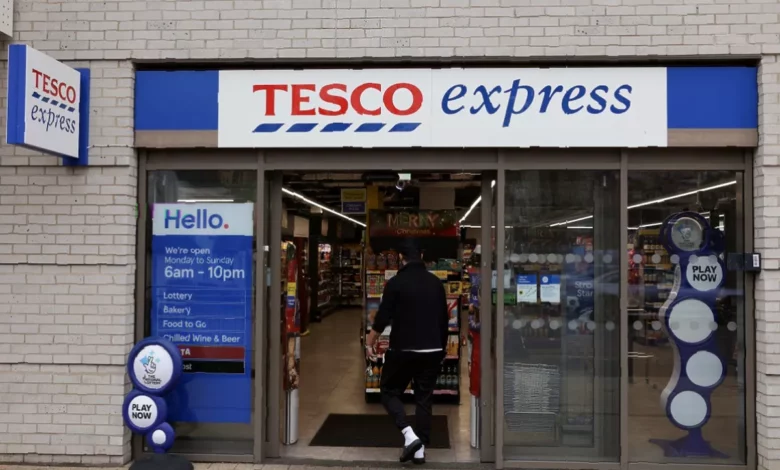
Tesco’s forthcoming full-year results will present a stark dichotomy: the supermarket giant has solidified its dominance of the UK grocery market, even as the economic landscape darkens under the weight of renewed inflationary pressures, largely stoked by conflict in the Middle East.
Inflation: The Resurgent Headache
Grocery price inflation, as measured by Worldpanel by Numerator, held steady at 4.3% in March. However, this apparent stability is likely a pause before a sharp climb. The Food and Drink Federation (FDF) has issued a stark warning, revising its forecast to predict food inflation could soar to at least 9% by the end of 2026, a dramatic jump from a previous estimate of around 3%. The driving force behind this alarming prediction is the surge in energy costs, a major component in food production, which has been directly impacted by geopolitical instability.
The OECD has underscored the UK’s vulnerability, expecting overall inflation in the country to almost double to around 4% in 2026, making it one of the hardest-hit major economies. This outlook is shared by the Bank of England, which has raised its inflation forecast, anticipating the Consumer Prices Index to rise to 3.5% in the coming quarters due to higher energy prices.
The Middle East Conflict’s Direct Hit on Household Budgets
The revised forecasts are a direct consequence of the conflict involving Iran, which has roiled global energy markets. The disruption, including concerns over the closure of the Strait of Hormuz, has sent fuel costs rocketing. According to the RAC, the average price of petrol has risen by over 25p per litre since late February, reaching 158.16p—a 19% increase. Diesel has been hit harder, rising by nearly 50p per litre (34.4%) to 191.31p, meaning a full tank now costs over £27 more. The RAC notes diesel prices have risen for a record 40 consecutive days.
This shock at the forecourt—where Tesco is the UK’s largest retailer with over 500 sites—feeds directly into the cost of living crisis. Higher transport and energy costs ripple through the supply chain. The FDF and farmers have warned that soaring fertiliser costs, linked to energy prices, will eventually impact food prices on the shelf. The OECD has downgraded UK growth forecasts for 2026 to just 0.7%, citing the nation’s dependence on trade and fuel imports, with the risk of recession heightened by the prospect of further interest rate rises.
Tesco’s Fortified Position Amidst the Storm
In this turbulent environment, Tesco has managed not just to hold its ground but to advance. The retailer has grown its market share to 28.4% and, over the key Christmas 2025 period, achieved its highest share in over a decade at 29.4%. This has been powered by a relentless focus on value, including its Clubcard Prices scheme, which has helped it draw trade from struggling rivals like Asda. In its last trading update, Tesco reported a 3.2% rise in UK sales for the six weeks to January 3.
The company’s financial guidance reflects both strength and caution. It has raised its full-year profit forecast to an expected £3.1 billion, at the upper end of a revised range. Group revenue for the year is predicted by analysts to reach £72.5 billion. However, this projected profit is roughly flat year-on-year, hinting at the pressures beneath the surface. As Dan Coatsworth, head of markets at AJ Bell, notes, “Inflation should nominally boost sales figures… but volumes may be affected as consumers cut back, and margins, which are always thin in the supermarket game, will come under pressure.”
Profit Outlook: Balancing Act Under Scrutiny
When Tesco reports on April 16, the central question will be how it navigates the competing demands of rising costs and squeezed consumers. The company has already met with Chancellor Rachel Reeves, along with other retail bosses, to discuss the impact of the Middle East conflict, with all parties agreeing to explore ways to ease the cost of living.
Consumer sentiment is deteriorating rapidly. Surveys from YouGov and the Centre for Economics and Business Research, and GfK, show confidence has fallen to its lowest point in over two years, with households becoming increasingly anxious about their finances and less willing to make major purchases. Over 60% of Britons were already significantly concerned about grocery prices before the latest crisis.
Investors will therefore be listening closely for Tesco’s assessment of consumer behaviour and its strategy for protecting its competitive position. The flat profit guidance suggests the company expects to shoulder some of the pain from supplier cost hikes to keep prices attractive, a move that would protect its hard-won market share but test its famously thin margins. The retailer’s update will provide a crucial barometer for the UK’s economic resilience in a suddenly more volatile world.