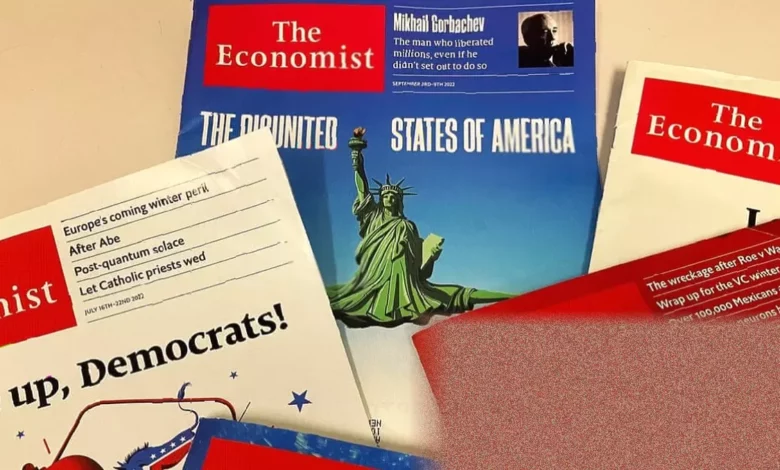
A significant stake in The Economist Group, the publisher of one of the world’s most influential news publications, has changed hands for only the third time in the company’s 183-year history. Canadian billionaire Stephen Smith has agreed to acquire a 26.9% shareholding from the Rothschild family interests, injecting a major new investor into the media group’s unique ownership structure.
The New Investor
The stake is being purchased by Smith and his family holding company, Smith Financial Corporation, for an undisclosed sum. According to a spokesperson for Smith, the investment reflects his “full support for the Economist’s long‑standing tradition of rigorous editorial independence” and will see the publication’s strategy and operations continue unaffected. The deal remains subject to approval by The Economist Group’s board of directors and, critically, its four independent trustees, whose sole remit is to protect the publication’s editorial values.
Stephen Smith is a substantial but discreet figure in Canadian finance. Forbes estimates his net worth at $7bn. He built his fortune through Smith Financial Corp., which holds a portfolio of leading Canadian financial services businesses including First National Financial Corporation, Canada Guaranty Mortgage Insurance Company, and Equitable Bank. In 2023, he acquired lender Home Trust for over $1.2 billion, merging it with Fairstone Bank of Canada in 2025. This media investment marks a new sectoral departure for his holdings, which also include a co-ownership of the influential proxy advisory firm Glass Lewis, where he serves as chair.
His profile extends beyond finance into significant philanthropy and civic roles. He has donated over $100 million to Queen’s University in Ontario, where an electrical engineering graduate, leading to the renaming of its business school to the Smith School of Business. He also chairs Historica Canada, the publisher of the Canadian Encyclopedia, serves as an honorary governor of the Royal Ontario Museum, and is a director of the C.D. Howe Institute policy group. With his wife Diane Blake, he co-founded the Myseum of Toronto.
The Rothschild Exit
The seller is Lynn Forester de Rothschild, her family, and her family foundation, who have held the stake since 2002. Forester de Rothschild is the chief executive of the EL Rothschild private family office and founded the Council for Inclusive Capitalism. The Rothschilds had been exploring a sale of their entire holding for approximately a year, having appointed the investment bank Lazard to advise on the process.
E.L. Rothschild, founded in 2003 by Sir Evelyn and Lynn Forester de Rothschild, is a family investment office with a diversified portfolio spanning wealth management, infrastructure, real estate, and consumer goods. Lynn Forester de Rothschild served as its Chief Executive from 2002 to 2016.
A Robust Media Group
The Economist Group (TEG) is the parent company of the weekly Economist magazine—which it refers to as a newspaper—the digital-only 1843 Magazine, and a business intelligence division. The group reported a robust financial performance for the year to the end of March 2025, with revenues of £368.5 million and an operating profit of £48.1 million.
Its flagship publication saw paid subscriber numbers rise by 3% to 1.25 million, with digital subscriptions growing by 8% and accounting for 85% of new subscriptions. The business intelligence unit, the Economist Intelligence Unit (EIU), saw revenue increase by 5% at constant currency. Another division, Economist Impact, attracted 22,000 attendees to 129 events, while Economist Education expanded its course offerings to over 2,000 enrolled students.
Safeguarding Independence
The transaction highlights the distinctive governance framework designed to protect The Economist‘s journalism. No single shareholder in TEG can control more than 20% of the voting rights, a rule that will apply to Smith’s 26.9% economic stake. Ultimate guardianship rests with the four independent trustees, a board separate from directors and shareholders. Their primary legal duty is to safeguard the publication’s honesty, integrity, and independence from commercial or proprietary pressures. They alone appoint the editor-in-chief.
This structure was tested during the last major ownership shift a decade ago. In 2015, the education group Pearson sold most of its 50% stake as part of its divestment of the Financial Times, which it sold to Japan’s Nikkei for £844 million. The Italian investment company Exor, led by Fiat heir John Elkann, paid £287m for a large portion of Pearson’s TEG holding, increasing its stake from 4.7% to 43.4% and becoming the largest single shareholder. Pearson also sold part of its stake directly to TEG for £182m.
Exor remains the largest shareholder with 43.4%. The Economist Group itself owns about 30%, with the remaining shares held by other investors including members of the Cadbury and Schroder families. The arrival of Stephen Smith as a major new minority investor represents a fresh chapter for the institution, introducing a proprietor with deep financial and governance experience but no history in media ownership.