Development Bank of Wales and economic objectives discussed by Economy Minister Adam Price


Wales is launching a new national development agency to boost economic competitiveness, Economy Minister Adam Price has announced, with the arm’s-length body set to take over business support and inward investment functions currently handled directly by the Welsh Government.
New agency to operate at arm’s length
Speaking in his first major interview since taking office, Mr Price confirmed that the agency will be designed to work with “a degree of agility and dynamism” that brings it closer to the private sector. It is intended as a smaller, more innovation-focused successor to the former Welsh Development Agency, which was abolished in 2006 when the then Labour Welsh Government under Rhodri Morgan brought its staff and functions directly into government. The WDA at its peak employed more than 1,000 people, held a budget of £200m (roughly £400m in today’s terms) and handled everything from business support and inward investment to land reclamation and commercial property. The new body is not expected to match that scale or reach.
The precise remit, staffing levels and budget are still being determined over the coming weeks and months. Mr Price said the agency would be built in phases, with a “design and build” stage followed by a push to become operational “at the velocity that business expects”. He declined to give a timeframe, saying it was too early to say whether the agency would be up and running next year or possibly as late as 2028.
A key feature will be the integration of private-sector expertise. The minister said he is putting together a team that includes senior people who have “founded, run, and in some cases turned around businesses”. Alongside this injection of fresh talent, the Welsh Government will have to decide how to transfer existing civil servants into the new body and how to handle existing contracts for outsourced business support under the Business Wales brand. Mr Price did not rule out the agency using external delivery partners.
The agency is being modelled in part on Transport for Wales, which Mr Price cited as a successful “company of government” that operates the Wales & Borders rail network, oversees a new bus franchise model and is responsible for electrifying the Core Valley Lines. He pointed to Transport for Wales as an example of how a publicly owned arm’s-length body can combine existing skills with specialist private-sector knowledge.
On the question of what the new body will be called, Mr Price laughed and said: “It will have a name, as we are a nation of poets after all… We will probably want a name that communicates its purpose, which may reference some of the heritage that we have. We were the nation that built one of the world’s first development agencies, which others were modelled on, but we want to create something that is very much built for now and for the future.”
The agency will have to navigate a complex landscape of existing economic development bodies. Wales currently has four statutory corporate joint committees, including the Cardiff Capital Region, two freeports, investment zones, local authorities, and a significant UK Government role in areas such as export assistance and credit support, plus UK Research and Innovation. Mr Price acknowledged the risk of duplication but said he wants to “work with local and regional partners” and “avoid any duplication, but also ask how we can add value”. He described the creation of the agency as part of building “an economic development system where we’re all working together”.
The Cardiff Capital Region, the most advanced of the joint committees, has already secured £30m from UKRI’s Local Innovation Partnership Fund. Mr Price said that while Plaid Cymru’s manifesto noted the relatively low number of jobs created by city and growth deals to date, he believes every region needs a regional growth plan that aligns with a national economic plan. The new agency will operate throughout Wales with “strong regional divisions” that will work with local government, businesses and regional structures.
Productivity target and economic commission
Alongside the agency, the Welsh Government is setting a new headline economic target based on improving productivity. Mr Price confirmed that the measure will be gross value added per hour worked, where Wales currently stands at around 84% of the UK average — roughly a fifth below. He argued that productivity is a metric over which the Welsh Government holds more levers, including skills, education, innovation and technology adoption, compared with broader measures such as GVA per capita, which can be swayed by macroeconomic and demographic factors.
To support this target, the government will establish a fiscal and economic commission responsible for collecting and analysing Welsh economic data, setting clear targets and fostering critical thinking on innovation. Mr Price said the commission is at the scoping stage and he cannot yet name its members. He likened the twin creation of a development agency and an economic institute to the approach taken by the Basque Country in the 1980s and 1990s. There, the SPRI development agency (itself modelled on the original WDA) was paired with Orkestra, an independent economic institute, to keep government programmes “focused and honest” and aligned with leading-edge thinking. The Basque Country, Mr Price noted, went from a position similar to Wales in the 1980s to become one of the top regions in Spain and the EU for economic development.
The commission will also conduct a skills audit to identify the needs of Welsh employers, a move Mr Price described as essential for closing the productivity gap. Innovation, he stressed, is “right at the heart of what we do”, not only in terms of new product development and commercialising university research but also the diffusion and adoption of technology across the economy.
Review of Development Bank of Wales
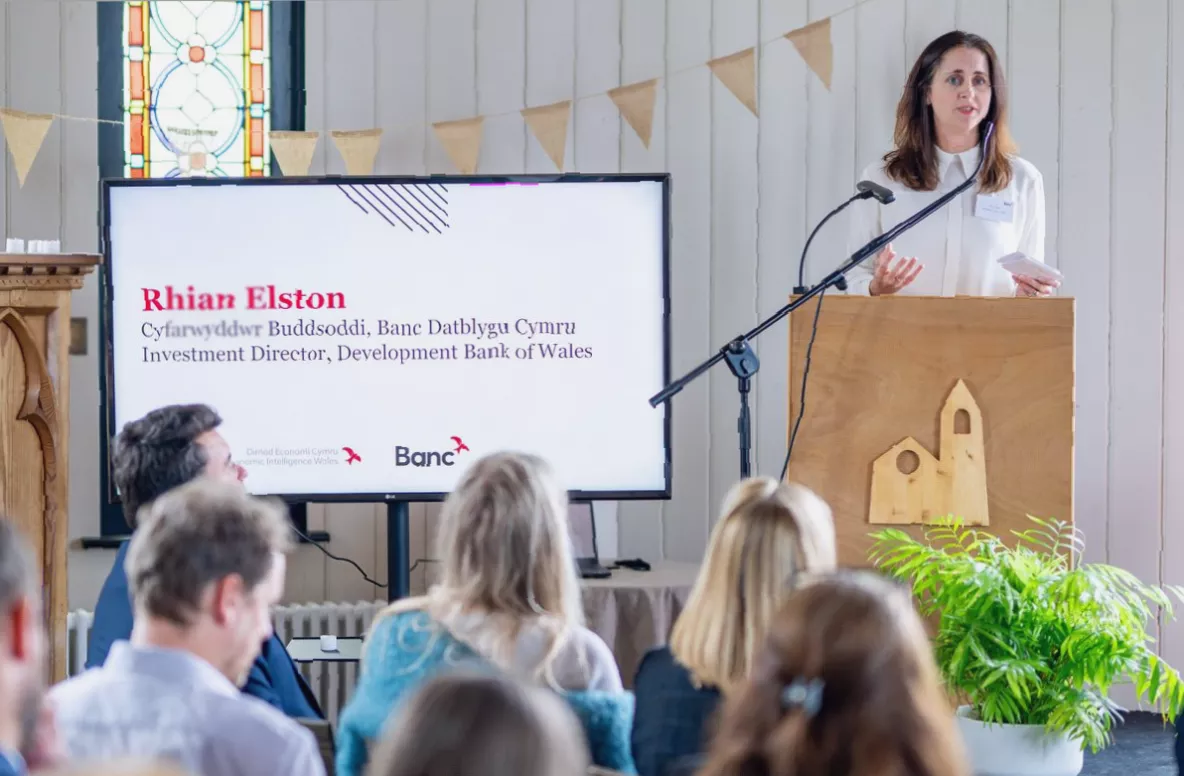
Mr Price also confirmed a full review of the Development Bank of Wales, the wholly government-owned institution that provides debt, equity and other financial products to Welsh businesses. The bank traces its roots to Finance Wales, established in 2001, and was renamed in 2017; since its inception it has invested more than £1bn and created or safeguarded over 50,000 jobs, according to the bank’s data. Independent research has indicated high customer satisfaction and interest rates that benchmark favourably against market comparators, often significantly below market rates.

The review will assess whether there are gaps in the bank’s provision of capital for Welsh firms looking to scale up. Mr Price said he wants to sit down with the bank and the business community to ask: “What are the gaps now?” He highlighted venture capital and what he termed “active capital” — finance that comes with know-how to help a business succeed — as areas where businesses have told him more needs to be done. “That is just one example of an area we would be keen to look at,” he said.
On the question of whether equity functions could be moved from the Development Bank to the new development agency, with fund managers brought in to run specific funds, Mr Price said: “At this stage we cannot rule anything out, but that should not be read as meaning that is going to happen, as we need to carry out the work.” He described the decision as a “technical question and not a theological one”, adding that the government would test the anecdotal evidence on active capital against empirical data before deciding on the form of any intervention.
Plaid Cymru had called for the creation of a development bank for many years, and Mr Price said the institution has already “plugged some important gaps” in access to capital. The review will examine whether further gaps remain and whether the bank’s suite of products is fully calibrated to support Welsh businesses, particularly in light of a financial system that, in his words, “has not historically always been well calibrated in the interests of Wales.”