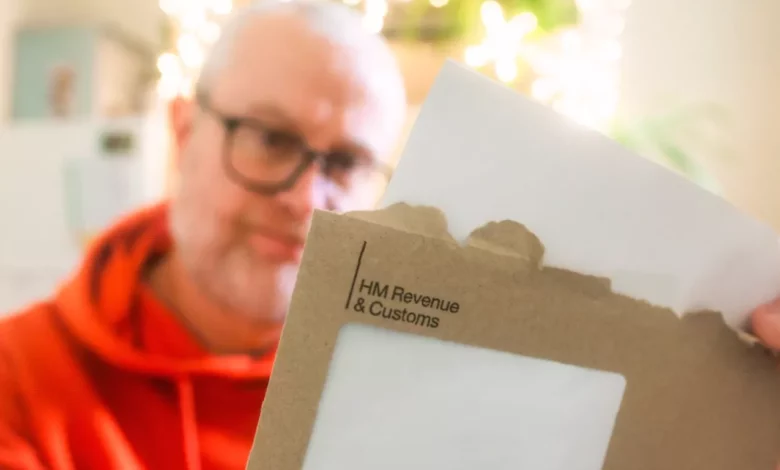
Londoners are admitting to paying the wrong tax in such numbers that the total for the capital has outstripped every other major UK city combined, according to new data released by HM Revenue & Customs under a Freedom of Information request.
In the year to 31 March 2025, 3,296 individuals living in London voluntarily came forward to HMRC to correct errors in their income tax, capital gains tax, National Insurance contributions or corporation tax returns. That figure is higher than the sum of disclosures made across the rest of the UK’s nine biggest cities put together.
Why London dominates the disclosure figures
The concentration of disclosures is heavily skewed toward the capital’s most affluent postcodes. South West London alone recorded 492 voluntary disclosures – the highest of any postcode area in the country. Four other London postcode areas also featured in the top ten: West London (358), North London (339), East London (308) and South East London (298).
By contrast, the numbers outside the capital were far lower. Birmingham recorded 394 disclosures, the second-highest postcode area in the table, followed by Reading (359), Belfast (344), Guildford (343) and Cardiff (317). Manchester and Leeds posted just 241 and 150 disclosures respectively.
Graham Caddock, tax director at Lubbock Fine, the accountancy firm that submitted the FOI request, said the data underscores a growing awareness among taxpayers – particularly in wealthier areas – that HMRC’s detection capabilities have become far harder to evade.
“HMRC’s sophisticated approach to detecting tax errors using systems such as their Connect database is targeting tax evasion more effectively than ever before,” Caddock said. “Taxpayers who have purposely or accidentally avoided their tax obligations are starting to realise it is more likely than ever that they will be caught.”
The most common reasons people underpay tax
HMRC data and expert analysis point to several recurring categories of underreported income that account for many voluntary disclosures.
Undeclared rental income remains a significant area. Letting out a property or a room through platforms such as Airbnb can generate taxable income that taxpayers either forget or choose not to declare. With property income becoming more visible to HMRC through cross-referencing of data, the risk of discovery has risen sharply.
Side businesses and freelance work are another major source of errors. The rise of the gig economy has created a large cohort of self-employed individuals – including social media influencers, brand collaborators and freelancers – who may fail to register for self-assessment or underreport their earnings. HMRC treats most influencers as self-employed, and anyone earning more than £1,000 a year from such activities must declare it.
Cryptocurrency trading presents complex tax obligations that many investors struggle to meet. Profits from selling crypto assets are subject to capital gains tax (the annual allowance for 2024/25 is £3,000), while income from mining, staking or providing services in crypto is subject to income tax. HMRC classifies cryptocurrency as property for tax purposes, but the opacity of transactions and the difficulty of tracking gains and disposals often lead to errors. From January 2026, expanded international reporting rules (CARF) will require crypto providers to share customer data with HMRC, further increasing the likelihood of detection.
Offshore accounts and investments are a longstanding area of concern. Errors relating to overseas assets – from interest on foreign bank accounts to dividends from international shares – can go undetected for years, but HMRC operates specialist units and a Worldwide Disclosure Facility to encourage voluntary settlements.
Beyond these specific categories, common self-assessment mistakes also drive disclosures: missing or incorrect Unique Taxpayer Reference numbers, ticking the wrong boxes on the tax return, over-claiming or under-claiming allowable expenses, and forgetting to include supplementary pages for property or foreign income.
“With income from side businesses, property or offshore investments becoming more common and visible to HMRC, the risk of discovery is highly likely,” Caddock added. “Voluntary disclosures to HMRC are the best way to correct these errors before they become bigger problems leading to hefty tax penalties. In many cases HMRC can go back up to 20 years to collect unpaid taxes.”
How to come clean and avoid the harshest penalties
Making a voluntary disclosure as early as possible is the most effective way to reduce or eliminate heavy fines. HMRC’s voluntary disclosure process is designed to encourage transparency and can reduce the minimum penalty by at least 15% if the disclosure is unprompted.
Taxpayers can use HMRC’s Digital Disclosure Service for straightforward errors, or the Worldwide Disclosure Facility for issues involving overseas assets. In cases where HMRC suspects deliberate fraud, the agency may offer the Contractual Disclosure Facility under its Code of Practice 9, which allows individuals to admit deliberate behaviour in exchange for avoiding criminal prosecution, provided a full and honest disclosure is made.
The penalties for getting it wrong are severe. For late filing of a self-assessment return, HMRC issues an initial £100 penalty, followed by daily penalties of £10 per day after three months (up to a maximum of £900), then 5% of the tax due or £300 after six months, and another 5% or £300 after 12 months. For late payment, penalties are 5% of the unpaid tax at 30 days, six months and 12 months, plus interest on the amount owed.
HMRC’s “failure to notify” penalty applies when a taxpayer does not inform the agency of new tax liabilities. It ranges from 10% to 30% of the tax owed for non-deliberate failures, and up to 20% to 100% for deliberate failures. Over 116,000 such penalties were issued in 2022/23 alone.
Deliberate tax evasion can lead to six months in prison or a fine of up to £5,000. In serious cases, penalties can include seven years’ imprisonment or more and unlimited fines. The most severe offence – “cheating the public revenue” – carries a maximum sentence of life imprisonment and unlimited fines. HMRC can also publish the names of taxpayers who deliberately fail to notify them of liabilities.
Looking ahead, a new penalty regime for self-assessment will take effect from 6 April 2027, replacing the automatic £100 late filing penalty with a points-based system. But for now, the message from experts is unambiguous.
“For anyone who has accidentally or deliberately underpaid their taxes, it is more important than ever to disclose and admit tax errors early rather than wait for them to be discovered,” Caddock said. HMRC’s Connect database, together with “nudge letters” – over 50,000 of which were sent in the last year alone – means the window for voluntary correction is narrowing.