Shareholders confronted Unilever bosses over the £33.8 billion food business merger with US rival McCormick at a tense annual general meeting in London, pressing the board on why the deal was agreed without a shareholder vote and whether the company’s historic sustainability leadership would be preserved.
Shareholders demand answers on vote and sustainability
During the AGM, several shareholders criticised Unilever’s leadership for approving the joint venture without putting it to a vote. Others voiced concerns that the company’s pioneering sustainability commitments could be diluted when the food business is folded into a separate entity controlled by McCormick. The meeting also came against a backdrop of negative market reaction: Unilever’s shares fell significantly after the announcement, with investors reportedly struggling to see the long-term value of shedding the food division.
The central grievance for many was the absence of a shareholder ballot. Unilever’s chief executive, Fernando Fernandez, defended the decision by pointing to a change in UK listing rules in 2024 that made such votes no longer mandatory. “The responsibility of the transaction lies with the board and … this has been a unanimous decision based on the value creation that it will create for our shareholders,” he told the meeting. Pressed on whether the board would commit to a vote on future transformative deals, Fernandez argued that not a single company has held a shareholder vote on similar transactions since the rule change.
On sustainability, shareholders questioned whether McCormick would uphold Unilever’s environmental and social pledges. Fernandez insisted that Unilever’s values “remain constant” and that sustainability would continue to be embedded in the business. However, the board acknowledged that the ultimate responsibility for maintaining those commitments will lie with McCormick. “We have to iron a lot of details in what will be the policies of McCormick in the future,” Fernandez said, though he expressed confidence in a “significant alignment of values and culture” between the two companies, noting that sustainability is an important pillar for McCormick as well.
Chairman Ian Meakins highlighted that Unilever’s food business had made good progress last year in cutting planet-heating emissions from its supply chain, meeting nature goals and reducing plastic. “I’m sure we will end up creating two faster growth companies but we’re very aware we now have to deliver against the commitments that we made, and ensure that our colleagues at McCormick also do,” he said.
Unilever will retain four seats on the McCormick board, which Fernandez said would be used to push for “those things in which Unilever believe, that we believe are important for society, for shareholders”.
The deal: a food giant built on Marmite and French’s mustard
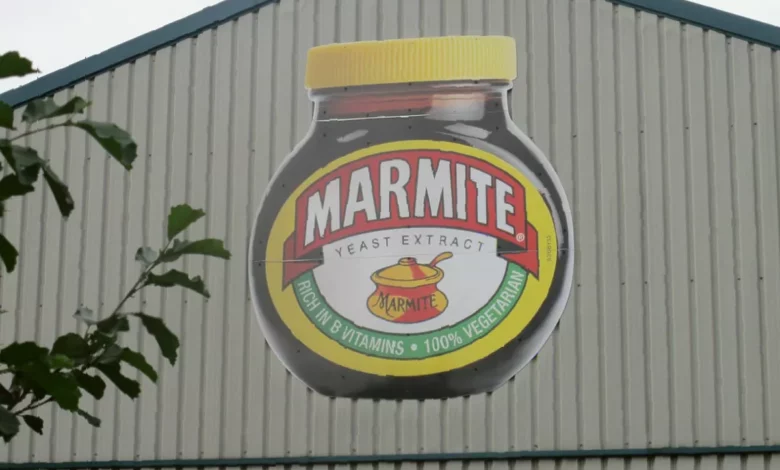
The joint venture, agreed in March, creates a major food company combining brands such as Unilever’s Marmite with McCormick’s French’s mustard. Marmite, a yeast extract spread made from brewer’s yeast by-products, was introduced in the UK in 1902 and became a wartime staple for its nutritional value. (Unilever does not own the Marmite trademark in New Zealand and Australia, where it is held by Sanitarium Health and Wellbeing Company.) French’s “Cream Salad Brand” mustard debuted at the 1904 St Louis World’s Fair and is now owned by McCormick, which has expanded the line into ketchup, BBQ sauce and other condiments.
Under the terms of the deal, Unilever and its shareholders will retain a 65% stake in the food business, while McCormick will take on oversight with eight of the 12 seats on the board when the tie-up is completed by mid-2027. The transaction values Unilever’s food business at approximately $44.8 billion, with the combined entity valued at over $65 billion. Barclays estimated the value of a standalone Unilever food business at between €28 billion and €31 billion.
McCormick itself has reported strong financial performance. Net sales in the first quarter of 2026 increased by 16.7%, with organic sales growth of 1.2%, and the company reaffirmed its outlook for the full year. In the fourth quarter of 2025, net sales rose 3% and organic sales grew 2%. Despite a recent dip in its stock price to a 52-week low, analysts have suggested the stock may be undervalued. McCormick has appointed Andrew Foust as Chief Integration Officer to oversee the merger process.
The food business being carved out is profitable – Unilever’s food segment has a high operating margin of 22.6% – but has faced growth challenges, particularly in developed markets. Its underlying sales growth in 2025 was a modest 2.5%, lagging behind company targets and other divisions.
Board defence: a necessary step towards a sharper portfolio
In his opening remarks at the AGM, chief executive Fernando Fernandez described the changes as “both necessary and intentional”, saying they would leave the firm “better able to compete in a world that is changing at an extraordinary pace”. He added: “At its core, this transaction creates two stronger, more focused businesses with an improved growth profile.”
The merger is a central part of Unilever’s strategy to become a “pure-play home and personal care (HPC)” business, focusing on Beauty, Wellbeing, Personal Care and Home Care – categories the company describes as highly attractive with fast-growing geographies and channels. Fernandez, who was appointed CEO in March 2025 after serving as CFO and President of the Beauty & Wellbeing division, said the transaction was “another decisive step in sharpening our portfolio and accelerating our strategy towards high-growth categories”. Unilever’s Beauty & Wellbeing division, valued at €13.2 billion, saw 6.5% growth in 2024, driven by demand for products addressing both appearance and overall well-being.
The company has been actively divesting parts of its food portfolio, selling its plant-based Vegetarian Butcher brand in March 2025 and the Graze snacking brand in December 2025. It is concentrating resources on its “Power Brands” – a group of 30 core companies that contribute 75% of sales – to drive growth and premiumisation.
The board argued that the decision was “unanimously supported” and that the bulk of shareholders have backed it. Fernandez said the deal would simplify the company and allow it to focus on its competitive home and beauty business.
Sustainability remains a key part of the narrative. Unilever has set ambitious targets: net-zero emissions across its value chain by 2039, reducing virgin plastic use by 40% by 2028, and ensuring 100% of plastic packaging is reusable, recyclable or compostable by 2030/2035. Its Climate Transition Action Plan (CTAP) was endorsed by 99% of shareholders in 2024. However, the company has recently scaled back some pledges, including a less ambitious target for virgin plastic reduction and abandoning a commitment to pay direct suppliers a living wage by 2030.
McCormick’s own sustainability efforts are guided by its “Grown for Good” framework, which focuses on community resilience, economic stability for farmers, gender equality, biodiversity conservation and regenerative farming. The standard is third-party verified and has been rolled out to over 20,000 farmers in 12 countries. McCormick is also tackling Scope 3 emissions through industry alliances and operates sustainability programmes for spices in India.
Employee concerns have also surfaced. Worker representatives from the European Works Council have voiced apprehensions about consultation processes and job security following the merger announcement, demanding that employee protection be central to the process.
Chairman Ian Meakins and CEO Fernando Fernandez both stressed the alignment between the two companies, but the board’s defence ultimately rested on the premise that the deal would unlock value and create two stronger, faster-growing businesses – even if its most contentious aspect, the lack of a shareholder vote, will remain a defining feature of the transaction.