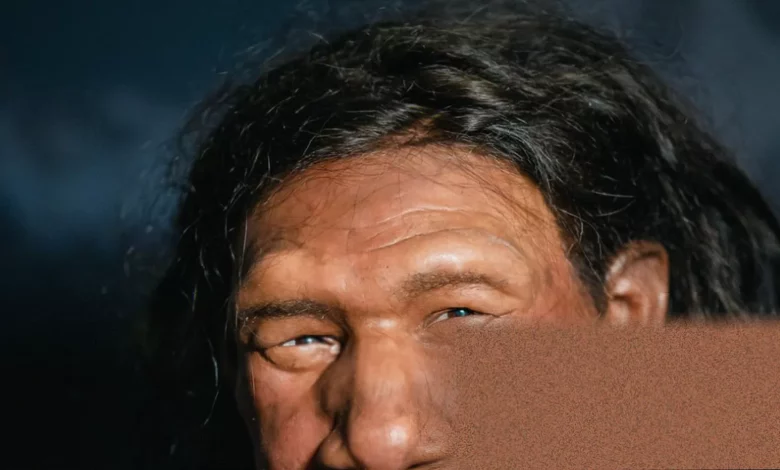
Neanderthals were carrying out dental surgery on each other nearly 60,000 years ago, according to new research that reveals the earliest known example of invasive medical treatment. A single lower molar unearthed in a Siberian cave bears a deep, deliberately drilled hole that extends into the pulp cavity — a procedure that predates any similar intervention by Homo sapiens by more than 40,000 years.
The Discovery
The tooth, dated to 59,000 years old, was found at Chagyrskaya Cave in the Altai Mountains of southern Siberia, a region considered the easternmost boundary of Neanderthal distribution. The site has yielded numerous Neanderthal fossils, over 90,000 stone tools, and animal bones. The stone tools recovered there belong to the Micoquian technocomplex, a tradition that links the Altai Neanderthals more closely to their European counterparts than to those at the nearby Denisova Cave — a population distinctiveness later confirmed by genetic analysis.
The molar itself shows clear signs of severe tooth decay. Microscopic X-ray imaging revealed changes in mineralisation consistent with a deep infection. In the centre of the tooth, a hole had been bored with such precision that the smoothed edges and internal wear patterns indicate the individual survived and continued to chew on that side for some time after the procedure.
The Procedure
To understand how the hole was made, the research team — led by Dr Kseniya Kolobova of the Siberian branch of the Russian Academy of Sciences in Novosibirsk and Dr Lydia Zotkina, also of the Russian Academy of Sciences — conducted experiments on modern human teeth. They manually rotated narrow, elongated tools made from local jasper between their fingers, replicating the grooves and shape found on the fossil. Penetrating the dentin using this method took between 35 and 50 minutes of continuous work. Dr Zotkina, a co-author, even donated her own extracted wisdom tooth for the experiment.
The likely purpose of the drilling was to relieve pressure. Justin Durham, a professor of orofacial pain at Newcastle University and chief scientific adviser to the British Dental Association, who reviewed images of the tooth but was not involved in the study, described the intervention as “the beginnings of a root canal treatment”. He explained: “The tooth is a closed box. The pressure that builds up during an infection is what causes the intense, painful, pounding, pulsing toothache. If you put a big hole in the tooth like this Neanderthal dentist did, it would relieve that pressure.”
Durham noted that modern dentistry uses diamond-tipped burrs spinning at more than 40,000 revolutions per minute to get through the outer surface of a tooth. “This is quite a phenomenal achievement,” he said. “I take my hat off to the Neanderthal who did it. If I was marking this for a dental student, I wouldn’t give it an A, but given the circumstances it’s pretty impressive.”
Nevertheless, the procedure would have been excruciating. “It would have been excruciating,” said Kolobova. “What struck me, and continues to strike me, is what an incredibly strong-willed person this Neanderthal must have been,” added Zotkina. “They must have surely understood that although the pain of the procedure was greater than the pain of the inflammation, it was only temporary and had to be endured.”
Left unfilled, the tooth would have remained vulnerable to chronic infection. But the short-term relief was likely effective, and the fact that the individual continued to use the tooth suggests the procedure achieved its aim.
A question that remains open is whether the drilling was self-inflicted or performed by another Neanderthal. Penny Spikins, an archaeologist at the University of York who studies early human care, commented that the tooth provides evidence of Neanderthals’ ability to pinpoint pain sources and work together to remedy them, showing a “willingness to do something actually quite difficult — to make someone’s pain worse in order to resolve it in the long term”. Rachel Kalisher, a bioarchaeologist at UC San Diego, found the research “clever” and the data “beautiful”, agreeing that the hole was likely produced by a stone tool, but expressed caution about definitively concluding it was intentional.
Insights into Neanderthal Intelligence
The discovery adds “invasive medical treatment” to the growing list of advanced Neanderthal behaviours, according to Kolobova. “This discovery powerfully reinforces the now well-supported view that Neanderthals were not the brutish, inferior cousins of outdated stereotypes but a sophisticated human population with complex cognitive and cultural capacities,” she said. It is the first time dental drilling has been demonstrated outside Homo sapiens.
Previous evidence of Neanderthal healthcare includes the discovery of an adult man with a withered arm and deformities in both legs, and a child with Down’s syndrome who survived until at least the age of six — proof that the group cared for vulnerable members. There is also evidence that Neanderthals used medicinal plants, such as poplar, which contains salicylic acid, a natural painkiller. Even earlier dental findings suggested they used toothpicks.
While discussions continue about the precise differences in cognitive abilities between Neanderthals and modern humans — some research suggests Neanderthal brains had larger areas dedicated to vision and movement, potentially leaving less room for higher-level social cognition — this single tooth provides a profound window into their resilience, manual dexterity, and understanding of cause and effect. As Zotkina put it: “Now, every time I go to the dentist, I think about that guy.”