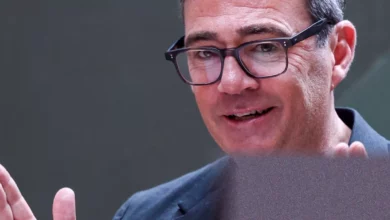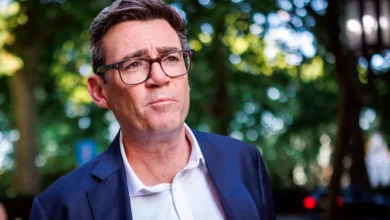
Labour MP Charlotte Nichols has forcefully dismissed recurring reports that she is preparing to step aside for Andy Burnham, the Greater Manchester mayor, insisting she has “never even had so much as a conversation” with him about such a move. “I don’t know how many different ways I can say this but I’m not stepping aside for Andy Burnham, and it’s both very tedious for me and very demoralising for my staff to keep seeing it reported that I might be about to go,” she said in a statement. The denial comes as Burnham is widely cited as a potential contender for the Labour leadership amid the deepening crisis surrounding Keir Starmer.
Leadership turmoil deepens
The threat to the prime minister’s position was the subject of a sardonic remark during the King’s Speech debate, when Starmer joked about a “list” of 100 MPs backing a colleague’s memoir, quipping: “At last, a list that we could all get behind.” But the humour belied a more serious reality: Starmer has been spending time in parliament meeting MPs and ministers, while allies claim there has been “a big show of support” for him. Ministers have also been working the Commons tearoom, arguing that a leadership contest would plunge Labour into chaos and paralyse the work of government for months.
The parliamentary Labour party’s (PLP) committee has issued a stark plea for discipline, urging MPs to stop coordinating the release of statements critical of the prime minister and resignations. The committee — Labour’s equivalent of the Conservative 1922 Committee — warned of “lasting damage” if the current position continues, stating that party rules regarding leadership challenges are clear and must be met. It also pledged to continue conveying “the honest and heartfelt views of backbenchers” to Starmer.
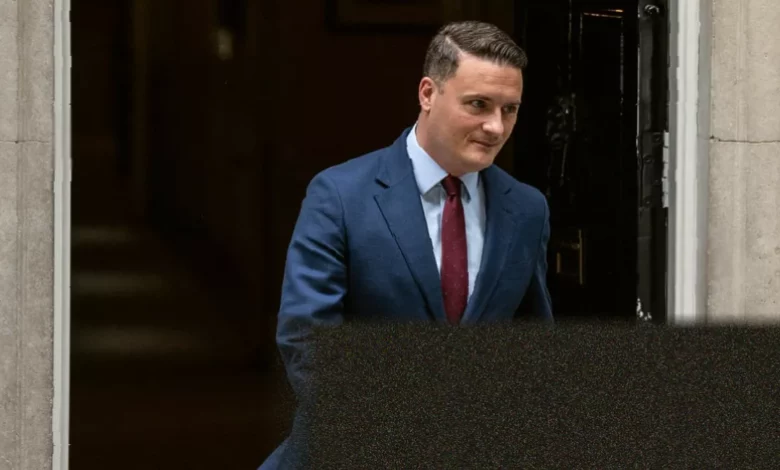
Behind the scenes, the unrest has already cost the government four junior ministers, with prominent backbencher Jess Phillips among those who have resigned. Allies of Health Secretary Wes Streeting claim he is preparing to quit as early as Thursday, possibly to launch a leadership bid. Streeting and Starmer held “crunch talks” in Downing Street that lasted just 16 minutes. Starmer’s spokesperson has repeatedly insisted the prime minister has “full confidence” in Streeting. Meanwhile, Labour-affiliated unions have called for a plan to be put in place for the election of a new leader, arguing it is “clear that the prime minister will not lead Labour into the next election.”
Chancellor Rachel Reeves, who is reportedly trying to rally support for Starmer among Labour MPs, pulled out of an event she was due to attend in Leeds, citing “diary changes”. She had previously withdrawn from a City of London event amid the leadership crisis, and faced a protest during a recent visit to Leeds University over the Israel-Palestine conflict.
The King’s Speech debate itself became a platform for attacks on Starmer’s authority. Conservative MP Mark Francois intervened to compare Starmer’s criticism of Green Party councillor Zack Polanski — for questioning split-second police decisions in Golders Green — with the government’s authorisation of prosecutions of military veterans over split-second decisions made during the Troubles in Northern Ireland. Starmer responded that he had been in control rooms in Northern Ireland and understood how difficult such decisions were, insisting the matters were distinct from the government’s legacy legislation. Lincoln Jopp pressed for publication of a defence investment plan; Starmer said it would come soon, accusing the Tories of hollowing out the armed forces. Jim Allister of the TUV highlighted the “humiliation” of Northern Ireland being governed by laws it cannot change under the post-Brexit settlement. Starmer acknowledged the problem, adding that “promises were made about Brexit which were not true”.
Starmer sought to regain the offensive in his own address, describing the King’s Speech as a “complete break” from the status quo, delivering “economic security, energy security and national security”. He framed the legislative programme as a “king’s speech for the young people whose gifts lie in their hands” and for “the children who, under the party opposite, had to go to school without breakfast”. He also used the opportunity to mock Conservative leader Kemi Badenoch, who had claimed the party’s local election losses showed it was “coming back”. “We do have one thing in common,” Starmer said. “Our parties both had tough results in the local elections last week. The difference is she hasn’t noticed.”
In a separate development, Plaid Cymru’s new first minister of Wales, Rhun ap Iorwerth, appointed his ministerial team, promising a cabinet that would bring “new energy, new ideas and a new direction”. His is a minority administration.
Energy independence bill aims to cut bills and boost renewables
The government’s flagship Energy Independence Bill, announced as part of the King’s Speech, is designed to wean the UK off what officials call “the fossil fuel rollercoaster” by accelerating the development of clean, homegrown power and electrifying the wider economy. The bill includes a suite of measures intended to reduce household bills and strengthen energy security against global volatility, including the impact of the conflict in the Middle East on fossil fuel supplies.
NEW: Labour Parliamentary committee tells "those coordinating the statements and resignations to stop"
FROM THE PLP BACKBENCH REPRESENTATIVES
The local and devolved assembly elections were devastating.
Good comrades lost their seats – with this outcome just the latest in a…
— Sam Coates Sky (@SamCoatesSky) May 13, 2026
Under the proposals, consumers will be able to receive discounts on their bills for using electricity during periods of high renewable generation — typically sunny or windy times when the grid is producing excess power. The legislation also aims to make permanent a plan to move older renewable energy subsidies from household bills to general taxation, a change officials estimate could save the average household around £90 a year.
Landlords would be required to invest in home upgrades, and the bill paves the way for the creation of a dedicated “warm homes agency” to deliver a £15bn programme of home electrification, including targeted support for vulnerable and low-income families. The legislation also contains measures to reform markets and regulation in order to speed up the deployment of technologies such as offshore wind and hydrogen, and to reduce “unnecessary delays” in building the grid infrastructure needed to support a much larger share of clean power.
Other legislation announced alongside the energy bill includes plans to abolish NHS England, reform special educational needs provision, limit trial by jury to reduce court backlogs, fast-track new nuclear power stations through a Nuclear Regulation Bill, and introduce a European Partnership Bill to streamline trade and regulatory agreements with the EU. Some Labour MPs have criticised the package as “incrementalism” that lacks the “bolder action” needed to tackle the cost-of-living crisis, but the government is betting that the energy bill — the centrepiece of its legislative agenda — will demonstrate its commitment to long-term change.
Reform UK councillor apologises over ‘non white’ post
A newly-elected Reform UK councillor has apologised after posting on social media that he had asked the police to take action about “non white persons taking over” a town park where there was a “strong pervading smell of cannabis”. Ken Tranter, an army veteran elected to the Aldershot South seat on Hampshire County Council, wrote on Facebook after his election that a local resident had raised the concern and that he had promised to speak to the police. “Their response was to say ‘they were aware’,” he said. “I don’t want them to be aware, I want them to stop it and return the park to family use. Therefore I will write to the Police and Crime Commissioner for Hampshire and demand action.”
The comments provoked immediate criticism, with one person responding: “Can you stop using non white as a label, it’s thoroughly rude, offensive and not needed. Disgusted.” Tranter subsequently deleted the post and issued a statement apologising. “My recent post about cannabis smoking in the Municipal Gardens was wrong in its wording and has caused understandable offence,” he said. “Referring to the group by skin colour was a poor choice that I deeply regret. It was clumsy, unnecessary, and open to misinterpretation as racist, and I take full responsibility for that.” He added: “Racism has no place in our community or in my politics, and I condemn it in all its forms.”
Lib Dems vow to vote against King’s Speech
Liberal Democrat leader Ed Davey announced that his party would vote against the King’s Speech, describing it as the “most surreal state opening” he had attended. “The prime minister may soon not be in power, not in place for his own programme, not able to deliver these promises,” Davey said. He argued that if every Labour MP who has called for Starmer to go voted against the speech as well, the government might be defeated. Davey called Starmer “one of the weakest prime ministers in postwar history” and said the legislative programme “does not offer the change our country needs”.
He was particularly scathing about the government’s proposals on Europe, dismissing the so-called “EU reset bill” as a bill that “fails to reset, from a prime minister who knows a thing or two about failed resets”. He accused Starmer of refusing to remove his red lines on a new EU-UK customs union, on the single market, and on a proper youth mobility scheme, and charged that this consigned the country to “higher prices, and lower growth, and failing to address the economic insecurity plaguing our economy”.
Davey also launched a biting attack on Health Secretary Wes Streeting’s record on the NHS. “When he’s not plotting his next leadership bid on the prime minister, the secretary of state would have Labour backbenchers believe he’s fixing the NHS. If only,” Davey said. He mocked the protracted speculation over Streeting’s potential resignation: “Now we’re told that the health secretary is preparing to resign tomorrow. This resignation is taking so long it would give NHS waiting lists a run for their money.” He went on to describe an NHS still in a “critical state”, with thousands of patients treated in hospital corridors daily and job adverts appearing for people to provide care in corridors.