Nintendo has confirmed it is remaking Lylat Wars for the Switch 2, bringing Fox McCloud’s on-rails space shooter back to life after a decade of dormancy. The announcement, made during last week’s Switch 2 showcase, caught many off guard — not least because the Star Fox series had been quiet for so long. Rumours of a new entry had circulated for months, fuelled by Fox’s otherwise unexplained cameo in the recently released Mario Galaxy movie, but few expected a straight-up rework of the 1997 Nintendo 64 title.
Lylat Wars (known elsewhere as Star Fox 64) occupies a peculiar place in gaming history. It was a technological showcase for its era: the first console game to feature controller rumble, thanks to the Rumble Pak accessory that plugged into the N64 controller and used an unbalanced weight to create vibrations. The game was designed to demonstrate both that peripheral and the Nintendo 64’s 3D capabilities, but it was also a product of strict technical limitations. Nearly all its levels are on rails — players fly along a set path, steering the Arwing rather than freely navigating — with only a handful of small arenas offering full movement. The whole campaign runs just over an hour (though multiple branching routes provide replayability). As one observer put it, the game is “very much a product of technical limitation”.
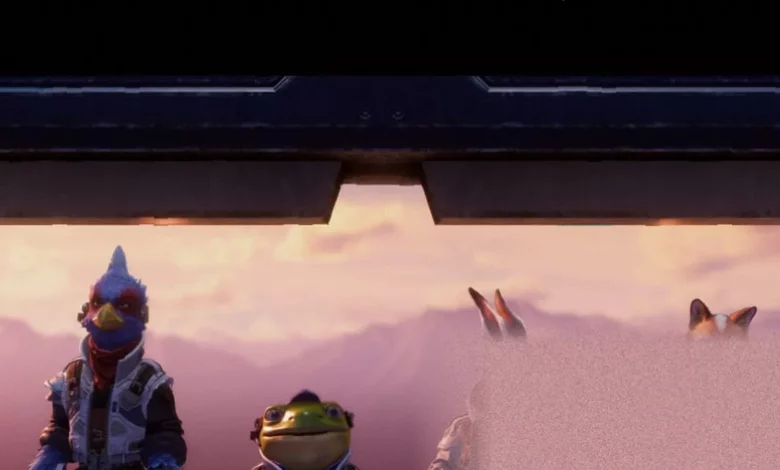
Now, three decades later, Nintendo is revisiting those limitations rather than abandoning them. The new Switch 2 version keeps the original level layouts intact but completely overhauls the visuals and character designs. Early footage shows Corneria, the opening planet, with strange stone towers jutting from water that Arwings skim across, wingtips throwing up spray. The fuzzy squad-mate mugshots of the N64 have been replaced by uncannily realistic animal faces, and the dialogue — cheesy as ever — has been re-recorded with new voice actors. The result, according to those who have seen it, is a game that “looks better now than it ever did, even in my imagination” — but one that also raises a question: why not build a wholly new Star Fox game, free of the on-rails constraints that defined the original?
The nostalgia trap
The decision reflects a broader, and slightly troubling, trend across the video game industry: a retreat to nostalgia at the expense of new ideas. Sega is preparing new entries in long-dormant series such as Crazy Taxi and Jet Set Radio (the latter due in 2026). Capcom and Square Enix have found rich rewards in remaking and re-releasing Resident Evil and Final Fantasy titles from the 1990s. Konami is working on a remake of Silent Hill 2, while also commissioning new takes on the franchise from Scottish developer SCREEN BURN Interactive (formerly NoCode) and Japanese author Ryukishi07. Upcoming remakes include Metal Gear Solid Delta: Snake Eater, Suikoden I & II HD Remaster, Dragon Quest III HD-2D Remake, Tomb Raider I-III Remastered, and Persona 3 Reload. The list grows longer by the month.
Critics argue that this approach, while commercially safe, risks turning gaming into a museum of its own greatest hits. Space dogfighting games, for instance, are in far shorter supply now than they were in the 1990s — a more ambitious, free-form Star Fox title could have filled that gap. Instead, Nintendo has opted to re-tread familiar ground. The same could be said of Mixtape, an Australian-made interactive coming-of-age movie set in the mid-1990s that has sparked debate about “second-hand” nostalgia. Some players adore its licensed soundtrack — featuring Portishead, Siouxsie and the Banshees, and Silverchair — and its inventive portrayal of adolescent experiences like a first kiss. Others find it an ill-fitting, tropey take on a decade they remember differently. The game has attracted more critical discussion than almost any other release this year, with opinions ranging from 10/10 adoration to eye-rolling dismissal. It is available on Xbox, Switch 2, PS5, and PC, with an estimated playtime of three to four hours.
The nostalgia wave extends beyond remakes. The very hardware these games run on is feeling the pinch of a changing market. Nintendo has announced that the Switch 2 will increase in price from $450 to $500 in the United States, effective 1 September, citing global RAM and component shortages, increased demand from AI data centres, fluctuating foreign exchange rates, and rising oil prices. Sony raised the PlayStation 5’s price for similar reasons earlier this year. The shortages are hitting the entire tech industry; Valve, too, faces potential delays and price adjustments for its hardware.
Industry currents
Meanwhile, the push for unionisation in video game studios continues. Microsoft-owned Double Fine, developer of Psychonauts and Keeper, has become the latest US studio to unionise, signalling a wider movement toward worker organisation in an industry notorious for crunch and job insecurity.
Elsewhere, other pockets of gaming culture are thriving. A new PC games website called Jank has drawn attention for a piece celebrating the video game pub. At Eurogamer, Dom Peppiatt wrote about learning to solve cryptic crosswords with the help of Pokémon. Streaming platform Twitch has seen users enter viral “mogging” beauty contests. Video games are also capturing the “happy-sad” spirit of Tove Jansson’s Moomins, and medical games — from Microsurgeon and Life & Death to Trauma Center: Under the Knife and Surgeon Simulator — continue to be used for training and rehabilitation.
For readers interested in shorter, discussion-friendly games, the idea of a video game book club has gained traction. Titles recommended for such a purpose include Crow Country, praised for its thematic depth and length comparable to a novel; Mixtape, with plenty to debate; Keita Takahashi’s To a T, a puzzle-adventure about a teenager stuck in a T-pose; the multi-Bafta-winning episodic game Dispatch; the liminal-space walking simulator The Exit 8; the slice-of-life adventure Despelote set in Quito, Ecuador; and Many Nights a Whisper, a meditative archery game that can be completed in under an hour.