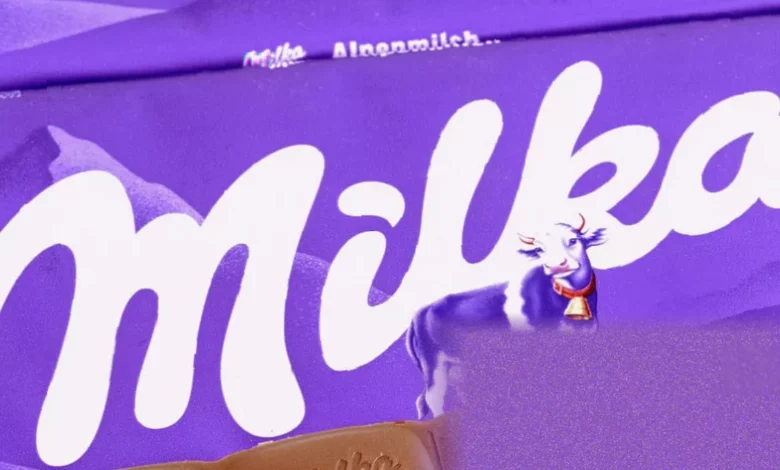
A German court has ruled that the makers of Milka cheated consumers with shrinkflation, in a landmark decision that could force manufacturers to overhaul the way they communicate product size reductions.
The regional court in Bremen found on May 13 that Mondelēz, the US owner of the chocolate brand, misled shoppers when it cut the weight of its classic Alpine Milk bar from 100g to 90g without adequately altering the distinctive purple packaging. The Hamburg consumer protection office, which brought the case, argued that the visual similarity to the original bar created a “visually conveyed expectation” that the product had not changed, deceiving customers who had been familiar with the 100g size for years.
The court ruled that any future reduction in product size must be accompanied by a “clear, understandable and easily perceptible notice” on the packaging for at least four months, to give consumers time to register the change. The verdict is not final; Mondelēz has one month to lodge an appeal. The company said it is “taking the court’s ruling seriously” and is examining the reasoning in detail, adding that its aim is to “communicate transparently, comprehensively, and responsibly”.
Consumer backlash and the “Golden Windbag”
The weight reduction, which took effect at the start of 2025, was accompanied by a price increase from €1.49 (£1.29) to €1.99 (£1.72). The bar also became a millimetre thinner. The net price rise of approximately 48% drew widespread criticism from German consumers, who voted the Milka Alpenmilch bar “rip-off packaging of the year 2025” in a consumer poll.
Months earlier, in July 2025, the consumer organisation Foodwatch had named the same bar the “most brazen advertising lie of the year”, awarding it the “Golden Windbag” (Goldener Windbeutel). Foodwatch criticised the small print on the packaging, often obscured by supermarket displays, as a deliberate tactic to hide the reduction.
Mondelēz told the court it had informed German consumers about the changes on its website and social media channels. But the court rejected that defence, ruling that the company should have provided a prominent, on-pack notice to avoid confusion.
Shrinkflation in the UK and beyond
The Milka case is the latest flashpoint in a broader shrinkflation controversy that has affected confectionery aisles across Europe. Ahead of Christmas, it emerged that lighter boxes of Quality Street and Celebrations, as well as smaller Terry’s Chocolate Oranges, had appeared on shelves in the UK. Toblerone – another Mondelēz brand – had 20g shaved off its chocolatey peaks, reducing a 360g bar to 340g.
It is not the first time Mondelēz has faced legal scrutiny over shrinking chocolate bars. In 2016, the company widened the gaps between Toblerone’s distinctive triangular chunks instead of increasing the price, sparking consumer outrage. Two years later, it reverted to the original shape. In 2017, Mondelēz warned of further shrinkflation and price rises in the UK due to the post-Brexit slump in the pound.
Research suggests that UK consumers are growing increasingly frustrated with the practice. A survey found that 61% of Britons consider shrinkflation “very unfair”, and 64% believe retailers should flag such changes. Nearly two-thirds said they would prefer a modest price increase over discovering a smaller pack at the same price, underscoring the importance of transparency.
The cocoa crisis and rising costs
The underlying drivers of shrinkflation in the chocolate industry are rooted in a severe supply squeeze. More than half of the world’s cocoa beans are harvested in Ghana and Côte d’Ivoire in West Africa, where poor harvests have been attributed to extreme weather, crop disease, and ageing plants. Cocoa futures reached record highs in late 2024, and although they have eased slightly, they remain well above historic averages.
UK chocolate prices rose by more than 17% in the year to October 2025. Beyond ingredients, manufacturers face higher costs for processing, packaging, energy, transport, staff, marketing, and retailer margins. Mondelēz has consistently pointed to these pressures, stating that the weight adjustment was necessary to “continue providing consumers with the expected quality standard in an environment that is ‘more complex and unstable than ever before’”.
Some brands have taken a different approach. Tony’s Chocolonely, for example, has committed to raising prices rather than reducing size or reformulating. Others have reduced cocoa content or used substitutes.
Legal precedent and the road ahead
German courts have a history of ruling against deceptive packaging. In 2016, the Higher Regional Court of Hamburg (OLG Hamburg) held that packaging with excessive empty space could infringe competition law, coining the term “Mogelpackung” (deceptive packaging). The Milka ruling builds on that precedent and is considered significant for future shrinkflation cases across Europe.
Under the German Packaging Act (VerpackG), which has been in effect since 2019, companies placing packaged goods on the German market are already required to license their packaging and register with the LUCID portal, or face fines. The court’s decision now adds a specific expectation of transparent communication regarding size changes.
Mondelēz said it was examining the ruling in detail. The company has one month to appeal.