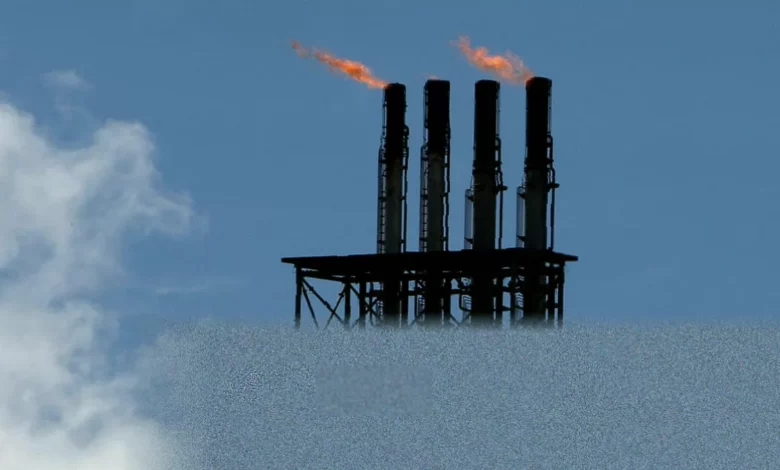
Western Australia is the only state in the country where greenhouse gas emissions have grown since 2005 — rising 17% over that period while every other state has recorded reductions. The increase, driven overwhelmingly by the state’s liquefied natural gas (LNG) export industry, has accelerated in recent years. Latest figures show annual pollution from the resource-rich state climbed another 4% in the most recent reporting period, reaching a record high of 90.94 million tonnes of carbon dioxide equivalent in 2024.
The scale of the problem is stark. Energy emissions alone were nearly 27 million tonnes higher in 2021 than they were in 2005 — a jump of 53% — and fugitive emissions from gas extraction and processing have more than doubled. The result is that Western Australia’s rising output is effectively cancelling out the decarbonisation efforts of other states, leaving Australia’s total energy emissions barely changed since the mid-2000s.
No interim targets, no clear pathway
Despite this trajectory, the state government led by Premier Roger Cook has resisted adopting binding interim emissions reduction targets. Western Australia is the only state without legislated goals for the years before 2050. Instead, it has long promised to introduce such targets — a promise that has been repeatedly delayed.
Documents released under freedom of information laws and seen by Guardian Australia — first reported by the ABC — reveal the Cook government now plans to abandon that commitment altogether. According to a leaked internal document, the state intends to replace interim emissions goals with a set of targets beginning only in 2035: for renewable energy deployment, and for carbon capture and storage (CCS). A separate “green exports” target would not start until 2040. The legislation would retain the overarching objective of net zero emissions by 2050, but would explicitly exclude any intermediate pollution-reduction milestones that could constrain the gas export industry operating in the state’s north.
Critics point out that carbon capture and storage remains an unproven technology at scale, despite decades of research and billions of dollars in pledged funding. Chevron’s Gorgon project, which operates the world’s largest CCS system, has injected more than 12 million tonnes of carbon dioxide but has consistently captured less than half of its original target. Relying on CCS in a new state framework is seen by many as a way to justify continued fossil fuel extraction without a credible plan to reduce emissions.
The federal government has given implicit backing to Western Australia’s position. Prime Minister Anthony Albanese and his cabinet have not publicly challenged Premier Cook’s argument that the state’s gas exports are good for the climate because they displace coal burning in Asia. Yet documents obtained under freedom of information laws contain advice that contradicts that claim, suggesting that Western Australian gas risks slowing Asia’s transition to clean energy.
Other Australian states have adopted ambitious interim targets — roughly halving or more their emissions by 2035 compared with 2005 levels — though not all are on track to meet them. The Queensland Liberal National government, for instance, is expected to miss its legislated 75% cut target, but at least has a formal goal on the books. Western Australia has none.
Woodside’s own modelling shows the gap
The second revelation to challenge the Cook government’s climate credentials came from a report commissioned by Australia’s largest gas company, Woodside. The modelling, conducted by Deloitte Access Economics and published last week, confirmed what many had suspected: Western Australia is far from being on track to reach net zero by 2050. The analysis found that even if the contentious $30 billion Browse gas basin development did not go ahead, the state could miss the net zero target by several decades.
To have any chance of hitting the goal, the report calculated, the state would need to deploy renewable energy at a rate 11 times faster than it has managed over the past decade. Despite this alarming finding, the report did not recommend a rapid transition away from gas. Instead, it concluded that developing the Browse project would lead to only a marginal shift in the state’s energy mix toward gas power, and emphasised the projected economic benefits of the development. The cost of the additional emissions — including those from the gas after it is burned in overseas markets — was not mentioned.
Gas remains a fossil fuel. It is mostly methane, a potent greenhouse gas, and releases carbon dioxide when combusted. A study by Cornell University found that when the full lifecycle is counted — extraction, processing, liquefaction, shipping and eventual combustion — exported LNG can have a 33% higher climate impact than coal over a 20-year period. Other research has reached similar conclusions, challenging the industry’s long-standing claim that gas is a cleaner alternative to coal.
The world still needs some gas to meet existing energy demand, particularly as backup in electricity grids and for certain industrial processes where viable alternatives are not yet available. But climate scientists and energy analysts argue that a serious government should be trying to use no more gas than absolutely necessary, to phase it out where possible, and to make a public case for why that is essential.
Major fossil fuel projects approved, Browse decision looming
The federal government has shown little willingness to slow the expansion of the gas industry. Last month, the Albanese government rejected a push for a national 25% gas export tax that would have forced multinational petroleum companies to pay more for the resources they extract. A week earlier, the federal offshore petroleum regulator approved a substantial $3 billion expansion of Chevron’s Gorgon project off the Western Australian coast — known as Stage 3 — which aims to sustain both domestic supply and exports to Asia.
At the same time, Woodside’s North West Shelf gas processing plant was granted a life extension of up to 70 years, from 2030 to 2070. Environmental groups have described the extension as a “carbon bomb”, warning it could produce up to 6 billion tonnes of greenhouse gas emissions over its lifetime, potentially undermining the goals of the Paris Agreement. The project has also faced legal challenges on environmental and cultural grounds, including concerns about its impact on the Murujuga rock art site.
The biggest decision still lies ahead. The verdict on Woodside’s Browse development — described by the company as Australia’s largest untapped gas basin — is expected before the end of the year. The project would involve drilling near the remote and ecologically rich Scott Reef, which is home to migratory whales, threatened turtles, sea snakes and more than 1,500 other species. The Western Australian Environmental Protection Authority initially deemed the proposal “unacceptable”, and experts say there is a stronger than usual legal case that it could be blocked on environmental grounds. Yet Australian governments have so far shown little appetite to deny fossil fuel companies what they seek.
Prime Minister Albanese has indicated plans to create a new federal environmental protection agency, though its exact powers remain unclear. For now, Western Australia’s rising emissions are making it harder for his government to meet its own nationally enshrined target of a 43% cut by 2030 and net zero by 2050. Premier Cook, who often appears to wield considerable influence over federal decisions affecting the resource sector, shows no sign of changing course. The question for Canberra is whether it intends to do anything about it.