Rugby sevens star Kevin Wekesa stresses climate injustices require attention, not European blame

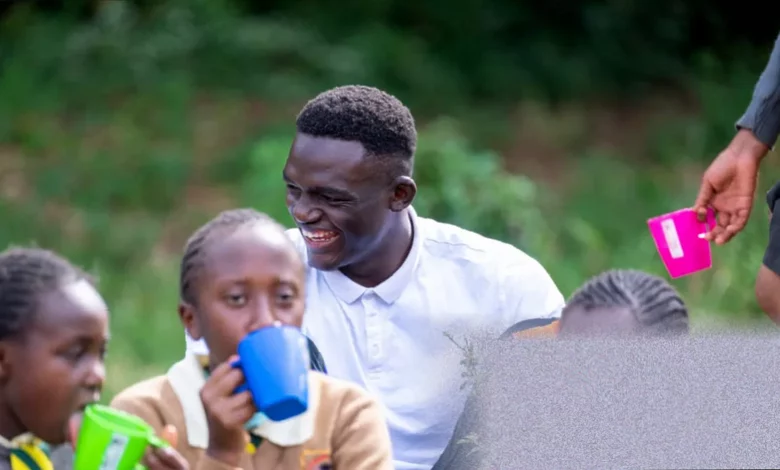
Kenyan rugby sevens star Kevin Wekesa is harnessing the power of sport to confront climate change, turning his experience of cancelled training sessions into a nationwide movement that puts children at the centre of environmental action. The 25-year-old forward for Kenya’s national team, Shujaa, and Kabras Sugar RFC founded the Play Green initiative in 2023, weaving together tree planting, education, recycling and the elimination of single-use plastics.
Wekesa, who holds a Bachelor of Science in Mechanical and Manufacturing Engineering Technology from the Technical University of Kenya (graduated November 2024), first confronted the climate crisis on the pitch. A year before representing Kenya at the 2024 Paris Olympics, he offered free rugby coaching in schools after the national sevens side was relegated from the top tier of international competition. When he arrived at a school in Kirinyaga, on the slopes of Mount Kenya — a region he expected to be wet and verdant — he found the field bone dry and unplayable. The session was cancelled. One student told Wekesa conditions had been like that for two months; another suggested the unfamiliar weather was down to climate change.
“I thought to myself, if it’s already affecting this level of sport, what about at the highest level?” Wekesa said. That same year he launched Play Green, an organisation that marries the values of rugby — teamwork, accountability, resilience — with the principles needed to tackle environmental challenges. His work earned him the 2025 IOC Climate Action Award, presented in Milan on 4 February 2026, in the Athlete category, and he was also a finalist for the 2025 Sport Positive Awards in the Next Generation Trailblazer category.
Children as active participants, not passive victims
Play Green’s core mission is education. “We work with children because they are inheriting the climate crisis, not because they are causing it,” Wekesa said. “Kenyan children have a very small carbon footprint compared to children growing up in high-carbon economies like northern Europe, yet they are often more exposed to the consequences: drought, floods, heat, water shortages, food insecurity, illness and missed school. I am not blaming European children but I must highlight climate injustices.”
The initiative treats children as active agents of change. After giving talks on climate change and playing rugby with students, Wekesa tasks them with adopting trees planted by Play Green. Each child writes their name and the year the sapling was planted on a label, creating a personal stake in the tree’s survival. The trees are primarily fruit-bearing species — avocado, mango, guava and other indigenous varieties — chosen not only for their environmental benefits but because Wekesa discovered that children were sometimes too hungry to play rugby after school. The fruit provides nourishment. He is also piloting a scheme that supplies wholegrain porridge to students.
The species planted vary by location, determined after Wekesa visited the Kenya Forest Reserve to learn which trees suit each region’s climate. He acknowledges that tree planting is not the most efficient way to reduce carbon emissions — globally, around 1.9 billion trees are planted each year, with China, India and Ethiopia among the leading countries — but stresses the broader value. “It gives students a sense of belonging,” he said, while providing shade that can be used as outdoor classrooms. “I remember many times doing a literature lesson under a tree when it was too hot to be in a classroom.”
So far, Play Green has held workshops in more than 40 Kenyan schools and planted over 6,200 trees, with the green spaces often called “Shujaa Forests.” Some students who took part in the earliest workshops have introduced Play Green initiatives to new schools as they progressed through their education. Throughout May 2026, Wekesa is teaching rugby, distributing pre-used rugby balls and planting fruit trees in 10 schools that have expressed interest in joining the programme.
Plastic reduction and policy ambitions
Play Green’s impact extends beyond the schoolyard. Wekesa led the phasing out of single-use plastic bottles within Kenya’s men’s and women’s national rugby teams, replacing them with reusable aluminium bottles — a switch that saves approximately 1,000 plastic bottles each week. He now wants to make banning single-use plastic a policy across all Kenyan rugby clubs and tournaments, with the ambition of eventually expanding to other sports in the country. Play Green also runs recycling programmes at rugby events, providing clearly marked bins and waste collection points.
In April, Wekesa met Inger Andersen, Executive Director of the United Nations Environment Programme (UNEP), to discuss reducing single-use plastic at the 2027 Africa Cup of Nations (Afcon). Kenya will co-host the tournament alongside Uganda and Tanzania from 19 June to 17 July 2027 — the first time Afcon has been hosted by three nations and the first in the CECAFA region since 1976. The joint bid is named “Pamoja,” Swahili for “together.” Kenya has paid its $30 million hosting fee to the Confederation of African Football and is undertaking stadium upgrades at venues including Talanta Sports Stadium and Moi International Sports Centre.
Kenya has a track record of environmental policy: it banned single-use plastics in 2017 and is an early signatory to the Clean Seas initiative. Athletics Kenya has committed to reducing its emissions by 50% by 2030 and reaching net-zero by 2040, and has warned that rising temperatures could affect sports performance and make some regions unsuitable for hosting events. Extreme heat has already forced the postponement of athletics competitions, including at the US Olympic Trials and the Tokyo Olympics marathon. The World Health Organization reports that climate change could cause approximately 250,000 additional deaths per year between 2030 and 2050 due to malnutrition, malaria, diarrhoea and heat stress.
Global vision from a local base
Wekesa, who has already competed at the Olympics and helped Kabras Sugar RFC win multiple Kenya Cup and Enterprise Cup titles, is acutely aware that his own travel for rugby carries a carbon footprint. He tries to minimise what he can but says the pledges of others — such as using sustainable transport to attend sports events — motivate him to do more because they prove people engage with climate change through sport. “It creates a wider group of people who are like a Play Green team around the world,” he said.