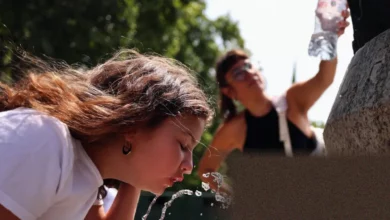
Southeast England will retain warmth the longest this weekend as the UK weather shifts from a record-shattering June heatwave to cooler conditions sweeping in from the Atlantic. An amber extreme heat warning remains in force through much of Saturday for areas including the southeast, with temperatures expected to peak in the low thirties Celsius rather than the extreme highs seen earlier in the week.
Amber extreme heat warning: what it means
The Met Office amber warning, which has been extended into Sunday morning for central and eastern parts of England, signals a continued risk to health even for the general population. Unlike the rare red warning issued earlier in the week by the UK Health Security Agency (UKHSA) and the Met Office — which indicated a risk to life for healthy individuals — the amber level still demands caution. Overnight temperatures in the affected eastern areas may not drop below 20°C, creating so-called “tropical nights” that increase heat stress and make recovery difficult.
High humidity accompanying the lingering heat exacerbates the danger, particularly for vulnerable groups: older adults, babies, young children, pregnant women, those with underlying heart or breathing conditions, outdoor workers, and people experiencing homelessness. Symptoms of heat exhaustion — including tiredness, headache, heavy sweating, confusion, and hot, dry skin — can escalate to heatstroke, a medical emergency. The London Ambulance Service recorded its busiest day in history on Friday, handling 8,869 emergency calls, while on Wednesday it responded to a record 642 Category 1 life-threatening incidents, surpassing both the May heatwave and the peak of the COVID-19 pandemic. The service declared a critical incident and deployed over 400 additional ambulance crews to cope. Hospitals also came under severe pressure, with some cancelling appointments and declaring critical incidents; University Hospital Southampton, for example, cancelled planned operations.
The amber warning period also carries a high risk of thunderstorms, particularly in the southeast on Saturday, with the potential for frequent lightning and hail. Hot, dry, and humid conditions have created an elevated wildfire risk, with the possibility of fires spreading quickly through crops and into farm buildings. Travel disruption remains widespread: Network Rail imposed blanket speed restrictions to prevent track buckling, major rail operators advised passengers to travel only if necessary, Eurostar cancelled multiple international services, and the Elizabeth line and Heathrow Express ran reduced services. Bitumen on roads has softened, leading local authorities to spread rock dust as a non-stick layer. At London City Airport, high temperatures reduced lift, requiring some passengers to be disembarked. Eurotunnel cancelled ticket bookings on trains at Folkestone due to air-conditioning failures. Thousands of households in southeast England experienced water shortages or low pressure after a dry spring and surging demand, with around 8,000 left without supply in Whitstable alone. South East Water imposed a hosepipe ban across Kent, Sussex, Surrey, Hampshire and Berkshire, while other companies set up bottled water stations and urged customers to cut usage.
General shift: from record heat to Atlantic air
Met Office chief forecaster Andy Page said the UK is “seeing a gradual shift in conditions over the weekend, with those to the southeast of England retaining the warmth the longest”. Fresher air from the Atlantic is expected to become widespread across the country by Sunday, bringing temperatures back closer to average by the start of next week. The far east of East Anglia may experience very warm but less humid weather on Sunday, followed by a fresher night. This transition follows an exceptional heatwave that saw provisional daily maximum temperature records for June broken on three consecutive days. On June 26, a reading of 37.3°C was recorded in Santon Downham, Suffolk, surpassing the previous June record of 35.6°C that had stood since 1976. Wales also set a new daily maximum for June on June 25, with 35.9°C in Cardiff. The heatwave has been described as “unprecedented for June” and a marker of how climate change is shifting the dial on temperature extremes in the UK.
The shift in weather has already brought associated risks. Wildfires have threatened crops and farmland, with dry conditions limiting grass growth and forcing farmers to dip into winter feed supplies early. Heat stress has damaged crops such as lettuce and brassicas — lettuce’s optimum growing temperature is around 20°C, and stress begins above 24°C, causing plants to bolt prematurely. Livestock, particularly dairy cows, have suffered reduced productivity and welfare risks, with high humidity worsening the effects. Wildlife has also been hit: drought conditions have dried up ponds, streams and rivers, causing dehydration and disorientation in animals. Bats have been found falling from the sky, bumblebees have been unable to forage, young amphibians have died in dried-up ponds, and birds have struggled to rehydrate. Trees have dropped leaves early to conserve water, and peat bogs and heathlands have dried out, raising the risk of wildfires.
Temperature peaks: low 30s but still significant
Despite the overall cooling trend, the amber warning area in the southeast can expect temperatures in the low 30s Celsius on Saturday — well above the June average, though far lower than the 37.3°C recorded earlier in the week. This peak, combined with humidity and warm nights, means the heat risk remains serious. The UKHSA and Met Office have advised the public to stay hydrated, limit strenuous activity during the hottest parts of the day, keep homes cool, and check on vulnerable neighbours. Government advice includes listening to forecasts and planning activities for cooler times. Hundreds of schools across southern England and Wales closed or reduced hours earlier in the week, and workplaces — including healthcare institutions — have struggled with buildings vulnerable to overheating. Historical context underscores the severity: the top 10 warmest years for the UK since 1884 have all occurred since 2002, and the average length of warm spells has more than doubled between 1961–1990 and 2008–2017. The summer of 1976 remains a benchmark, but climate projections indicate that by 2050 the UK will face higher temperatures and more frequent extremes, with infrastructure “built for a climate that no longer exists”. Heatwaves are already linked to sharp increases in mortality — around 3,000 excess deaths were recorded in England and Wales during heat periods in summer 2022 — and projections warn of a significant rise in heat-related deaths by the 2070s. Disrupted sleep and heat stress are also affecting mental health, exacerbating conditions such as depression and anxiety. The NHS, already strained by the surge in ambulance calls and hospital admissions, faces continued pressure as the amber warning holds through the weekend.