Jess Phillips has resigned as the minister for safeguarding and violence against women and girls, accusing Sir Keir Starmer of a lack of boldness on child protection and warning that the government’s fear of confrontation has left children without a safety net while it “dilly dallied” with tech bosses.
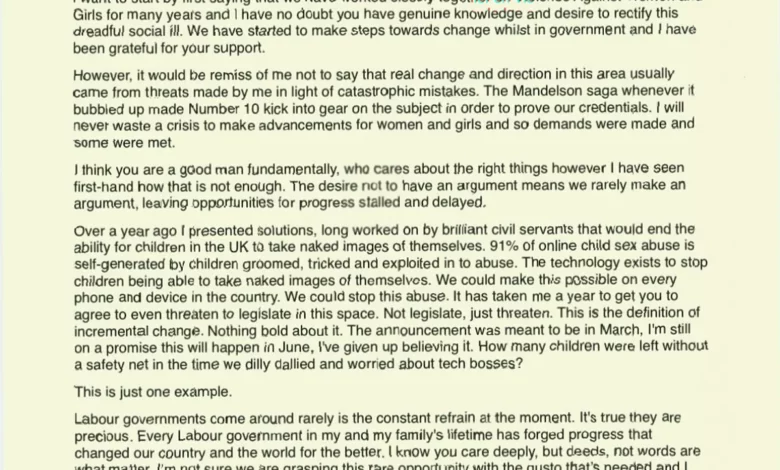
In a resignation letter released on Tuesday, the Birmingham Yardley MP said she could no longer serve under the current leadership because she was “not seeing the change I think I, and the country expect”. The resignation comes as more than 80 Labour MPs have publicly called for Starmer to step down after disastrous local election results, with the party described as riven with conflict and facing a sharp drift rightward in both policy and tone.
Technology and political inertia
Phillips built her resignation around a single, detailed example of what she called “incremental change” and “nothing bold”. She revealed that more than a year ago, civil servants had presented solutions that would “end the ability for children in the UK to take naked images of themselves”. The technology, she said, already exists and could be made to work on every phone and device in the country.
According to Phillips, 91% of online child sexual abuse is self-generated – images and videos taken by children who have been groomed, tricked or exploited. The International Justice Mission has stated that technology already exists to halt the trade in livestreamed child sexual abuse, and recent legislation – the Crime and Policing Act 2026 – has aimed to criminalise AI models optimised to create child sexual abuse material and update laws on “paedophile manuals” to include AI-generated imagery. But the specific measure Phillips championed – a requirement for device makers to block children from taking naked images on phones – remained stalled.
“It has taken me a year to get you to agree to even threaten to legislate in this space. Not legislate, just threaten,” Phillips wrote directly to Starmer. “The announcement was meant to be in March, I’m still on a promise this will happen in June, I’ve given up believing it. How many children were left without a safety net in the time we dilly dallied and worried about tech bosses?”
A pattern of crisis-driven action
Phillips argued that the government only acts under duress. She cited the “Mandelson saga” – the appointment of Peter Mandelson as UK ambassador to the United States in late 2024, followed by his sacking after emails revealed ties to Jeffrey Epstein, a scandal that damaged Starmer’s reputation for competence and integrity – as an example of how Number 10 only “kicks into gear” on violence against women and girls when a “catastrophic mistake” threatens its credibility. “I will never waste a crisis to make advancements for women and girls,” Phillips wrote, “and so demands were made and some were met.”
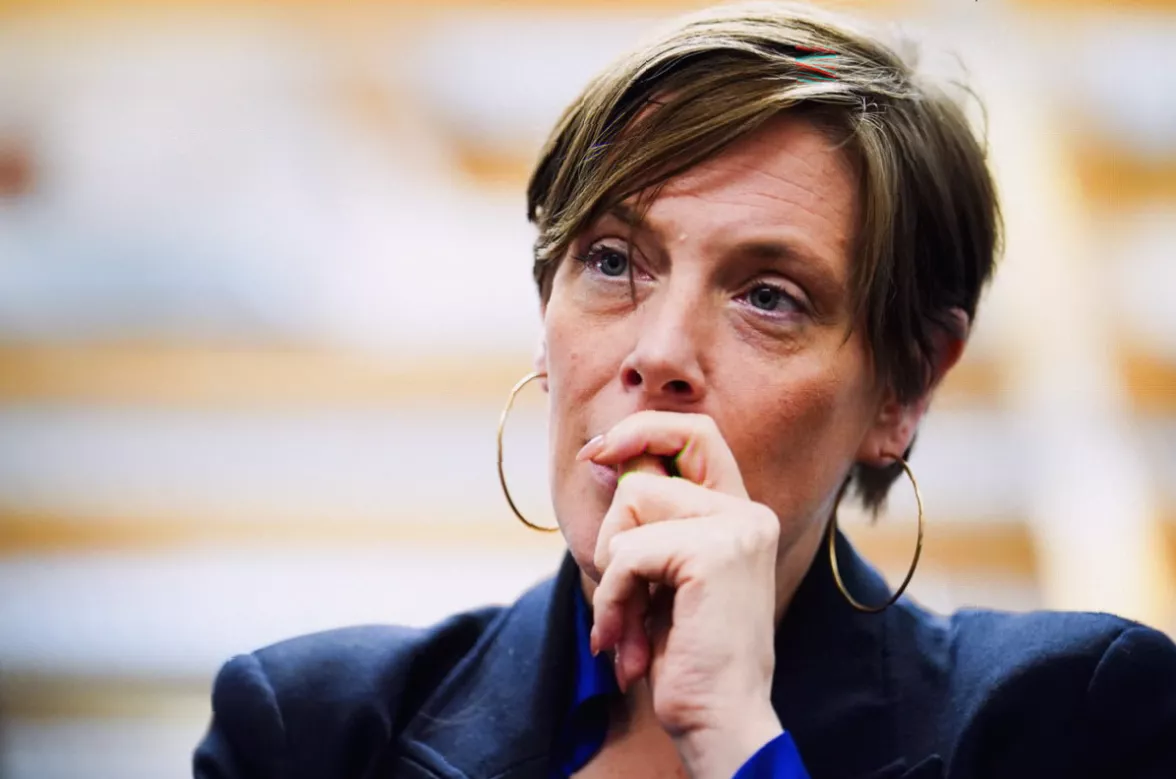
The minister, who had served as Parliamentary Under-Secretary of State for Safeguarding and Violence Against Women and Girls since July 2024, and before that as shadow minister for domestic violence and safeguarding, said the pattern of incrementalism reflected a broader aversion to political argument. “The desire not to have an argument means we rarely make an argument, leaving opportunities for progress stalled and delayed,” she wrote. “Have a row, push back, make arguments, bring people along. Standing up and being counted can’t always be workshopped.”
Deeds, not words
Phillips, who was Birmingham’s first Victims’ Champion before becoming an MP and worked for Women’s Aid developing services for victims of domestic abuse, sexual violence, human trafficking and exploitation, had been the minister responsible for the government’s strategy on violence against women and girls, which in December 2025 was declared a “national emergency” with a target to halve such violence within a decade. She said Starmer had “genuine knowledge and desire” to tackle the issue, but that this was not enough.
“I think you are a good man fundamentally, who cares about the right things,” Phillips wrote, “however I have seen first-hand how that is not enough. … I know you care deeply, but deeds, not words are what matter. I’m not sure we are grasping this rare opportunity with the gusto that’s needed and I cannot keep waiting around for a crisis to push for faster progress.”
Her resignation is the third from the ministerial ranks this week, following Miatta Fahnbulleh, the minister for housing, communities and local government, and Alex Davies-Jones, the minister for victims, both of whom urged Starmer to set a timetable for his departure. Starmer has so far said he will not resign, arguing that the threshold for a leadership contest has not been met.
Phillips, who was first elected in 2015 with 41.5% of the vote and re-elected in 2017 with an increased majority before holding her seat in 2024 with a significantly reduced share, ended her letter by invoking the rarity of Labour governments. “Labour governments come around rarely is the constant refrain at the moment. It’s true they are precious. Every Labour government in my and my family’s lifetime has forged progress that changed our country and the world for the better.” She concluded: “I’m not seeing the change I think I, and the country expect, and so cannot continue to serve as a minister under the current leadership.”