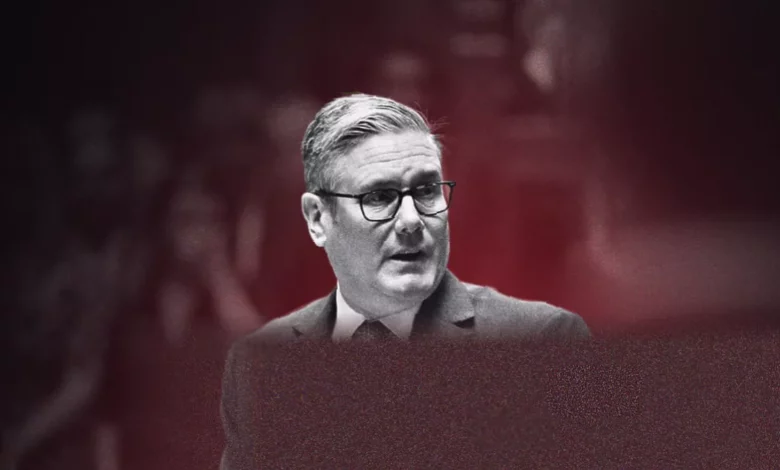
Labour MPs are staring at electoral oblivion after last week’s local and devolved election results, with a growing number concluding that the party’s trajectory under Sir Keir Starmer is not only bleak but irreversible unless the leadership changes. The party lost 1,496 councillors and control of 38 councils in England – a rout that has shattered the discipline that kept backbench dissent in check for much of the past year. More than 70 Labour lawmakers have publicly demanded that Starmer resign or set a departure timetable, while over 100 MPs signed a statement arguing that “this is no time for a leadership contest” – a number critics note still represents less than half of the parliamentary party.
Election results fuel backbench revolt
The scale of the defeat has transformed private unease into open rebellion. Until now, MPs’ fear of replacing a leader who might be replaced by someone worse had neutralised impatience with Starmer’s performance. That calculation has shifted. The evidence of nationwide electoral catastrophe is now indisputable, and the prime minister’s response has only deepened the crisis. He took responsibility in terms that colleagues found more defiant than humble, insisting in an interview that he intends to serve a decade in Downing Street and characterising the voters’ damning verdict as the steep part of a normal learning curve for new prime ministers. In a speech on Monday, Starmer said “incremental change won’t cut it”, yet proceeded to offer caveat-laden half-pledges that critics argue are the only currency he holds.
Senior cabinet ministers have privately encouraged Starmer to consider standing down. Ministerial aides have resigned, and the weakening of his political control is now visible across the government. To trigger a formal leadership contest, a challenger would need nominations from at least 20 per cent of Labour MPs – currently 81 – alongside backing from grassroots organisations and affiliated trade unions. An official revolt against a sitting Labour leader has never occurred in the party’s history; both Tony Blair and Gordon Brown stepped aside before formal challenges could be launched.
Starmer’s response: defiance amid disaster
The prime minister’s speech on 11 May was billed as a make-or-break moment. He acknowledged that the government had “made mistakes” and signalled a need for “a bigger response than we anticipated in 2024”. Yet the plural pronoun – “we” – infuriated Labour MPs who had never doubted the scale of the challenge. Many believed the manifesto on which they fought the 2024 general election – a landslide victory that secured 411 seats – was too timid, but they were cajoled into accepting modest ambition as the price of reassuring voters that Starmer had neutralised the party’s radical impulses. That bargain now looks hollow.
Starmer’s defenders argue that his qualities – a dull but worthy prime minister focused on meticulous problem-solving – are tragically undervalued in an age of public contempt for politics. Generous critics concede he is a scrupulous public servant but note that a diligent pragmatist should have developed a fuller programme for government while still in opposition. The harsher judgment is that the Starmer project made a fetish of pragmatism as an electoral tactic to the exclusion of policy, that avoidance of awkward questions – how to raise money for public services, how to repair the damage inflicted by Brexit – amounted to a ban on thinking about answers, and that the determination to purge the party of Jeremy Corbyn’s legacy was pursued with a factional monomania that mislabelled dissent of any kind as toxic leftism.
The core problem: pragmatism without policy
The central criticism of Starmer’s leadership is that his centre-hugging pragmatism never developed into a coherent creed. If there ever was a definition of “Starmerism”, it consisted in the calculation that Britain had been brought low by incompetent rightwing government and ineffectively countered by unrealistic leftwing opposition – and that the solution must therefore be pragmatism itself. But that approach left the government without ideological bearings. Its most familiar manoeuvre is the U-turn. The fiscal mandate was set to parameters chosen by the last Conservative government. Its immigration policy sounds to many like a queasy tribute to Nigel Farage. Even on Brexit – where Starmer was scathing about Farage’s broken promises and pledged to return Britain to “the heart of Europe” – he still could not commit to the red lines that confine the UK to the economic periphery: no single market membership, no customs union. The only concrete offer is a youth experience scheme for young people to work and study in Europe.
A litany of policy reversals has reinforced the perception of indecision. Starmer’s flagship Green Prosperity Plan – £28 billion annually in green investment – was scaled back sharply. The government backtracked on cutting winter fuel payments for pensioners. Despite a manifesto pledge not to increase national insurance, taxes were raised. Welfare reform changes were significantly altered after fierce opposition. Labour MPs initially blocked a grooming gangs inquiry, which was later announced after Conservative campaigning. Starmer eventually caved to backbench pressure and scrapped the two-child benefit cap. Each reversal erodes the sense of difference from the old regime. Fleet Street, which treated the Labour government not as a legitimate democratic preference but as the accidental side-effect of voters’ haste to be rid of the Conservatives, has had ample material to sustain that narrative.
Brexit and the search for a clear vision
Brexit remains a fault line. Starmer’s speech on closer ties with Europe was seen by some as a move away from Brexit promises, but his refusal to rejoin the single market or customs union leaves the policy direction ambiguous. Nigel Farage and Reform UK, who made significant gains in the local elections, oppose any rapprochement. The prime minister’s denunciation of Farage – accusing him of taking Britain “for a ride” and warning of a “dark path” under Reform – may rally the Labour base but does not by itself constitute a positive alternative. The government’s proposed nationalisation of British Steel is a more concrete step aimed at saving industrial jobs in areas where Labour voters have defected to Reform, but critics argue it is a reactive measure rather than part of a strategic industrial plan.
Leadership contenders in the wings
With Starmer’s position increasingly precarious, several potential successors are manoeuvring in half-shadow. Wes Streeting, the Health Secretary, is widely considered the most ready for a contest, bolstered by sharp communication skills and a fall in NHS waiting lists, though his centre-right positioning may alienate party members and Starmer loyalists accuse him of undermining the prime minister. Andy Burnham, the Mayor of Greater Manchester, is Labour’s most popular politician with voters but is not currently an MP; a previous attempt to secure a by-election candidacy was reportedly blocked by Starmer’s allies. Angela Rayner, the former deputy prime minister, resigned in 2025 over an underpaid property tax admission and faces an ongoing HMRC investigation, complicating any immediate campaign. Ed Miliband, a former Labour leader, is seen as a potential candidate for the soft-left, a strong advocate for net zero policies who opposes new oil and gas exploration licences. Each candidate must navigate the requirement for 20 per cent of MPs to trigger a contest, and the historical absence of a formal revolt against a sitting leader makes the path uncertain.
The venomous loathing on the doorstep
Labour canvassers encountered an intensity of anger towards Starmer on the campaign trail that has been described as “venomous loathing”, shocking even deeply disillusioned MPs. This bears no resemblance to the gentler critique of Starmer as an honourable statesman whose administrative capabilities have been squandered by lack of a coherent creed. For a party staring at possible annihilation, it hardly matters whether voter contempt is unfair if it is also irreparable. Starmer’s refusal to accept that he is the problem – prescribing more of himself as the solution – is turning private misgivings into public demands for new leadership. The last reserves of goodwill have been depleted by the feeling that the prime minister is too attached to his own self-image as a man of principle. What he presents as civic duty to continue serving the country looks to many like refuge in arrogant denial.
The journalist and commentator Rafael Behr, whose analysis has charted the party’s trajectory, argues that removing Keir Starmer is a remedy to the condition of having Keir Starmer as leader – but not a diagnosis of what the country has been lacking or a destination it should reach. Anyone imagining they could replace the incumbent, he suggests, should have the confidence to express those things now and display a credible alternative vision. Otherwise, the only prize of succession is to become the new face of the same old problem.