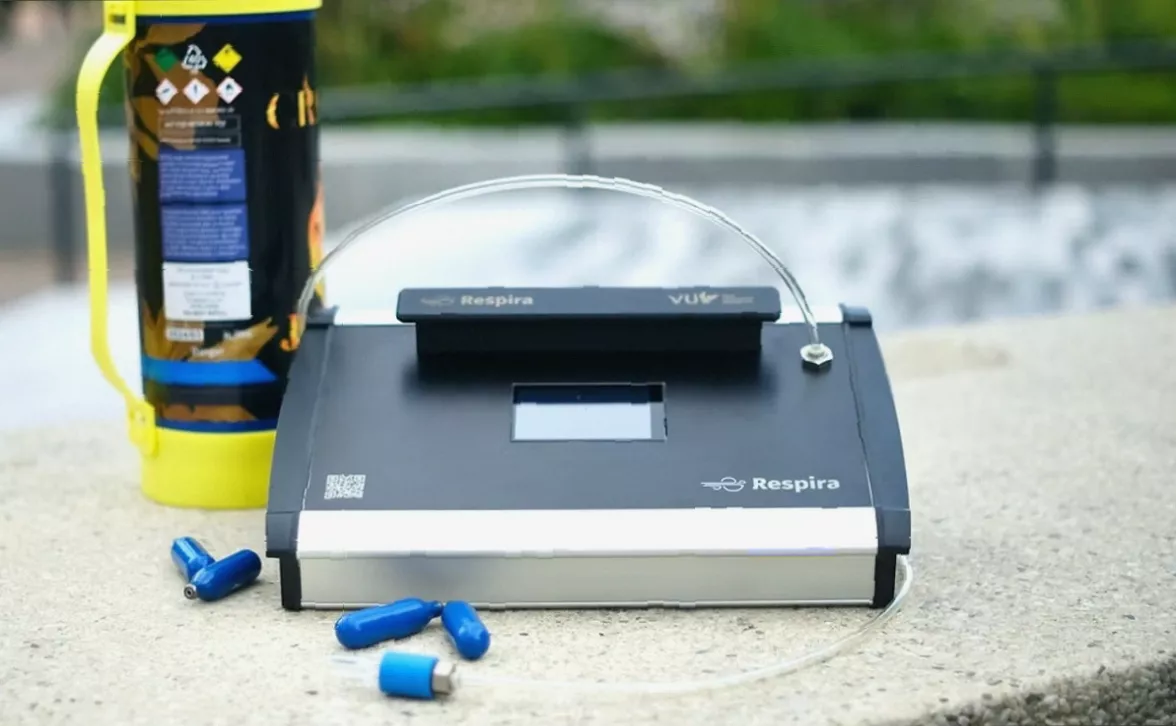
Police are trialling a world-first breathalyser for laughing gas in a bid to tackle what officers describe as an “emerging threat” to road safety. The portable device, which works like a standard alcohol breathalyser, is being tested by Hampshire and Isle of Wight Constabulary alongside Thames Valley Police across southern England.
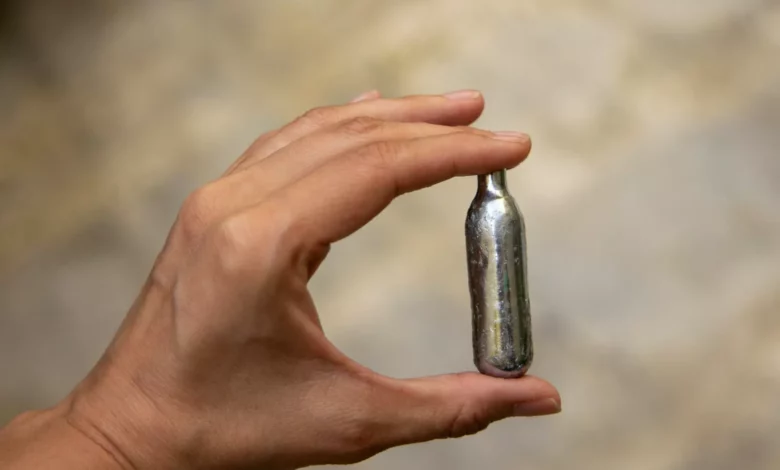
The forces are deploying the new technology to detect drivers under the influence of nitrous oxide – commonly known as NOS or “hippy crack” – a Class C drug whose unlawful possession can carry a prison sentence of up to two years. A spokesperson for the two forces said driving while affected by the substance had already led to fatalities. “Its use can cause unconsciousness and even neurological damage or death from suffocation of the oxygen supply to the brain. Tragically, our officers have already seen deaths connected to drivers who were under the influence of NOS.”
Trials aimed at closing a prosecution gap
Acting Superintendent Emma Hart, of the joint operations roads policing unit, said that currently there is no device available to prove a driver has inhaled laughing gas, making prosecution difficult. “That is why our forces are leading this testing phase, to break new ground and prove these devices can help save lives on our roads,” she said. “Nitrous oxide is a growing issue, especially with young drivers who don’t understand the harm it can cause, so when we saw the opportunity to test this new technology, we knew how important it could be towards these devices being rolled out across the country.”
If the trials prove successful, the breathalyser could provide the evidential tool needed to bring drug-driving charges against motorists who have used the substance. Currently, police have no prescribed legal limit for nitrous oxide – unlike alcohol – and must rely heavily on observations, witness accounts and circumstantial evidence. The drug’s short half‑life means it often vanishes from body fluids by the time standard checks are carried out, even though its impairing effects can persist.
The human cost of laughing gas behind the wheel
The dangers of driving after inhaling nitrous oxide have been starkly illustrated by a series of fatal crashes. In 2023, three teenagers – Elliot Pullen, 17, and 18‑year‑olds Ethan Goddard and Daniel Hancock – died when the car they were passengers in crashed into a tree on the A415 in Marcham, Oxfordshire. The 18‑year‑old driver, Thomas Johnson, was filmed inhaling laughing gas behind the wheel moments before the collision and was driving at up to 100 mph. In December 2024, Johnson was jailed for more than nine years for causing their deaths.
Further cases have emerged since. In South Yorkshire in April 2025, a 20‑year‑old driver killed an 81‑year‑old cyclist while high on nitrous oxide and driving at high speed in a hit‑and‑run. The same month, a driver in Edinburgh was jailed for killing an 82‑year‑old woman after inhaling the gas. In Greater Manchester, a driver was jailed in May 2025 for hitting a pedestrian while using laughing gas balloons.
There are currently no official UK statistics on road traffic accidents linked to nitrous oxide, partly because of the detection difficulties. However, Dutch police have reported a sharp increase in N₂O‑related traffic incidents since 2016, with around 20 lives claimed annually by such accidents in the Netherlands.
Beyond the immediate risks behind the wheel, the health consequences of nitrous oxide are serious. It can cause dizziness, mental confusion, loss of coordination and disorientation – effects that significantly impair driving ability. Even after the initial euphoria wears off, residual psychomotor alterations can persist for at least 45 minutes. Heavy or regular use can lead to vitamin B12 deficiency, anaemia, nerve damage, tingling and numbness, and in extreme cases, paralysis. The drug can also cause unconsciousness and death from oxygen deprivation.
How the new breathalyser works – and its limitations
The device, named the NitrousTest, was developed by Respira Technologies following research at the LaserLab of the Vrije Universiteit Amsterdam. It uses absorption spectroscopy – a technique based on laser spectroscopy research – to measure the concentration of nitrous oxide in a person’s breath. The user simply breathes into the portable unit, and results appear within minutes. The device can detect as little as 20 parts per million of nitrous oxide in exhaled breath, and can identify whether someone has inhaled the gas for up to two hours beforehand. Some studies suggest it remains detectable for at least 60 minutes, and up to 90 minutes in controlled environments.
Respira Technologies received NWO Take‑off funding to refine the prototype into a market‑ready product. The test results are intended to be used as evidence for prosecution in court, which would mark a major step forward for enforcement. Nitrous oxide became a Class C drug under the Misuse of Drugs Act 1971 on 8 November 2023, making unlawful possession for psychoactive effects an offence punishable by an unlimited fine, a caution or community punishment, with repeat or serious offenders facing up to two years in prison. Supply or production carries a maximum of 14 years. The legislation exempts legitimate uses in healthcare, catering and industry.
Despite the technological promise, questions remain about the device’s real‑world application. Evidential standards and reliability thresholds have yet to be fully established, and the precise relationship between recent use and actual impairment is still being studied. Police also face the challenge that the drug’s effects can outlast its detectability in breath. Enforcement data from 22 police forces across England and Wales showed fewer than 100 arrests for nitrous oxide possession in the first three months after the ban, with less than a quarter of those leading to charges. Some forces have prioritised offences with more immediate risk, raising questions about the overall effectiveness of the ban.
The trials now under way in Hampshire and the Thames Valley will determine whether the breathalyser can meet the evidential bar required for successful drug‑driving prosecutions – and whether it can finally give officers a practical tool to prove what has long been difficult to measure.