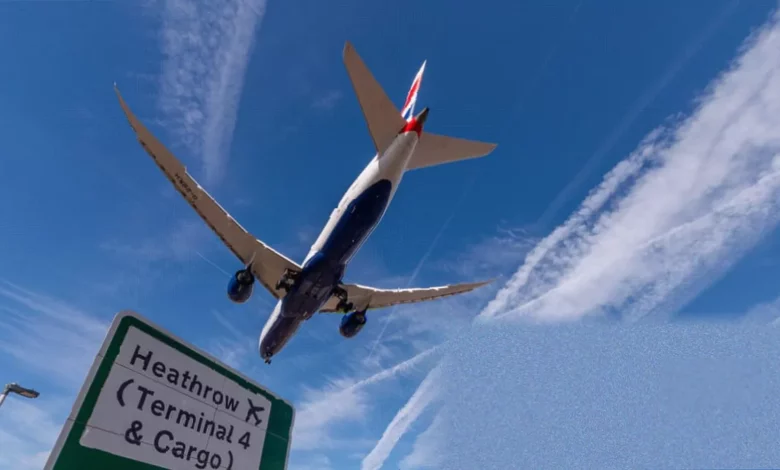
Heathrow suffered its sharpest annual drop in passenger numbers since last March, with 6.7 million travellers passing through the west London airport in April — a 5 per cent decline on the same month in 2025. The airport attributed the fall to the impact of the Iran conflict and “short-term adjustments to travel plans”.
The US-Israeli war on Iran, which began on 28 February, has caused severe disruption to global aviation networks. Travel demand to and from the Middle East slumped by more than 50 per cent, the airport said, as airlines grappled with airspace closures, flight cancellations and extended journey times. At the height of the military activity, rival hubs in the region — including Dubai International Airport and Doha’s Hamad International Airport — temporarily halted operations. More than 52,000 flights to and from the Middle East had been cancelled since the start of the war, affecting over half of all planned flights in the region. The conflict concluded on 5 May, but its effects continue to ripple through the industry.
Transfer passengers rise as travellers bypass Gulf hubs
Despite the overall downturn, Heathrow recorded a 10 per cent increase in transfer passengers year-on-year. Travellers rerouting to Asia and Oceania have switched to the London hub instead of using Gulf rivals such as Dubai and Doha, the airport said. The shift has helped absorb some of the displaced travel demand, with Heathrow acting as an alternative transit point for routes that would normally pass through the conflict zone.
Globally, 13,005 flights planned for May were cancelled between 10 and 21 April, according to industry data, underscoring the scale of the disruption.
Fuel crisis and rising ticket prices
Fears over fuel supplies have intensified because of the effective blockade of tanker shipping through the Strait of Hormuz, a channel used by more than a fifth of the world’s oil. Jet fuel prices averaged $181 a barrel in the week up to 1 May, roughly double the average last year, according to the International Air Transport Association. Prices reached the highest levels ever recorded for jet travel. The global average jet fuel price in March was $181.57 per barrel, before slipping 10.1 per cent to $162.89 in the latest week, although the overall trend remains sharply elevated. Brent crude oil has surpassed $100 a barrel as a result of the blockade.
The owner of British Airways, IAG, said it would attempt to recoup most of a €2 billion hit in fuel costs this year through “revenue and cost management actions”, with fares likely to rise. IAG expects its annual fuel bill to reach €9 billion and plans to recover about 60 per cent of the additional costs through fare increases, particularly on British Airways flights. The company has also revised its capacity growth forecasts downward. Lufthansa, the German carrier, similarly expects a substantial increase in fuel-related costs. The crisis has been described as the most acute shock to global aviation since the Covid-19 pandemic.
IAG has hedged 70 per cent of its fuel supply for the remainder of the year, shielding it from the full impact of the price surge. However, some UK airlines have successfully lobbied for the ability to cancel more flights without risking valuable airport slots, a move that could add to uncertainty for passengers.
Heathrow chief executive Thomas Woldbye said travel demand “remains strong” and that “current fuel supplies stable”. He noted that April was still the busiest month at the airport so far this year. But the airport will review and update its passenger forecast for 2026 next month. Its latest estimate had projected 85 million passengers passing through this year.
Despite the upward pressure on costs, some reports suggest airlines are beginning to cut prices for summer flights to try to prevent a delay in bookings. An analysis by the Financial Times found that fares for a week-long trip in July dropped between 9 April and 6 May for 27 of the top 50 European flight routes to the Mediterranean.