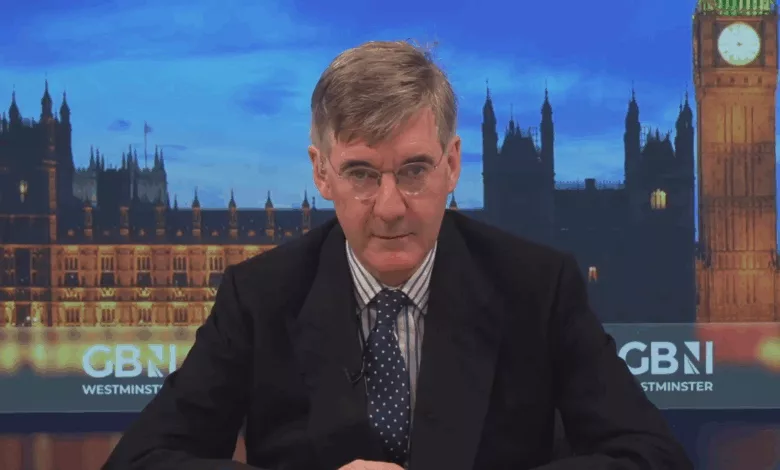
The Imperial State Crown travelled in its own carriage, flanked by the cap of maintenance and the sword of state. Heralds in tabards lined the processional route. Officials assembled. The King read his speech. Yet for all the ceremony, the question hanging over Westminster was whether the pageantry masked a fundamental vacuum — a legislative programme that, in the words of the former Conservative minister Jacob Rees-Mogg, amounted to “sound and fury that signifieth nothing.”
Ceremony and spectacle
King Charles III delivered the King’s Speech on a May day of particular grimness, with hail falling in London. The sight of the heralds, the tabards taken from the cupboard, the precise ordering of the procession — all the traditional elements of the State Opening were present. The Imperial State Crown required its own carriage, sharing space with the cap of maintenance and the sword of state. It was, by any measure, a magnificent display. But as Rees-Mogg wrote for GB News, the question remained: “What did it signify today? If anything, what was the point of it?”
Political vacuum and leadership crisis
Normally the King’s Speech renews a parliamentary year and sets out the full-throttled thrust of the government. This year, the political context made the event profoundly uncertain. Prime Minister Keir Starmer is under intense pressure after Labour suffered heavy losses in local and regional elections. Inside the party, some Labour MPs are openly discussing a leadership challenge, with Wes Streeting frequently mentioned as a potential successor. Starmer and Streeting held a brief meeting that lasted only sixteen minutes — a length that prompted Rees-Mogg to remark: “you wonder if the coffee was cold enough to drink by the time it ended.”
Starmer has given no indication that he intends to step down and has insisted his government will demonstrate “hope, urgency and exactly whose side we are on.” But the political arithmetic is unforgiving. Rees-Mogg laid out two stark possibilities: either Starmer lingers on “wounded, limp, incapable of getting his policies through,” meaning the bills announced today will not happen, or he is removed within days and a new prime minister will have different priorities. “He wants to stay, he wants to keep going, but he is powerless,” Rees-Mogg wrote. “He has become a vacuum. There is nothing there.”
A hard-left attack on liberties?
Rees-Mogg was scathing about the content of the speech itself, describing the proposals as “what you would expect of a hard-left socialist attacking our liberties.” He singled out several specific policies, each of which warrants close examination.
Digital identity. The government plans to introduce digital identity measures, which Rees-Mogg characterised as an “identity card” system that infringes on personal freedom. The King’s Speech included legislation to create a digital identity framework, though the precise scope and compulsory nature of the scheme have yet to be detailed.
Limiting jury trials. One of the most significant legal changes proposed is a restriction on jury trials for certain offences. Under the plans, defendants facing a likely jail sentence of less than three years would no longer have the automatic right to trial by jury. Rees-Mogg called this “getting rid of jury trial” — a direct attack on a legal tradition that, as the research briefing notes, dates back to Magna Carta. The government argues the measure is necessary to tackle court backlogs.
European Union relations. The European Partnership Bill will contain controversial powers to fast-track legislation for new agreements with the EU, aimed at strengthening ties and improving European security. A separate piece of legislation will implement new agreements to cut paperwork and ease the movement of goods between Great Britain and Northern Ireland, as well as with the EU. Rees-Mogg, a key proponent of Brexit, described this as “overriding the referendum that we had in 2016” and “signing up to more European regulation.”
Nationalisation of British Steel. The government is expected to bring British Steel into public ownership, safeguarding steelmaking capacity and jobs. This follows a government intervention in April 2025 to ensure uninterrupted production. Rees-Mogg labelled it a straightforward nationalisation, part of a wider “attack on property rights.”
Regulation and business. Rees-Mogg said the speech contained “a proposal to make more regulations hit this country through business.” The government’s industrial strategy includes pilot schemes in defence technology and AI-controlled ships, and the Energy Independence Bill aims to speed up clean energy technologies. Critics argue these measures will impose additional burdens on industry.
Leasehold reform. The government plans to cap ground rents and ban new flats from being sold as leasehold properties. Rees-Mogg described this as an “attack on property rights through undermining leasehold ownership of property,” arguing that such changes take things from people and give them nothing in return.
Climate and energy. The Energy Independence Bill and other green measures, Rees-Mogg claimed, will “make us colder and poorer if we weren’t cold enough today.” He pointed to the hail that fell in London as “indicative of the state of the nation.”
The King’s Speech contained 40 bills — a higher-than-average number — described by the government as “mission-led” and based on principles of security, fairness, and opportunity. Among other proposals not directly criticised by Rees-Mogg are an overhaul of special educational needs provision, legislation to ban conversion practices, a new Immigration Bill to speed up the removal of foreign criminals, and the establishment of an independent football regulator. Yet for Rees-Mogg, the sheer volume of legislation only underscored the lack of coherent vision. “And you do wonder whether that hail was indicative of the state of the nation,” he wrote. “I’m afraid the King’s Speech, and I don’t want to be discourteous to my sovereign Lord, with sound and fury that signifieth nothing.”