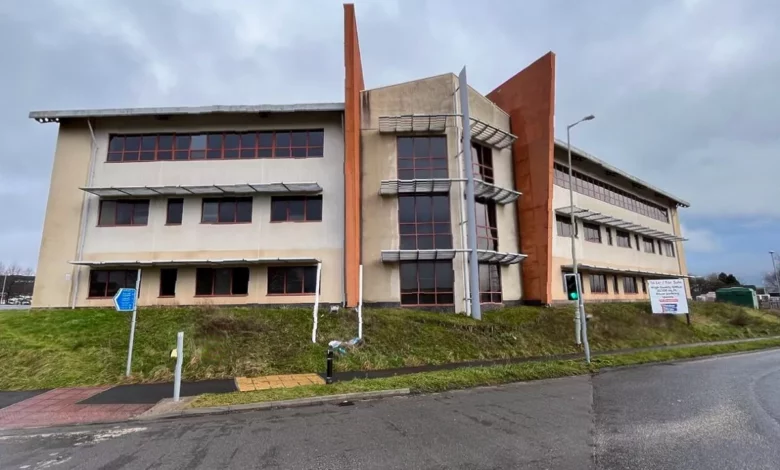
A vacant office building on the outskirts of Bridgend is to be transformed into an 80-bedroom Travelodge hotel, in what the company describes as a textbook example of sustainable growth through repurposing.
Waterton House at Waterton Cross, a 23,300 sq ft property that has stood empty since 2022, will be converted into the budget chain’s 21st hotel in Wales. The building, situated about two miles from Bridgend town centre at the junction of the A48 and A473, was previously occupied by CGI, the Canadian-headquartered IT and business consulting firm. CGI has since consolidated its Bridgend operations into a single building; the company, founded in Montreal in 1976, remains a major local employer and opened a Cyber Security Centre in the town in December 2019, having previously committed to creating more than 620 skilled IT jobs in the area.
The freehold of Waterton House was sold by an undisclosed private investor, represented by John James of the Cardiff office of property advisory firm Fletcher Morgan, to London-based property development company Wavendon Land Ltd. Wavendon Land, whose business activities include development projects, real estate buying and selling, and property management, will finance the conversion and has entered into a long-term lease – believed to be 30 years – with Travelodge. Tim Parker and Mark Stevens of Newport-based NP Linnells acted for Wavendon Land.
Work on the project, which already has planning consent for a change of use from office to hotel, is due to begin this month and is expected to take between 18 months and two years to complete. Unlike conversions to residential use, office-to-hotel changes of use are not covered by permitted development rights and require full planning permission. Travelodge said the new hotel will be refitted to its latest brand standards and will include the chain’s popular 85 Bar Cafe.
Repurposing as a route to sustainable growth
Travelodge UK development director Tony O’Brien said the Bridgend project demonstrated how the company could expand without the environmental cost of new construction. “This is a great example of how we can sustainably grow by repurposing vacant buildings,” O’Brien said. “Bridgend is a well-connected location, and this hotel will deliver high-quality, great-value accommodation for both business and leisure travellers.” The company emphasised that the approach brings the building back into productive economic use while avoiding the carbon impact associated with building from scratch.
The development is part of a wider trend across the UK in which underused office blocks are being converted into hotels, driven by the decline in office demand following the rise of hybrid working and by local authorities’ recognition of the economic benefits of new hotel accommodation. For Travelodge, the strategy extends beyond office conversions: the chain, which operates more than 600 hotels across the UK, has a requirement to open more than 300 additional locations and is actively pursuing “rebrand acquisitions” – taking over existing hotels and converting them to the Travelodge brand. In 2025 the company acquired a significant number of former Campanile and Ibis hotels in this way, and it has also converted office buildings elsewhere, including a site near St Paul’s Cathedral in London. Travelodge aims to upgrade approximately 65 per cent of its room estate to its new design standards.
The Bridgend hotel follows the start of construction in September 2025 of a 182-room Travelodge near the new Cardiff arena, underscoring the chain’s expansion in Wales.
Historic Beaumaris hotel changes hands
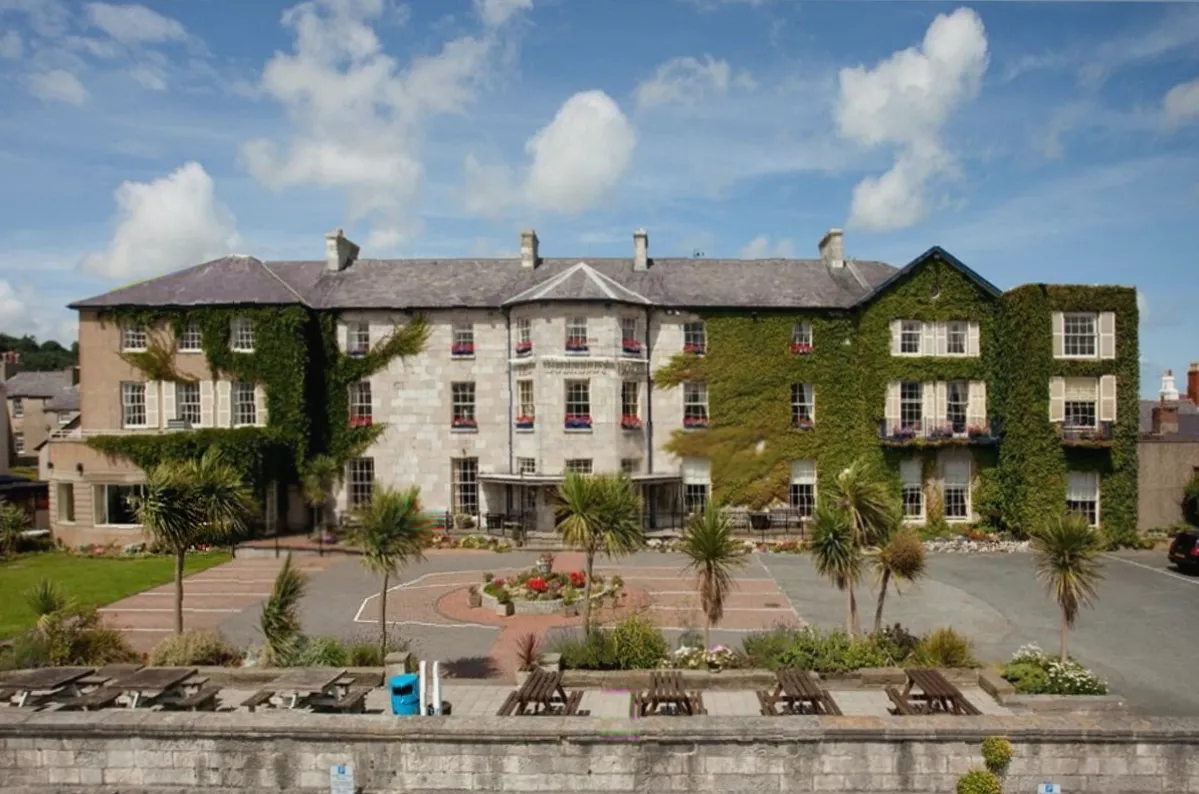
Separately, the historic Bulkeley Hotel in Beaumaris, on the Isle of Anglesey, has been acquired by Condor Hotels in a partnership between its chief executive, Yvonne Jackson, and Welsh hospitality leader Shon Morgans. The sale price has not been disclosed.
The Grade I listed, 43-bedroom hotel stands on the Beaumaris seafront, overlooking the Menai Strait and the Snowdonia mountains, and also fronts the High Street. Originally built in 1832 as a Georgian showpiece by Sir Richard Bulkeley, it was commissioned to host the 13-year-old Princess Victoria during her visit to the Royal Beaumaris Eisteddfod and Regatta. The building was designed by architect Joseph Hansom – renowned for the Hansom Cab – and its construction required the demolition of 450 homes on Beaumaris Green. The hotel was expanded in the 1930s and now features en-suite bedrooms, a ballroom, restaurant, lounge bar and grill, and an art gallery.
The property had been owned for more than 30 years by Bernard and Carole Rhodes, who decided to retire. It was marketed by Graham + Sibbald, initially with an asking price of £5 million, later reduced to offers over £3.5 million. Martin Davis of Graham + Sibbald’s specialist Hotel + Leisure team brokered the transaction.
Yvonne Jackson, an Anglesey resident and a member of the North Wales Tourism Board, leads Condor Hotels & Hospitality. She brings a strong track record in the development and management of premium hospitality assets across North Wales and the rest of the UK, having held senior roles with Q Hotels, Hilton Hotels and DeVere Hotels. Her business partner, Shon Morgans, runs two well-known dining destinations: The Goat in Llandudno and Aber Park Lodge in Aberystwyth. The new owners have said they plan an extensive property-wide refurbishment that will respect the hotel’s historical significance while raising its contemporary hospitality standards.