A significant measles outbreak in northeast London has reignited urgent warnings about the dangers of the virus, as health officials confirm a resurgence driven by falling vaccination rates and campaigners highlight a rare, fatal complication that can strike decades after infection.
The UK Health Security Agency has reported over 60 suspected measles cases linked to several schools and a nursery in Enfield, part of a wider national surge. As of February 19, 130 laboratory-confirmed cases have been recorded in England since the start of the year, with 68% in London. This follows 959 cases in 2025 and a worrying peak of 2,911 cases in 2024—the highest number in over a decade.
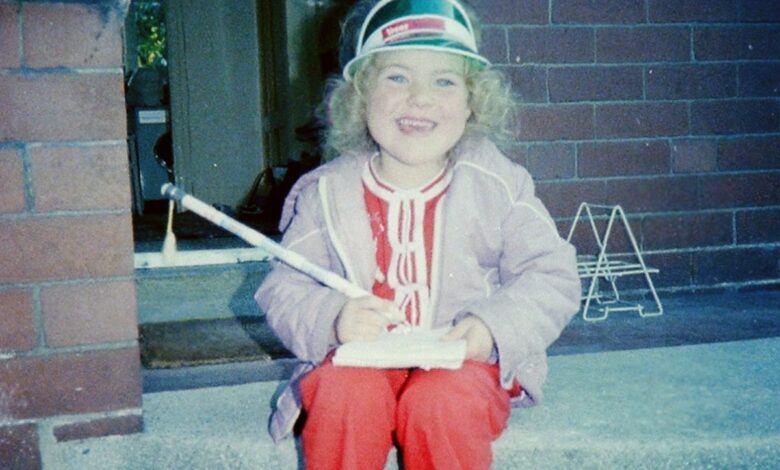
Behind these statistics lies a stark human cost, exemplified by the story of Sarah Walton, who died last year at the age of 45 from a devastating neurological condition caused by the measles virus she caught as a baby.
A Life and a Legacy
Sarah Walton contracted measles at just 11 months old while attending nursery, before she was eligible for the measles, mumps and rubella (MMR) vaccine, which is routinely given after a child’s first birthday. She recovered fully from the initial illness and lived a healthy, active life for the next two decades, excelling at music and sport and studying at university.
At age 25, however, she began experiencing disturbing symptoms: losing words, fumbling buttons, and suffering falls as her leg gave way. In September 2004, she received a diagnosis of subacute sclerosing panencephalitis (SSPE), a rare and fatal complication of measles. Her mother, Jo Walton, recalled a doctor explaining it was a terminal condition with no cure.
“She was walking, she was talking, she was eating. Five weeks later, on 2 December, she came out, she was unable to move, she was unable to speak and she was unable to swallow,” Jo Walton said. After a 20-year battle during which she was cared for at home, Sarah died in February 2025. “She deserved her wings,” her mother said. “We miss her every single day and night.”
Jo Walton is now urging parents to vaccinate their children. “Sarah’s fondest hope… was that nobody else would go through what she was going through,” she said. “Measles is evil, and it should be vaccinated against.”
The ‘Devastating’ Complication That Lies in Wait
SSPE is a progressive neurological disorder caused by a persistent, mutated measles virus infecting the central nervous system. It typically emerges 5 to 15 years after the initial measles infection, though cases like Sarah’s, with a 24-year latency period, are documented.
The condition is almost invariably fatal, with treatment focused on supportive care to manage symptoms. According to the original article, SSPE affects approximately 1 in 50,000 cases of natural measles. However, the risk is far higher for those infected in infancy; research indicates it can be as high as 1 in 600 for infants infected before their first birthday. A historical analysis for England and Wales put the overall risk at 4.0 per 100,000 cases, rising to 18 per 100,000 for infant infections.
Data from the UK Health Security Agency shows that since 2009, three children and three adults in the UK have died from SSPE. A study analysing UK cases between 2017 and 2019 identified six children with SSPE, the highest incidence since 2000, noting trends towards younger onset and atypical presentations.
A National Vaccination Crisis
The current outbreak is fuelled by declining MMR vaccination coverage, which has fallen well below the 95% threshold required for herd immunity, according to the World Health Organization. In Enfield, only 64.3% of five-year-olds had received both MMR doses in 2024-25. Nationally, the rate for five-year-olds was 83.7% for the same period.
The decline has led to serious illness in the ongoing outbreak. One GP surgery in Enfield reported that one in five children it diagnosed with measles required hospitalisation, and none of those admitted were fully immunised.
In response, the UK government launched a national campaign titled “Stay Strong, Get Vaccinated” on February 16, 2026. This comes as the UK officially lost its measles elimination status in January 2026, a status first achieved in 2016 following the successful introduction of the MMR vaccine in 1988. Before the initial measles vaccine was introduced in 1968, the UK saw epidemics every two years with up to 800,000 annual cases.
Experts cite multiple factors for the drop in uptake: the proliferation of misinformation online, disruptions to health services during the COVID-19 pandemic, and systemic issues including fragmented immunisation services and a reduction in health visitor numbers, which has limited tailored outreach to parents.
The Broader Dangers of Measles
While SSPE is a rare outcome, measles itself is a highly contagious and potentially serious illness. Beyond the initial symptoms—which include cold-like signs, a distinctive rash, and sometimes small spots in the mouth—complications can be severe.
These include pneumonia, encephalitis (swelling of the brain that can lead to convulsions, deafness, or intellectual disability), ear infections, and bronchitis. In approximately 1 to 3 in every 1,000 cases, measles leads to death from respiratory and neurological complications.
The charity Encephalitis International is running a campaign called ‘Flames’ to raise awareness of encephalitis symptoms, using the acronym: Flu-like symptoms, Loss of consciousness, Acute headache, Memory problems, Emotional or behavioural changes, and Seizures. The NHS advises parents concerned their child may have measles to seek advice from 111 or their GP.
For Jo Walton, the message is simple and urgent. “It is possible to stop your child or other children dying as a result of [measles],” she said. “I hope our experience will serve as a warning to parents.”