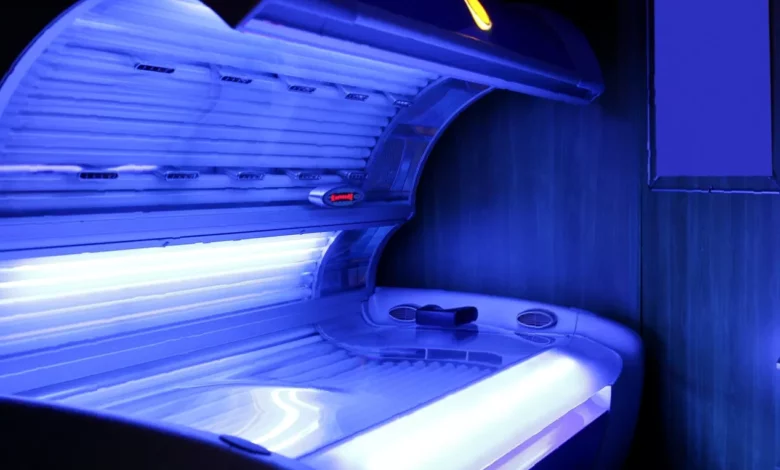
New laws proposed by the government would require sunbed operators to carry out mandatory ID checks on all customers, in a bid to stop children from using sunbeds. The Department of Health and Social Care (DHSC) said teenagers as young as 14 are currently accessing sunbeds illegally because contactless payment systems allow them to “tap and tan” without any oversight from staff.
Closing the loophole
The Sunbeds (Regulation) Act 2010 already prohibits under-18s from using commercial sunbeds in England and Wales, with similar laws in Scotland and Northern Ireland. But enforcement has been weak. The DHSC said that contactless kiosks, where a customer can pay and activate a sunbed without any staff interaction, have made the ban easy to evade. Under the new proposals, a member of staff would be required to be present and to physically check a customer’s identification before they are allowed to use a sunbed.
The planned crackdown, launched on Friday for a 12-week public consultation, also includes a requirement that health warnings must be clearly displayed in all premises. Dangerous claims that sunbeds help with weight loss or prevent sunburn would be banned outright. The government said new rules could be in place as early as next year, and it will launch a separate call for evidence in autumn 2026 to examine whether even tougher action is needed.
Why the change is needed
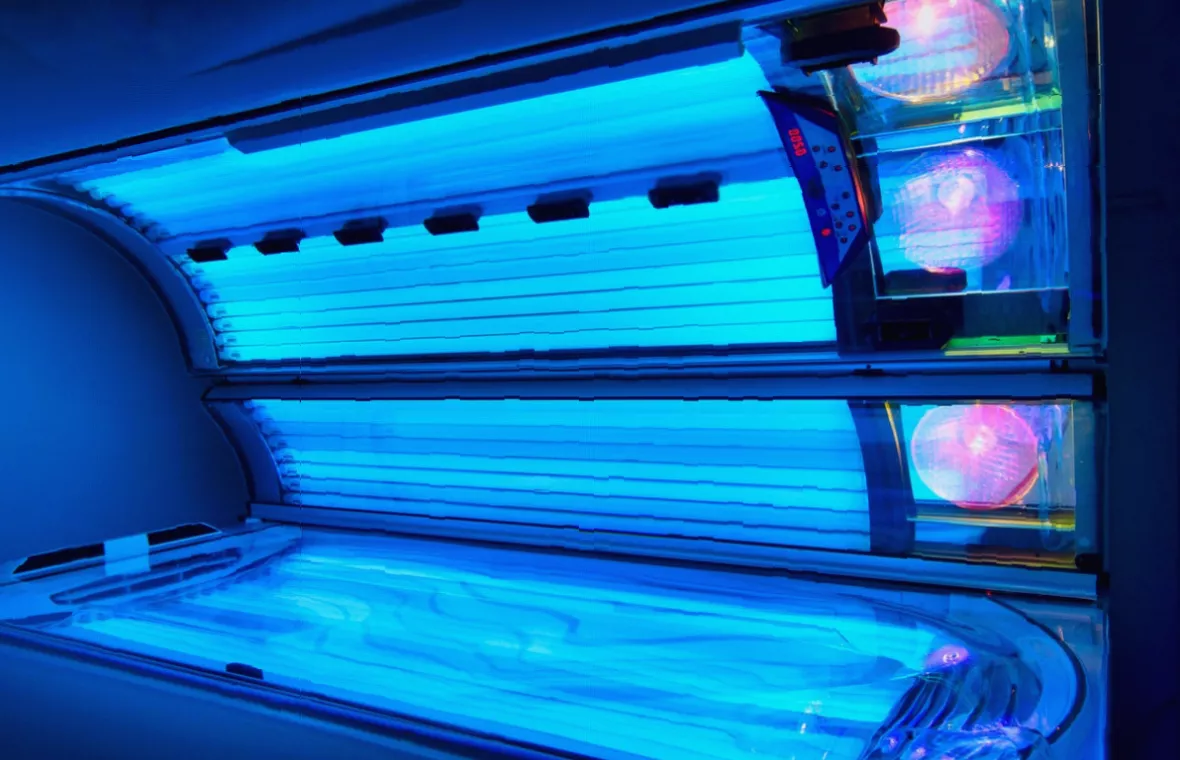
Sunbeds emit UV radiation and are classified as Group 1 carcinogens by the International Agency for Research on Cancer (IARC) and the World Health Organisation — the same category as tobacco and asbestos. Research has shown that a single sunbed session before the age of 35 is associated with a 59% increased risk of developing melanoma, the deadliest form of skin cancer. A single session can also raise the risk of squamous cell carcinoma by 67% and basal cell carcinoma by 29%.
In the UK, sunbed use is estimated to cause around 440 melanomas and roughly 100 deaths each year. In 2023 there were almost a quarter of a million new skin cancer diagnoses across the country, costing the NHS an estimated £750 million annually. Melanoma is now the fifth most common cancer in the UK. In 2022 there were 20,980 new cases, the highest number on record, with incidence rates rising by around 32% over the past decade. Projections suggest the number could reach 26,500 new cases a year by 2038–40.
Public health and prevention minister Sharon Hodgson said: “Sunbeds cause cancer and yet children as young as 14 are still accessing them illegally. That is not acceptable. We’re closing the ways in which businesses could get away with this, and making sure anyone who uses a sunbed knows exactly what they’re risking. Stopping cancer before it starts is the best thing we can do for families and the NHS.”
The measures form part of the government’s national cancer plan, which includes an ambition for one in three cancer patients to be cancer-free or living well five years after diagnosis.
Expert and charity reaction
Professor Peter Johnson, national clinical director for cancer at NHS England, said: “Sunbeds are not a harmless shortcut to a tan – we know they are a cancer risk, and under-18s should not be using them at all. These proposals would help prevent unscrupulous operators from providing sunbeds to children and make sure that adults understand the risks before they use one.”
Marie Tudor, chief executive of the skin cancer charity Skcin, called the consultation “extremely encouraging”. She added: “With skin cancer now the most common cancer in the UK, and evidence showing the risks increase significantly when sunbed use begins at a young age, stronger regulation is urgently needed. Mandatory ID checks, clearer health warnings, and tighter controls on misleading health claims are positive and necessary steps towards improving public safety, raising awareness, and helping to prevent future skin cancer cases.”
Jules Worrall, interim chief executive at Teenage Cancer Trust, said the proposals “could protect more teenagers and young adults” if enforced. She said: “We strongly recommend that sunbeds are avoided and want to ensure that teenagers and young adults are informed about the risks. So we’re pleased that the consultation aims to strengthen health warnings, as well as crack down on ID checks, because we are deeply concerned about the level of harmful misinformation easily available promoting so-called ‘benefits’ about sunbeds.”
Susanna Daniels, chief executive of Melanoma Focus, said: “Young skin is especially vulnerable to the risks of sunbeds, and research has shown that a single exposure to indoor tanning before the age of 35 years is associated with a 59% increased risk of developing melanoma.”
Wider context and concerns
The existing ban has failed to prevent widespread underage use. Surveys suggest that 34% of 16- to 17-year-olds in the UK still use sunbeds, and around 28% of all UK adults do so — rising to 43% among 18- to 25-year-olds. Sunbed salons tend to be concentrated in more deprived areas, contributing to health inequalities. Belfast has been described as the “sunbed capital of the UK”. Social media platforms such as TikTok have also been criticised for promoting tanning culture and spreading dangerous misinformation, including the myth that sunbeds provide a “safer” tan or help with vitamin D production.
An All-Party Parliamentary Group (APPG) for Beauty, Hair & Wellbeing has previously declared UV radiation a “Preventable Public Health Crisis” and called for tobacco-style regulation of sunbeds. Internationally, Australia banned commercial sunbeds in 2016 and Brazil did so in 2009, citing their contribution to melanoma cases. The government’s consultation will now seek views from the public, businesses, local authorities and experts before any legislation is finalised.