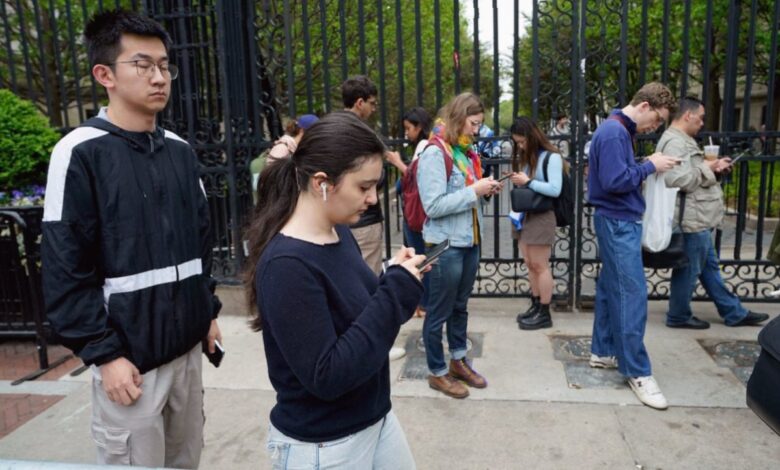
A major new study of American college students has revealed a stark correlation between time spent on social media and feelings of loneliness, with researchers warning of a damaging reciprocal cycle that poses a serious threat to young people’s health.
The research, which polled nearly 65,000 students aged 18 to 24 across more than 120 US colleges, found that spending just 16 hours a week—or roughly two hours a day—on the platforms was enough to significantly increase the risk of loneliness. For the heaviest users, those spending upwards of 30 hours per week, the likelihood of reporting loneliness was 38% higher than for non-users.
Dr. Madelyn Hill, an assistant professor at Ohio University who co-authored the study, emphasised the grave implications. “We know that people who are lonely are more likely to become depressed,” she said in a statement. “We also know that those who are lonely are more likely to die early.”
A Reciprocal Cycle of Isolation
The study’s authors say the relationship likely works in both directions: excessive social media use may lead to less in-person interaction and increased loneliness, while lonely individuals may turn to social media seeking connection, potentially exacerbating their isolation. They also cautioned that some students may underestimate their screen time, which could affect how quickly feelings of loneliness manifest.
The findings are particularly concerning given the near-universal use of social media among college students and the scale of the loneliness they report. The study indicates that 54% of the students surveyed were lonely, a figure consistent with other national research. Demographic disparities were also evident, with female and Black students reporting particularly high rates.
A Public Health Epidemic with Deadly Consequences
The research adds substantial weight to warnings from public health leaders who have declared loneliness a crisis. US Surgeon General Dr. Vivek Murthy has labelled loneliness and social isolation a national epidemic, stating that its impact on health is as damaging as air pollution or tobacco. Some studies suggest loneliness is as dangerous to health as smoking.
The World Health Organization notes that globally, one in six people is affected by loneliness, which it links to an estimated 100 deaths per hour worldwide—over 871,000 annually. WHO Director-General Dr. Tedros Adhanom Ghebreyesus has observed that “despite endless possibilities to connect, more people are finding themselves isolated and lonely.”
The health risks are profound and well-documented. Loneliness is a significant predictor of psychological distress and is linked to markedly increased risks of stroke (32%), heart disease (29%), and dementia (50%). It is also a risk factor for type 2 diabetes, cognitive decline, depression, anxiety, self-harm, and suicide, according to bodies like the Centers for Disease Control and Prevention.
The Mental Health and Substance Use Crisis on Campus
This loneliness epidemic intersects with a broader mental health crisis among students. Anxiety and depression are common, with a 2023 survey finding 36% of students reported anxiety and 28% experienced depression. Approximately 76% report moderate to severe psychological distress.
Substance use is a significant co-occurring concern. A 2024 study found more than 20% of college students suffer from a substance use disorder, with other research suggesting the figure could be nearly half. In 2023, 27.1% of young adults aged 18-25 had a substance use disorder. Alcohol remains the most commonly used substance, though daily marijuana use has reached historic highs, according to Texas A&M Health. Younger adults are also more likely to say they use drugs or alcohol when they feel lonely.
Social Media’s Double-Edged Sword
While technology can offer a seeming lifeline, experts caution it is often a double-edged sword. Dr. Saul Levin, CEO of the American Psychological Association, explained that while social media can help people communicate, “distracting yourself when you’re feeling lonely with social media might be a double-edged sword: while it can connect, it can also lead to feelings of missing out.”
Excessive use is linked to higher rates of anxiety, depression, and loneliness among young adults. It can decrease physical activity and face-to-face communication, which are protective against depression. The compulsive checking driven by “FOMO” (Fear Of Missing Out) can disrupt sleep and harm mental health, while social comparison with curated online profiles can fuel low self-esteem and body image issues.
Research suggests the type of platform and how it is used matters. Passive consumption on sites like YouTube and Reddit, and some dating apps, is linked to heightened loneliness, whereas networking platforms like Facebook and Instagram were not directly associated with increased loneliness in some studies. WhatsApp was associated with lower levels of loneliness. Experiences of online victimization or compulsive use are also linked with higher loneliness.
Notably, during the COVID-19 pandemic, positive feelings about social media for connection may have been adaptive, potentially reducing loneliness and depressive symptoms, indicating its role can be context-dependent.
A Call for Action from Campuses
Faced with these compounded challenges, the researchers are calling on academic institutions to act. They recommend educating students on the potential negative effects of excessive social media use, encouraging them to set time limits, and vigorously promoting real-world social events on campus to foster in-person connections.
“Young adulthood is a time of many changes, from leaving home for the first time, to starting college and forming new friendships, and it is vital that colleges and universities do all they can to help their students forge connections with others,” said Dr. Hill. Experts also highlight the need to bolster social support and resilience as protective factors, and to consider how social media might be leveraged to promote positive psychosocial adjustment.
This need is acute, as many students report gaps in mental health support. Nearly one in five have used campus services, but 40% found them unhelpful, with concerns about confidentiality and time acting as further barriers to seeking help.