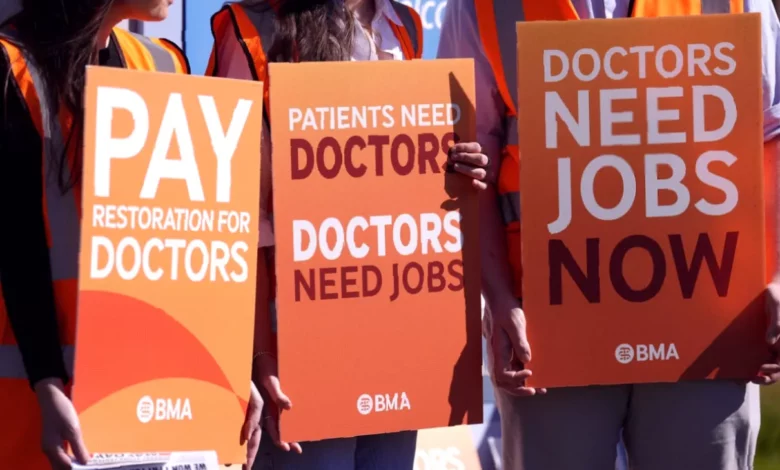
The British Medical Association has acknowledged the positive changes made for resident doctors and patients over the past year, according to the trust involved in the long-running dispute. The recognition comes as a new government offer, which includes a range of measures on training, pay and working conditions, is put to a referendum of BMA members, with planned strike action now called off.
The offer, presented after weeks of negotiations, addresses several core demands that have driven 16 rounds of industrial action since 2023. At its heart is a commitment to create 4,500 specialty training places over the next three years, designed to ease the severe “bottleneck” that has left thousands of resident doctors unable to progress to consultant roles and facing unemployment. A portion of these places had been intended for an April 2026 start, but the government said accelerating them for the current year was no longer possible due to the timing of the strike action. The offer also guarantees that all Locally Employed Doctors (LEDs) – those on local contracts rather than national training agreements – will receive the terms and conditions of the standard 2016 resident doctor contract, with an enhanced annual appraisal process for LEDs to be designed by July 2026.
On pay, the deal delivers an average uplift of 6.6% by April 2027, combining the current year’s recommendation from the independent Doctors’ and Dentists’ Remuneration Body (DDRB) with further increases. This includes a 3.5% pay rise effective from 1 April 2026, backdated to that date, as recommended by the DDRB. Health Secretary James Murray stated that after a cumulative 28.9% increase for resident doctors over the past three years, “the country simply cannot afford to increase the pay offer for this year” and that the government intends to accept the DDRB’s headline recommendation of 3.5% for 2026/27. The offer also reforms pay progression: exam, portfolio and membership fees will be covered, and less-than-full-time doctors who meet competencies will be guaranteed annual career progression. Faster nodal point reform is promised, with pay uplifts twice a year contingent on career progression, and medical academics will see increased pay premia.
Trust acknowledges more work needed
In a statement, the trust said: “The BMA has recognised the positive changes we have made for both resident doctors and patients over the last year – but we are not complacent, we know more is needed and that working conditions have not been good enough, and we will continue to do more to make the NHS a desirable place to work.” The remarks reflect a broader acknowledgement that while progress has been made on training places, contract harmonisation and pay uplifts, the underlying issues of pay erosion and workforce pressures remain substantial. The BMA has long argued that junior doctors’ pay has fallen in real terms by nearly 30% since 2008, with a 15.4% drop on average compared to 2010/11 levels by 2023/24. The initial demand had been for a 35% rise.
What happens next
The offer now goes to a referendum of the BMA’s resident doctor membership. Dr Jack Fletcher, chair of the BMA’s Resident Doctors Committee, expressed frustration at the timing but said the BMA holds up its end of the bargain when the government shifts its position. He stressed that the core demands were a fair offer that secures enough jobs to tackle doctor unemployment and addresses pay erosion. If members reject the deal, Dr Fletcher warned that further escalated action would be planned for the following month. The dispute, which began under the previous Conservative government and saw deals reached in September 2024 after 11 rounds of strikes, has caused at least 1.7 million healthcare appointments to be rescheduled since the end of 2022, according to NHS England data. Studies on earlier strikes, including the 2016 industrial action over the new junior doctor contract, found that mortality rates for patients admitted to hospital did not significantly increase on strike days, though one study observed higher readmission rates for Black emergency patients, suggesting negative consequences for some minority groups despite overall mitigation efforts.