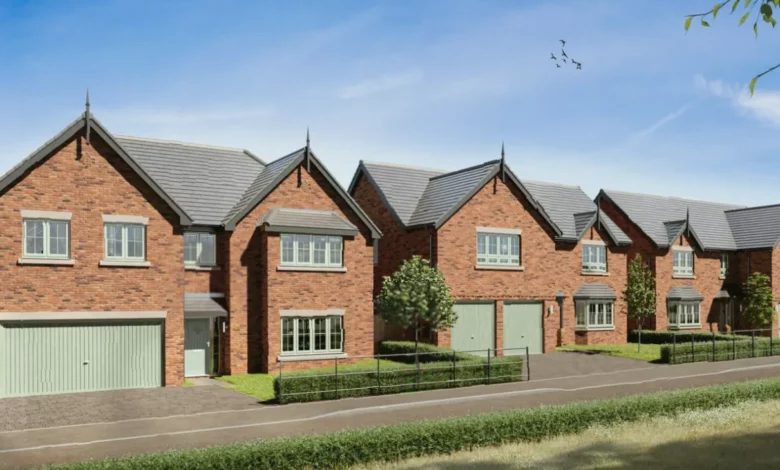
New images have been released offering the first glimpse of the homes that will rise on the site of the former University of Liverpool halls of residence in Mossley Hill, as Bellway Homes pushes ahead with its £65 million Carnatic Park development. The visuals, published by the housebuilder, show the proposed replacement for the Carnatic Halls complex, which has lain empty since its closure in 2019.
The development, situated at the junction of Elmswood Road, North Mossley Hill Road and Rose Lane, will deliver 143 properties. According to Bellway, the mix comprises 65 one- and two-bedroom apartments spread across five three- and four-storey blocks, and 78 three-, four- and five-bedroom houses in two- and three-storey blocks. Eight of the units have been designated as affordable housing. Work to demolish five of the former student halls began earlier this year under a 10-month programme that includes the removal of asbestos – a substance previously discovered at the site in 2004 during re-wiring work in Lady Mountford House, which required decontamination.
Planning permission for the scheme was granted by Liverpool Council last year, with Bellway having originally applied for 162 homes before scaling the proposal back to 143.
Dual architectural schemes designed for conservation area
Bellway has developed two distinct architectural styles for Carnatic Park, named Mossley Hill and Urban Green, in a deliberate effort to respect the character of the Mossley Hill Conservation Area in which the site sits. The Mossley Hill elevations, intended for the exterior of the development facing Elmswood Road and Carnatic Road, feature Tudor boarding with black doors and windows. The Urban Green elevations, positioned further inside the development, will use Chartwell Green doors and windows. The housebuilder says the designs are intended to complement the existing local vernacular – a necessary consideration given that planning applications within conservation areas face stricter scrutiny to preserve or enhance the area’s appearance. Alterations to external doors and windows, roof changes and demolition typically require specific permission in such zones, and guidance often restricts the use of uPVC in favour of timber or other materials that match historic properties.
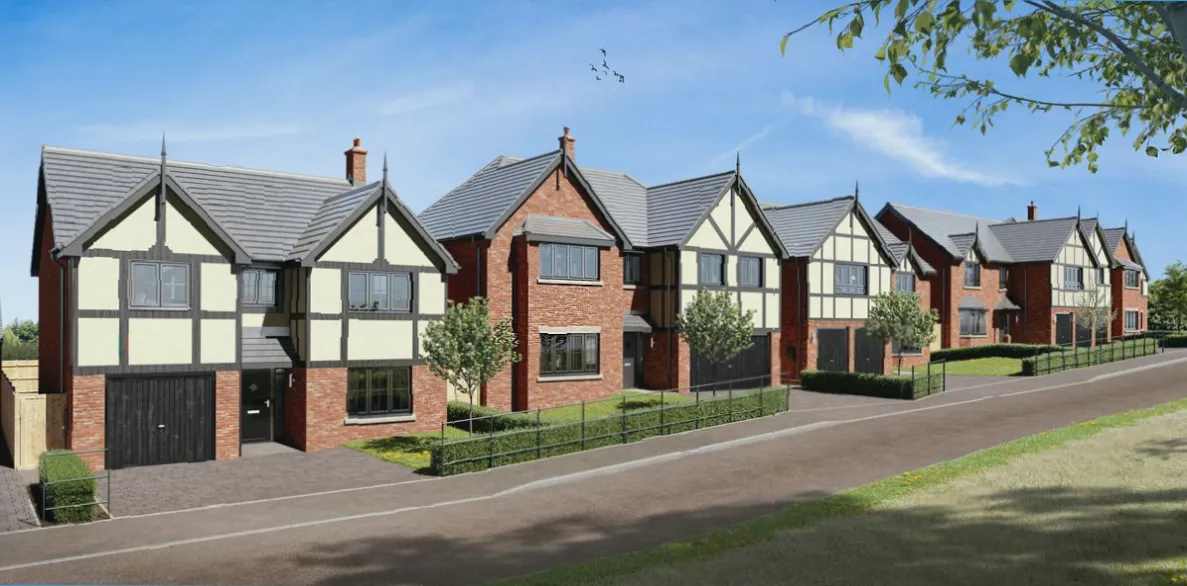
The choice of two elevations reflects the site’s dual identity: its prominent position on three roads and its wooded, landscaped interior. Bellway is retaining existing sandstone and brick boundary walls and mature trees, and the development will include just over 12 acres of designated open space open to the public, along with walking and cycling routes. Biodiversity is expected to improve by more than 40%, with planting of biodiversity-rich species and the installation of hibernacula, bat and bird boxes, and hedgehog highways. All homes will feature renewable and low-carbon energy systems, energy efficiency measures and electric vehicle charging points.
David Williams, managing director at Bellway North West, said: “We have received huge interest in Carnatic Park and are delighted to finally be able to reveal the new visuals that highlight just how stunning the prestigious development will look once complete. We have worked hard to ensure the overall aesthetic of Carnatic Park perfectly complements the existing architectural character of the local area and delivers a superb collection of high quality new build homes with a modern yet timeless appeal.”
He added: “We are extremely excited to be developing at Carnatic Park and make these beautiful new homes available to homebuyers in Liverpool. Remediation work has already started and we hope to have a sales presence on site by late summer with first occupations in spring 2027 and completion forecast towards the end of 2028.”
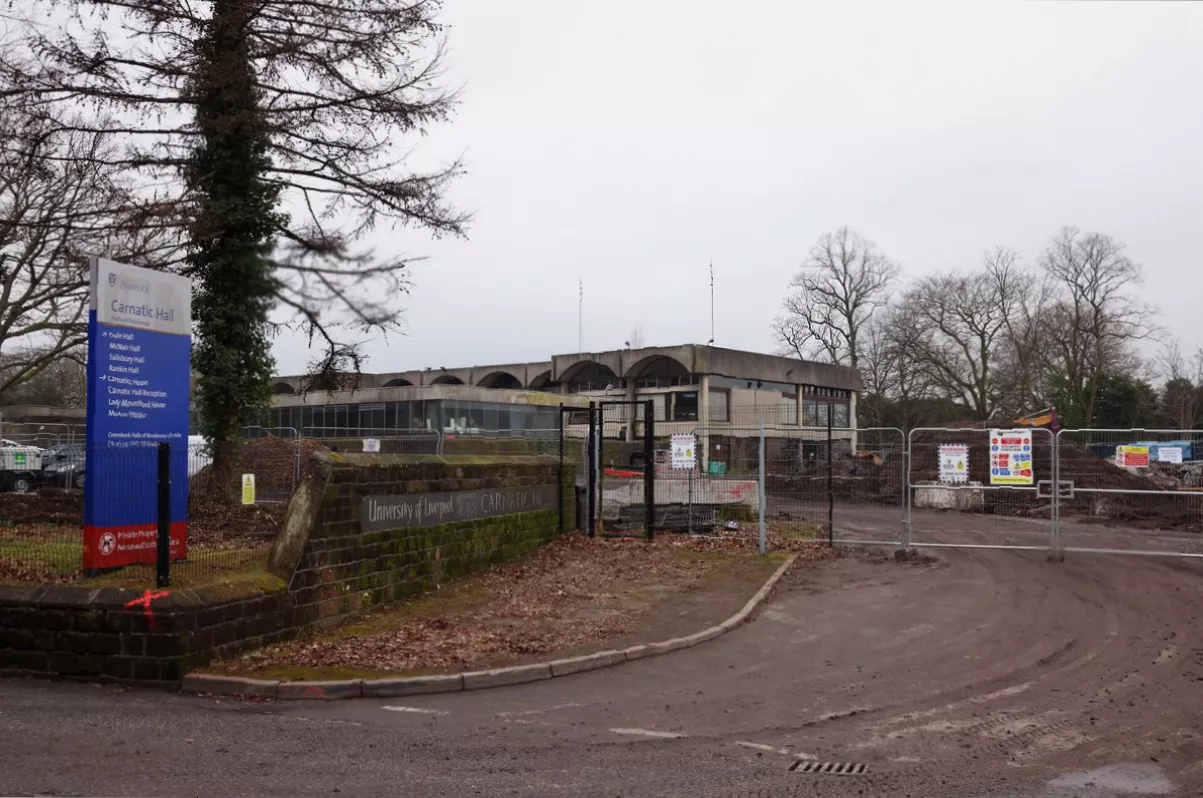
The site’s history runs deep. Before the university halls were built, the land was occupied by Mossley Hall, an 18th-century mansion constructed in 1779 for Peter Baker, a Liverpool merchant who profited from privateering and the transatlantic slave trade and later served as mayor in 1795. Baker captured the French East Indiaman Carnatic – a prize valued at £135,000, from which he reportedly gained £400,000 from the cargo – and renamed the house accordingly. The mansion was severely damaged by fire in 1891 and rebuilt in a similar style by its then-owner, Walter Holland. The University of Liverpool acquired Carnatic Hall in 1946, having taken a mortgage on it in 1942, and initially used it to house the University Museum’s collections for safekeeping during and after the Second World War. In 1964 the mansion was demolished to make way for the Carnatic Halls of Residence, a complex of six buildings – McNair Hall, Salisbury Hall, Rankin Hall, Morton House, Lady Mountford Hall and Dale Hall – designed by architects Manning and Clamp. The university closed the halls in June 2019 as part of a broader estate strategy to focus on modern, on-campus accommodation and the refurbishment of Greenbank Student Village.
The development is expected to contribute to the local economy, support jobs, involve local suppliers and provide employment and skills training opportunities. Bellway reports “unprecedented” interest from potential buyers, with a sales presence due on site from late summer 2026. The first residents are expected to move in during spring 2027, with the entire scheme forecast for completion towards the end of 2028.